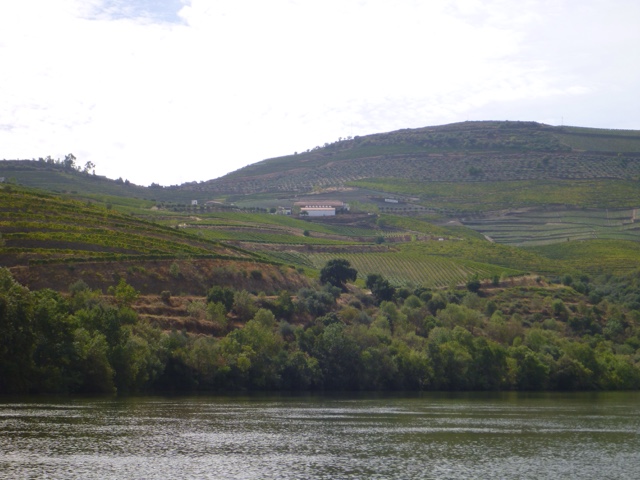
As we drove out of the Douro Valley the scenery changed dramatically as all of a sudden the vineyards were replaced by large trees on rolling hills and the small clusters of homes were far fewer. We stopped at a couple of smaller towns on our way to Coimbra to enjoy their sights. In Viseu we saw the Camino signs showing the way for the Porugese Camino which brought a smile to both of us. Our first major stop was Coimbra which was the capital of Portugal from the 12th to 13th century. The old town of the city is charming with a maze of narrow winding streets leading you past little shops and restaurants. Once you reach the top of the hill where the university is situated the views over the city and river are stunning. After exploring the historical sights of this beautiful city it was time to head off to the Algarve for some relaxation.
We hopped on a train and headed south to Lagos for some beach time. Lagos was at one time the location of the African slave market in Europe and the first great Poruguese maritime expedition embarked from here but now it is just an enjoyable little bit of the Algarve. Pedestrian streets, funky craft shops, bars and restaurants intertwined with sculptures and sea creature designs laid in the cobble stones make for interesting strolling. The highlight of this town however is the beaches and limestone cliffs dotted with tunnels and grottoes. The colours and shapes of the stones are magnificent and the tunnels and caves were fun to pass through when the tide would allow. As summer has come to an end the beaches were quiet which was wonderful even though it was 28 degrees.

Leaving the Douro Valley we first stopped at Lamego to visit two of their magnificent cathedrals. This one sits very high on the hill and has a very impressive staircase leading up to it which has beautiful statues and landings all the way up. So impressive and the view from the top was equally amazing.

Looking up at the cathedral from the second landing on a clear blue day was outstanding.


The clock sat above the cloisters and seemed to be frozen in time.

The streets were narrow and like so many other places we have visited pedestrian only and lined with delightful buildings with shops on the street level and apartments up above.

Eric enjoying a meal at a small family sidewalk cafe where the owner came and engaged in conversation and brought out drinks after our lunch to top off a superb meal.

Inside the church of Santa Clara in Coimbra

The cloisters of Santa Clara. As these are on the opposite side of the river to the old town not many venture here and in fact we were here on our own. They are no longer used today but were wonderful to visit.

The old town of Coimbra had twisty steep cobbled streets and this one people had artistically decorated with all sorts of whimsical crocheted objects. Fun to walk along.

Coimbra 's university was founded in 1290 and is Europes second oldest university. Once a royal palace it is situated overlooking the city and the river and is still today regarded as Porugals most respected university. The library was spectacular to visit. It is one of Europes best surviving Baroque libraries and displays 55000 books in 18th century splendor. Only 65 people are allowed in at a time and the doors are kept tightly closed to control moisture. There are two levels of books dating back to the 1700s with ornate wood throughput. At night they release some bats to control any insects that may do harm to the volumes. Of course no photos were allowed.

The inside of the university chapel was quite ornate with a beautifully painted ceiling and dates from 1517.


The white buildings with red tile roofs in Lagos have a very Mediterranean feel.

Parts of the old wall remain which once protected the city from the Spaniards and the pirates.

Not a level street to be found but fun to wander the pedestrian ways in search of our next meal.

The biggest appeal of Lagos to us was its rugged shoreline of limestone cliffs with a multitude of caves and grottos.

Small beaches were divided by outcropping of stone. Depending on the tides you could get through the caves to the next beach.

Exploring the coast by boat was a must


I found the colours inside this grotto particularly interesting. Nature is so creative.

A deserted piece of untouched sand accessible only by boat. How perfect for a picnic until the tide comes in.

The array of colours was amazing

Here the sun was able to shine under the stone illuminating the water and the cave.

Enjoying some of the beaches and tunnels at low tide.

Passing through from beach to beach. The tides are quick and one could easily get stranded on a beach if not careful

I am coming out of a tunnel onto this pristine beach. What a perfect day.

Lagos has a lovely promenade along the river which is about a mile long and quite fun to stroll along watching the activity on the water as well as the observing the locals selling their wares along the way.