Saturday, 6 October 2018

Cesky Krumlov

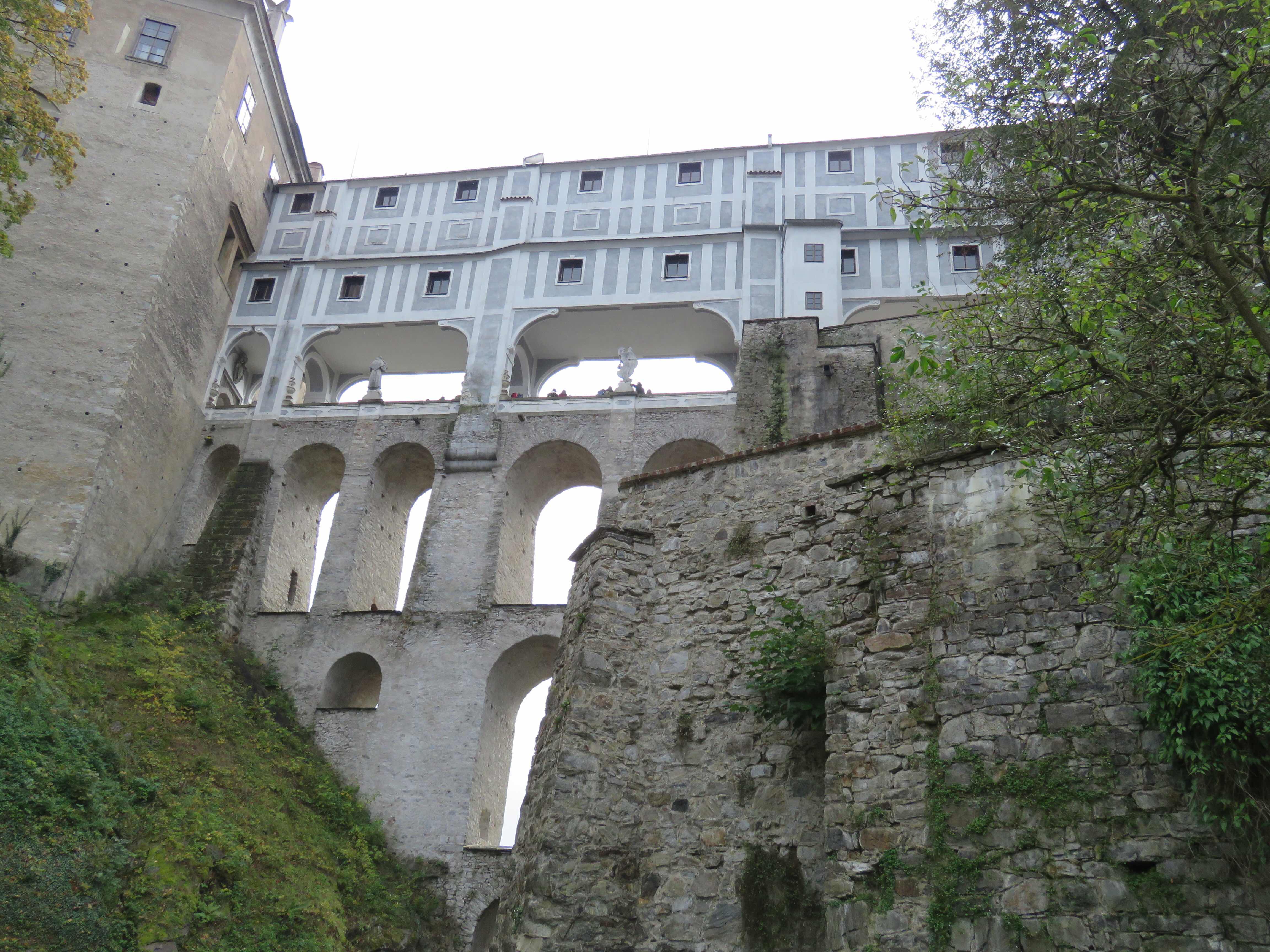
We were lucky enough to be driven from Vienna to Prague so not only did we get to enjoy the countryside and the small farming villages but we got to take a side trip to the picturesque village of Cesky Krumlov.  The whole town of 14,000 is a world UNESCO site and is one of the most charming towns we have ever visited.  The towns first roots were set down in 1240 by the Vitkovo family and all the buildings date from the 14th to 17th century with a majority of Renaissance and baroque architecture. The town is built on a horseshoe bend of the Vitava River which adds to its charm and beauty.  Prior to WWII it was mostly a German town but the German residents were expelled after the war and it is now predominantly Czech.  During the communist era the town fell into disrepair but since the revolution in 1989 its Beaty has been restored.  All the streets are cobblestone and there are very few cars allowed within the town itself.  The windy streets lead you up to quite a large castle for a town of this size which today serves as a tourist destination for tours as well as some rooms are rented to the locals for accommodation.  There is a place in the moat of the castle where European brown bears have been kept since the 16th century and this tradition continues today.  Apparently they get the bears from ones born in captivity and have a couple at a time.  We had a local guide who had been raised here and then gone to live in San Francisco for a few years where she met her husband but they returned here to raise their daughter.  Two very different worlds.  After a couple of hours of poking around the wonderful sights we enjoyed a typical Czech meal before setting off to Prague.

Looking up to the castle. The colours were stunning even with a bit of drizzle 

Castle buildings sat high above the river banks

Picturesque alleyways 

Colourful displays outside charming stores

The painted designs are original and in great condition 

Inside the courtyard 

The dam has been added in recent years as the town suffered quite a serious flood several years ago

Almost like a fairytale

Red is definitely the colour of choice for roofs in many places we have visited on this trip

An inside bridge to cross the gorge

Whimsical figures invite one in to browse

Cobblestone streets were in great shape and are well trodden

No chain stores here though apparently McDonalds has tried many times

Little figures watching the tourists 

Charming restaurants 

Could have spent more time just taking in the atmosphere 

Several old churches throughout the town

The houses all hold each other up

Not a lot of room for cars

Tranquility in the midst of tour groups


Friday, 5 October 2018

Vienna

Vienna is an Austrian city of 1.75 million people and the name itself conjure up visions of waltzes and operettas and wonderful composers performing their musical creations.  In reality it is a real melting pot of a cosmopolitan population including Hungarians, Germans, Czechs, Poles, Slovaks, Spaniards, Flemings and Italians.  Within the old part of the city are many magnificent old buildings and many wonderful pedestrian only areas.
As this was a return visit for us I decided to do something a little different and try out some dental tourism.  Situated in a beautiful building and decorated with candles and flowers and cut glass lights it was the first time I have ever been offered an alcoholic drink at any type of doctors when we were offered lemoncello on arrival. Though I declined it I did hope it was not the anaesthetic.  I left the office minus a wisdom tooth which had been causing me issues for a couple of weeks.  I am happy to say that the tooth fairy comes tomVienna and she pays in Euros over here!
While in Vienna we had a wonderful meal at a lovely restaurant with Steve and Tina and then went to a an evening of classical music and dance.  We were lucky enough to score front row seats and it was a magical performance. Though our visit was short it was mostly enjoyable.

Enjoying schnitzel with our guide Raul.  Well not me as I was not allowed to eat for six hours

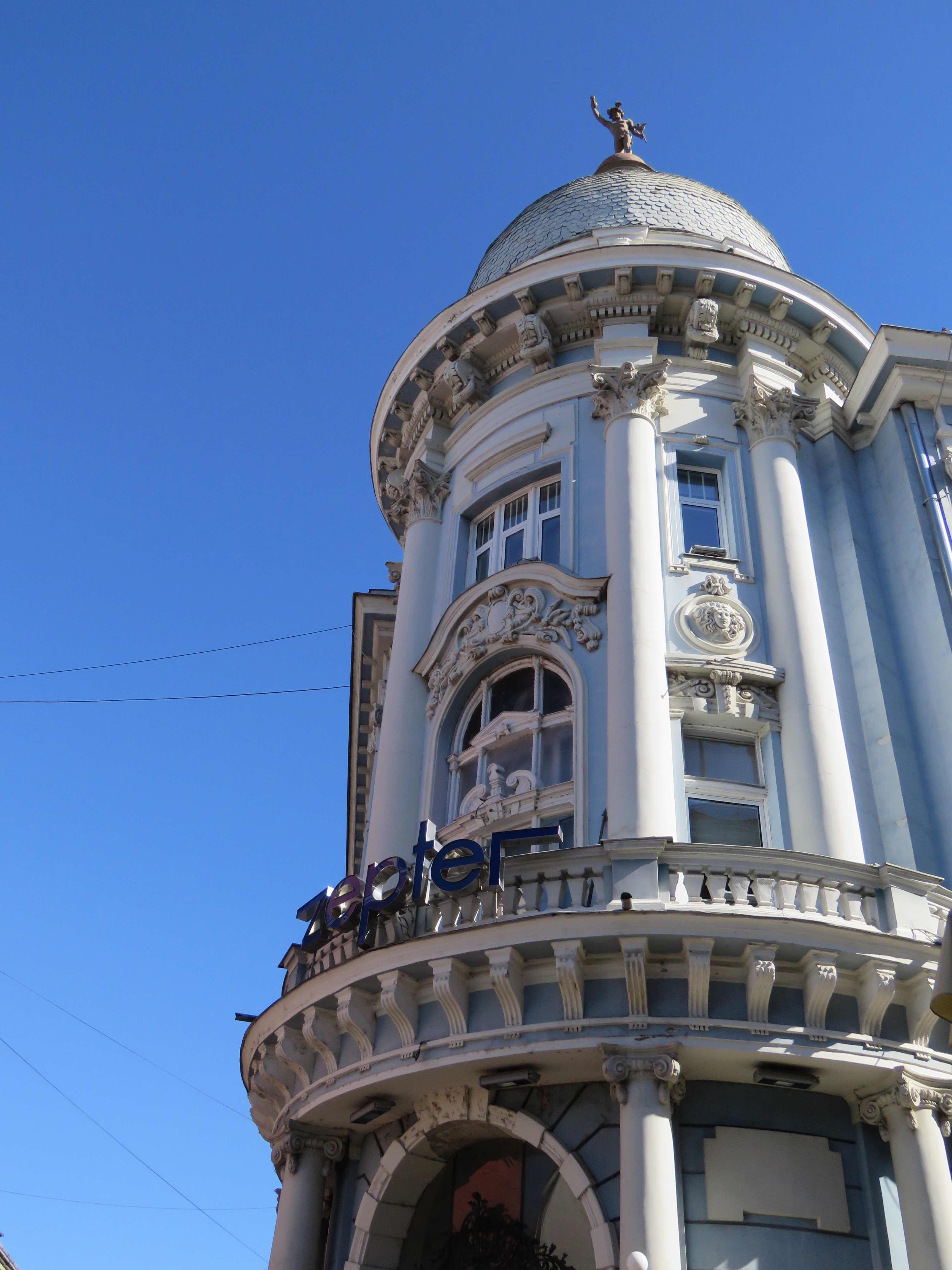
Wonderful statues on the tops of buildings.  One always has to look up

Doorways are also picturesque 

So many phot opportunities 

Walking along the pedestrian square

Front of the mani cathedral 

Colourful window displays 

Instead of window shopping we were building shopping 

Wonderful flower shops


Old architecture right next to the new. Quite a contrast


The opera hall where we enjoyed our concert


Strange to see cigarette machines along the streets. Europeans certainly have not got unto the no smoking band wagon


The tiles on the cathedral roof were beautiful in the sunlight.  Was hard to get a descent picture of the cathedral because unfortunately they have advertisements on several places on it which are very large.  I suppose it is a way to make money but somehow an ad for an airline just does not fit on a church.


Inside the cathedral 


This statue was on a building on a little side street. They are everywhere. It is like an outside museum 


When in Vienna one has to try a piece of Sacher torte 


Some tourists posing in front of the gold statue of Strauss


A drink of wine before dinner. How civilized 


Conclusion to a wonderful evening 


Wednesday, 3 October 2018

Croatia Ana Hungary

We made a short but interesting visit to Croatia.  Docking in Ilok, which has vineyards dating back to the Romans, we drove through the fertile countryside where the main industry is agriculture to Vukovar.  From 1991 to 1995 Croatia was involved in a massive civil war between the Croats and the Serbs and extensive damage was done to cities and industries.  Approximately 20,000 people died and many were buried in mass graves.  On our way to Vukovar we stopped at one of these sites where the people of Croatia have built one of the most moving memorials to honour those who lost their lives.  Vukovar was almost totally destroyed during this civil war and has been rebuilt but they have left a few of the bombed buildings standing as a somber reminder of that very sad time.  During our trip this was the first time that we had a guide that had not lived in the country during the hard times as her parents and her lived in Switzerland.  It really made a difference as there was no personal connection,more like a text book.
In Hungary we first visited Peces which is in the center of the regions agricultural industry.  In the town center which is pedestrian only, the Europeans have it right, surrounded by beautiful baroque buildings,the square is dominated by the symbol of the city,the former Pasha Gazi Kassim Mosque.  What makes this Mosque unique is that it is now a Catholic Church.  The foundation for the second church in this town dates back 1000 years.  A charming town and a wonderful place to spend a few hours.
Returning to Budapest for our second visit was lovely.  We only spent a few hours here before leaving for Vienna so we were pleased we had been here before.  A highlight is the Fisherman’s Bastion on the Buda side which gives one a panoramic view of the city.

Fishing along the Danube 
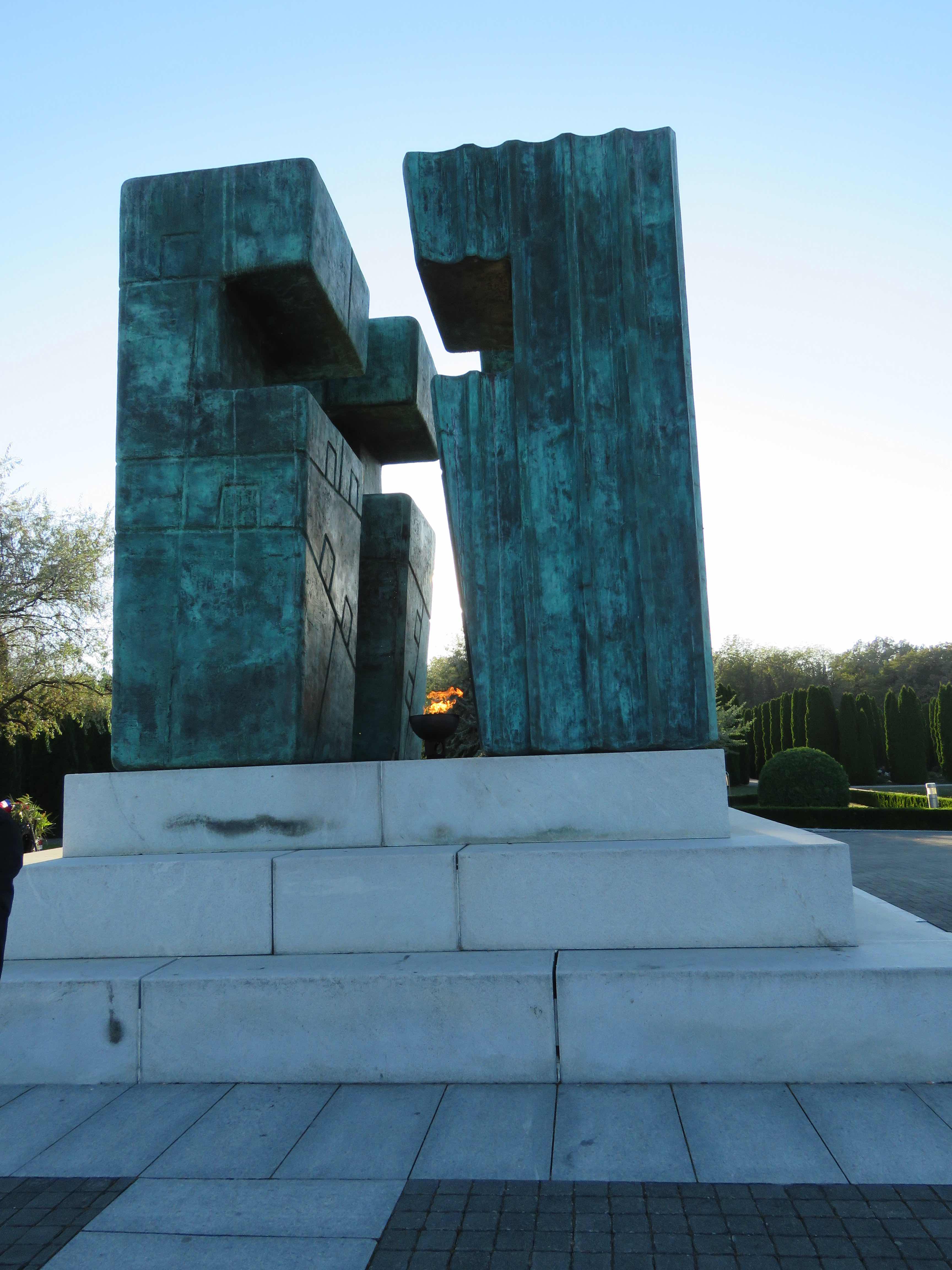
The eternal flame at the cemetery for those killed in the civil war in Croatia 
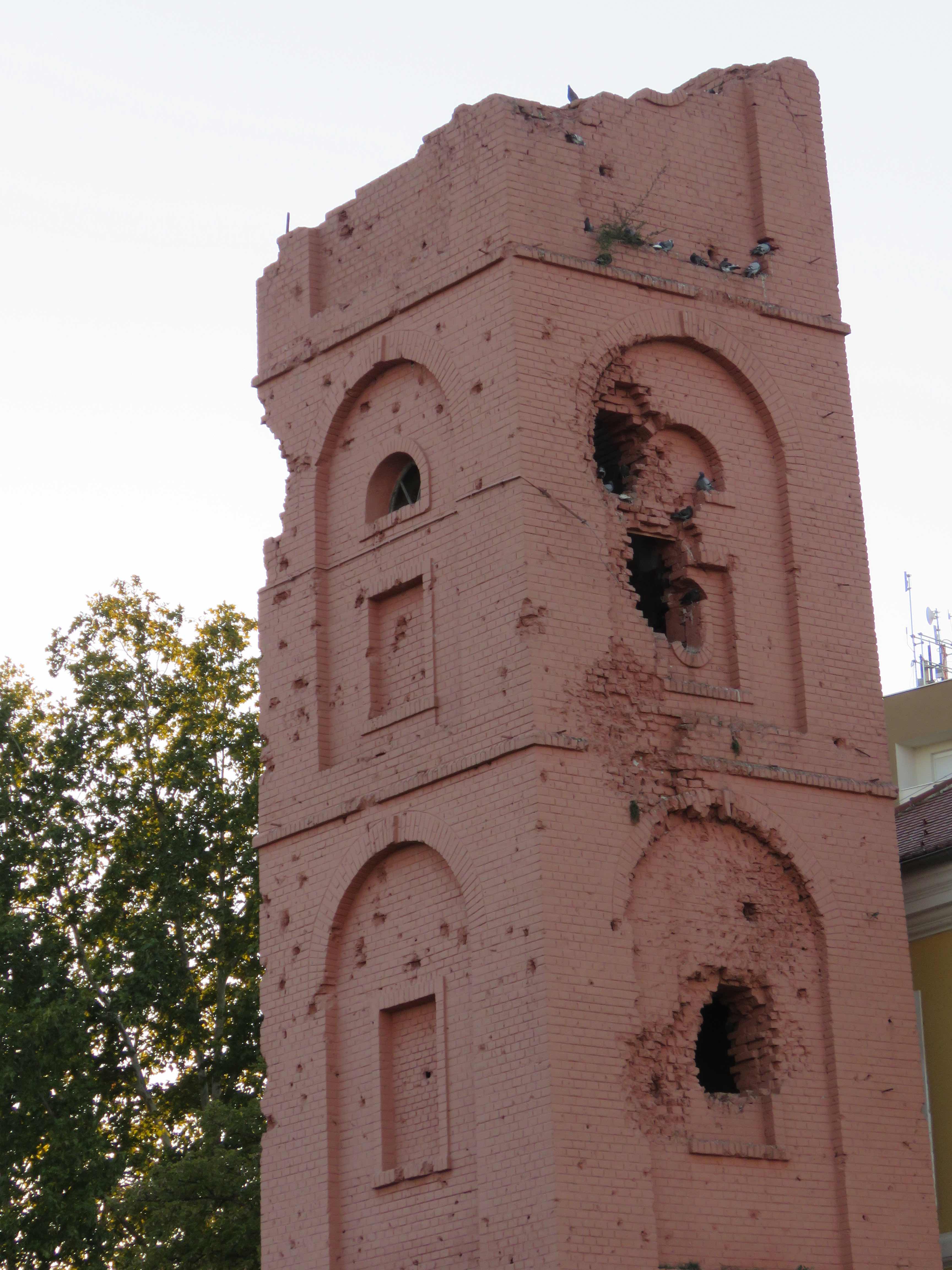
The church tower with bullet and bomb results 

A sad reminder of war time

Stunning organ in the church in Peces

Beautiful church 

The Mosque at Peces

The church sits on 1000 year old foundations 


Tony Curtis donated this two million dollar “willow” sculpture where people can have names of family lost in the holocaust engraved.  This is at the synagogue in Budapest 

The Fisherman’s Bastion in Buda

St Mathias Church in Budapest with its beautiful tiled roof

Looking across the river to the Parliament Building in Budapest 

Budapest 

Inside St Mathias

Our charming server at lunch

Budapest marketplace 

Tuesday, 2 October 2018

(Backup) Serbia

As we continued our journey up the Danube we had to pass through the two Iron Gates which refer to the huge locks and damn system that controls the water flow and allows for ships to enter the picturesque set of gorges through which the Danube River flows separating Serbia from Romania.  Built in 1971. The locks raised the level of the water in the 130 km long gorge 35 meters and 25,000 people from 17 towns had to be relocated.  Quite a sacrifice for many.  Travelling through the twisty gorge with lush mountains on either side dotted with the occasional small village is quite pleasurable..a few special sites awaited us as well.  On one riverbank right at water level is a weathered marble Trajan’s Plaque placed in AD 101 in honour of the Roman Emporer to commemorate the construction of the Trajan road along the Danube which was quite a feat in those days.  The plaque had to be moved up the bank when the locks were built.  At one bend of the river is an old monastery watched over by a giant head of Deceballusus,last prince of the Dracians, a 40 meter high relief carved into the rock.  Near the end of the gorge built high on the rocks just as the sun was setting we came upon the Gobubac castle which is starting to crumble but still looks quite impressive with its nine massive towers joined by a ring of walls.
We visited Belgrade,which has been the capital city of Serbia since 2006.  Belgrade has been bombed many times but is very tenacious and keeps returning from the assaults.  The NATO bombings during the Kosovo war in 1999 caused considerable damage some of which is still visible.  As the Serbians partially blame Clinton for this they were relieved that Trump won!  We visited the Kalemegdan Fortress which is situated high above the city with the original structures dating back to the end of the first century.  The views of the city were outstanding.  We visited St Sava’s Temple which is the largest temple of the Serbian people.  Sitting high on a hill it can be seen from all over the city.  The one outstanding feature of this temple is that the interior is totally unfinished so the church is not used, only visited from the outside.  A stroll through the pedestrian area revealed many more lovely old buildings.
The afternoon took us on a visit to the Royal Palace.where we were personally greeted by Crown Prince Alexander and Princess Katherine .  They spoke to us about there lives and what it was like in Serbia and we even got the chance to speak with them personally.  It really was special and even though we toured the palace it seemed anticlimactic after that.
Our final visit in Serbia was to Novi Sad which is situated on the river and is very picturesque. This city was almost totally destroyed during the 1848 revolution so 19th century architecture dominates the city centre.  It was also deviated by NATO bombardment during the Kosovo war in 1998 which left it without all three of its bridges. Our guide was 19 at the time and told us of hearing constant bombing for weeks on end.  A life we cannot begin to imagine.  A visit to the Petrovaradin Fortress provided beautiful views of the city but the highlight was the visit to the pedestrian part of town and to be able to stroll amongst the beautiful buildings and just soak up the atmosphere.  All and all we enjoyed the people of Serbia and learned so much about what this country has been through.


Entrance to the iron gates

The plaque commemorating the building of the Roman road along the Danube

The face of Decebalus carved into the stoneA

an ancient monastery 

A pleasant view of Belgrade 

Nightclubs and restaurants along the river in Belgrade 

A group photo with the Crown Prince and Princess 

Dinner with friends

A Serbian musician in typical dress

Tito’s memorial and tomb

Beautiful building in Novi Sad

Charming restaurant 

Inviting church squares