Monday, 29 October 2018

Everest

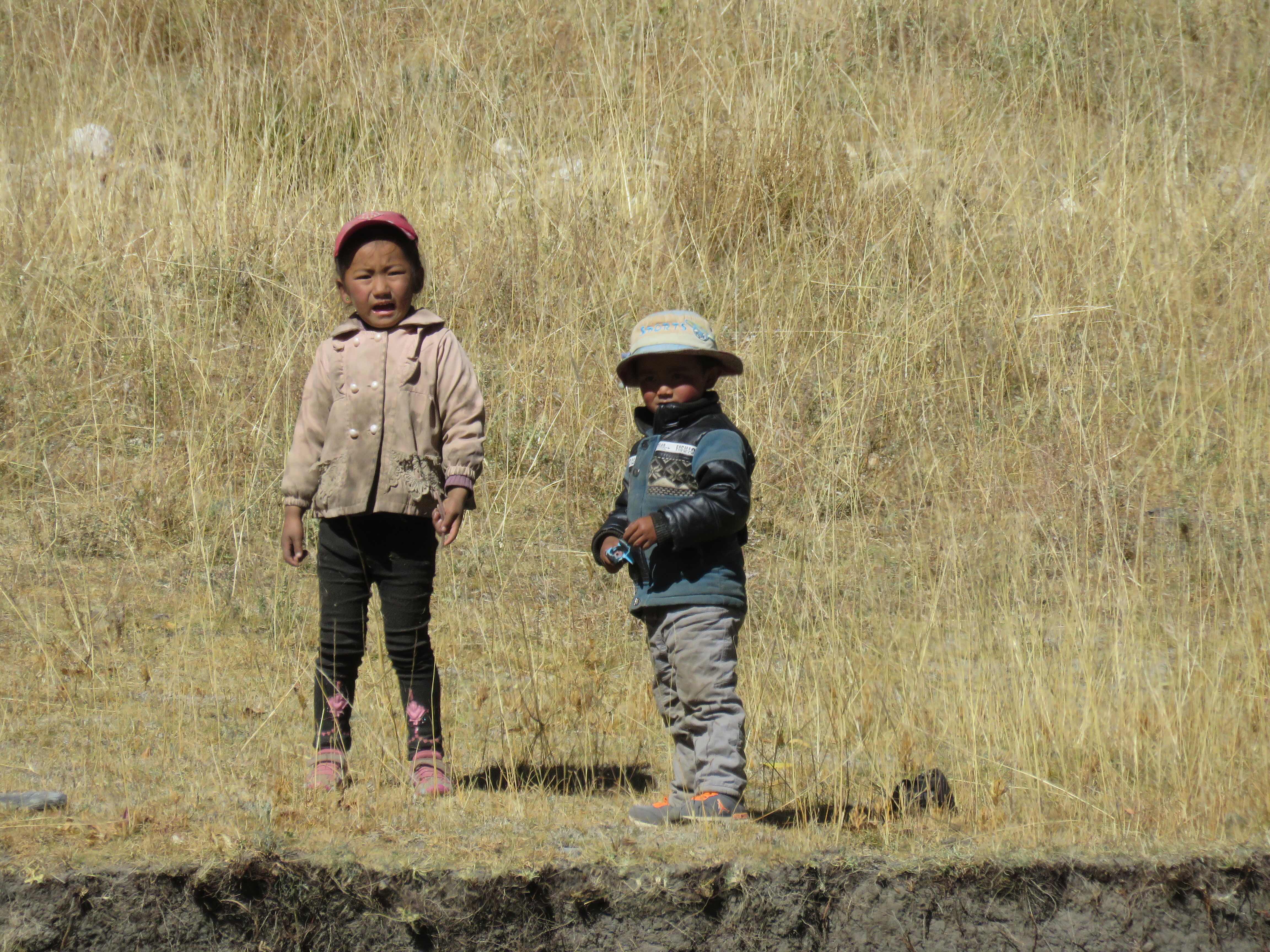
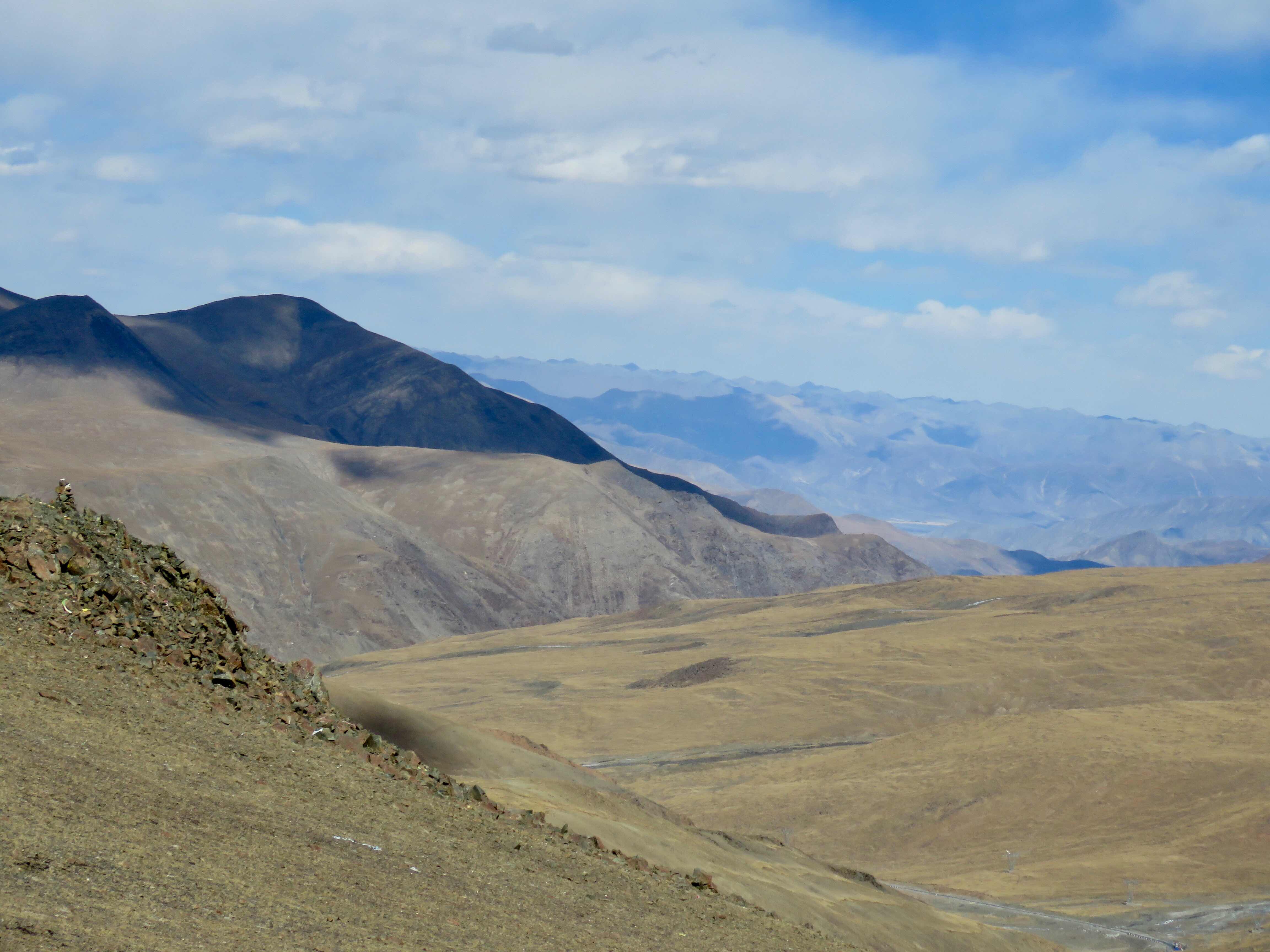
We left Shigatse on October 21st and headed to Xegar which would be our base for our visit to Everest.  Along the way we made our first stop and took a hike up to 15,030 feet which gave us a panoramic view over the tops of the treeless mountains of Tibet as we are above the tree line.  Along the way we pass through many small villages and lots of pastures full of hundreds of sheep, cows, and yaks being attended to by the shepherds.  A hard life.  Every once and awhile seemingly out in the middle of nowhere you pass through areas where there is all kinds of building going on, most of it empty all in an attempt to encourage movement from China.  Our lunch stop was a very picturesque area along a riverbank with yaks grazing across the way.  Two young children watched as we ate and all the leftovers were given to the local family.  I would think this was prearranged.  Driving further along up Lakota La Pass we stopped for our challenge of the day which was a hike to 17,121 feet for a possible glimpse of Everest.  Going up hill my lungs were on fire and the wind was absolutely howling. It was incredibly hard but I was determined. Many turned back.  Almost at the top there was a rather steep incline and I collapsed there and told Eric to go on. I really felt I was going to get blown off the mountain.  The wind eased and Kerrin and I heard those at the top with a flag and with her encouragement we decided to go for it.  Best decision ever because the sense of accomplishment I felt when I stood at that peak with Eric is something I will carry with me forever.  Also special to share that moment with Peter Hilary, one of the worlds great mountaineers.
We then drove to Xegar which is at 14,268 feet.  We checked into the Qomolagma Hotel which we had been repeatedly warned by our guides was at the bottom of the star list but was the best for our visit to Everest.  When Eric and I checked into our room we discovered it was the one in the hotel without any heat and was below zero.  Tried toughing it out but couldn’t do it. Fortunately we did get moved but won’t be on our return list but I know the next two days will more than make up for the discomfort. First time I’ve ever gone into a dining room dressed like I’m going out in the snow.


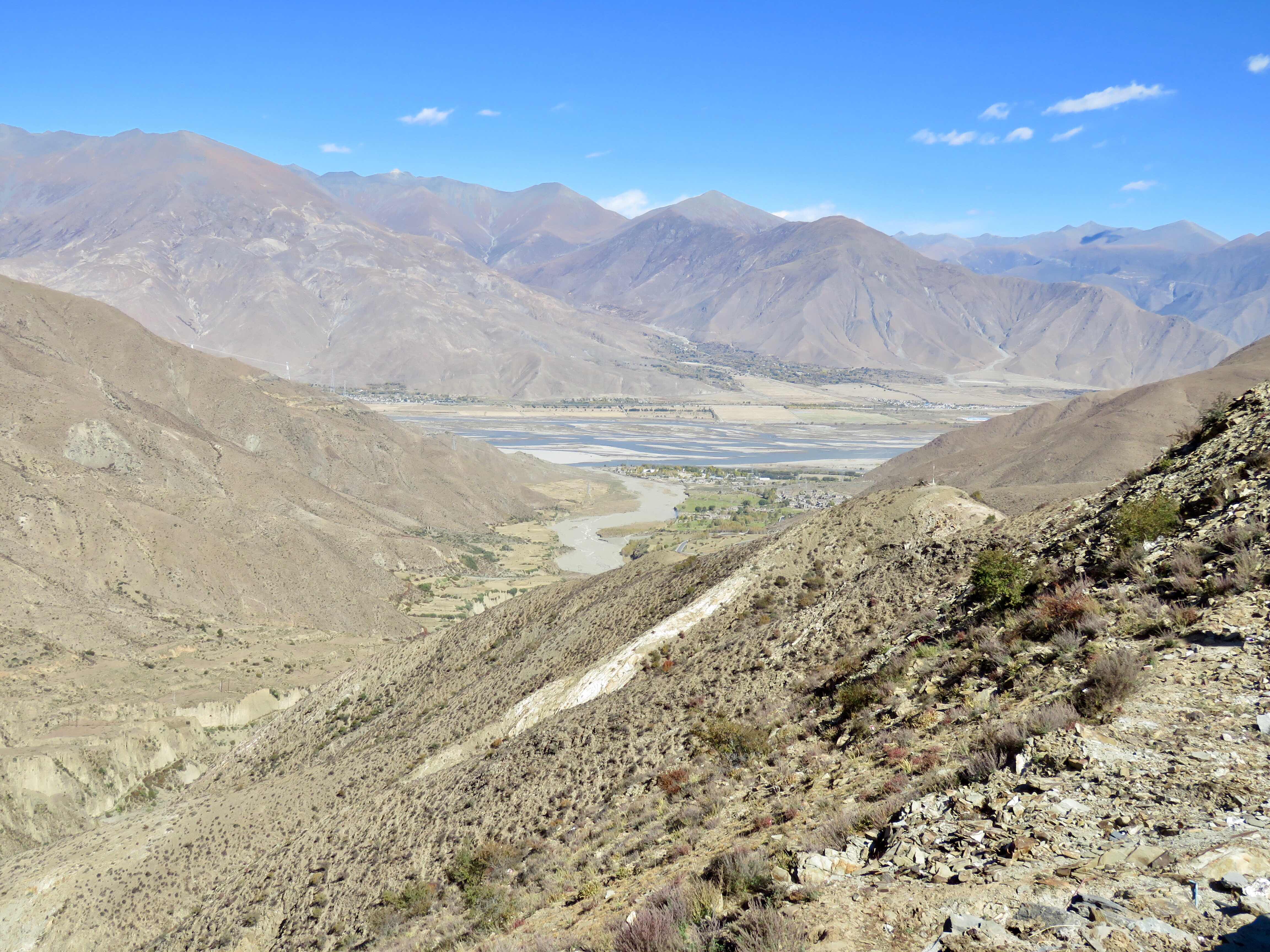
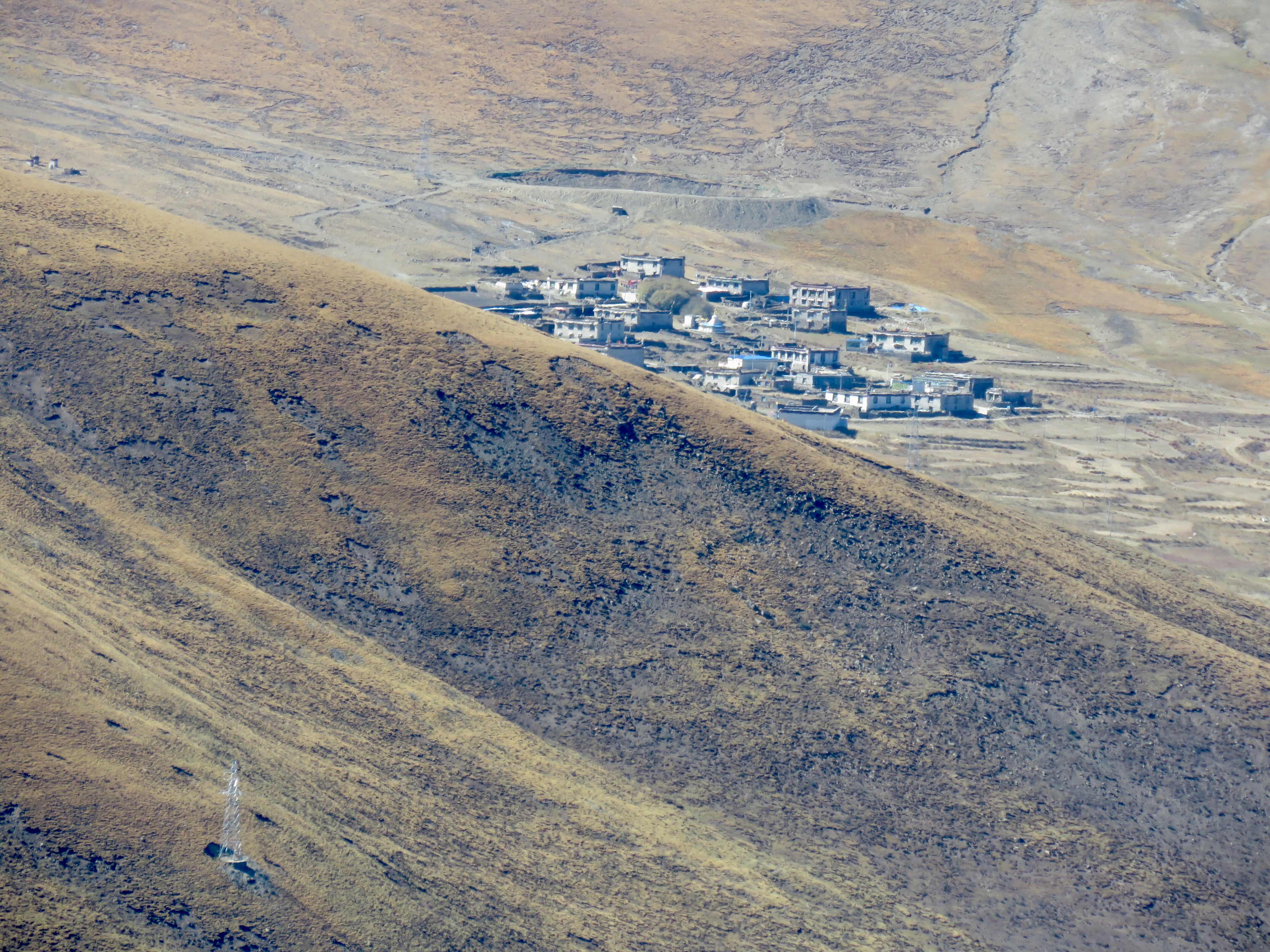
Villages nestled at the base of mountains 

Feeling like we were on top of the world 

We keep getting higher but this hike was easy compared to the next one

Life is good 

Judy bargaining for some yak wool

Herds of yak

We were watched over by local children while we ate lunch 

Interesting farm vehicles 

This lady is collecting yak dung

A boy and his cow

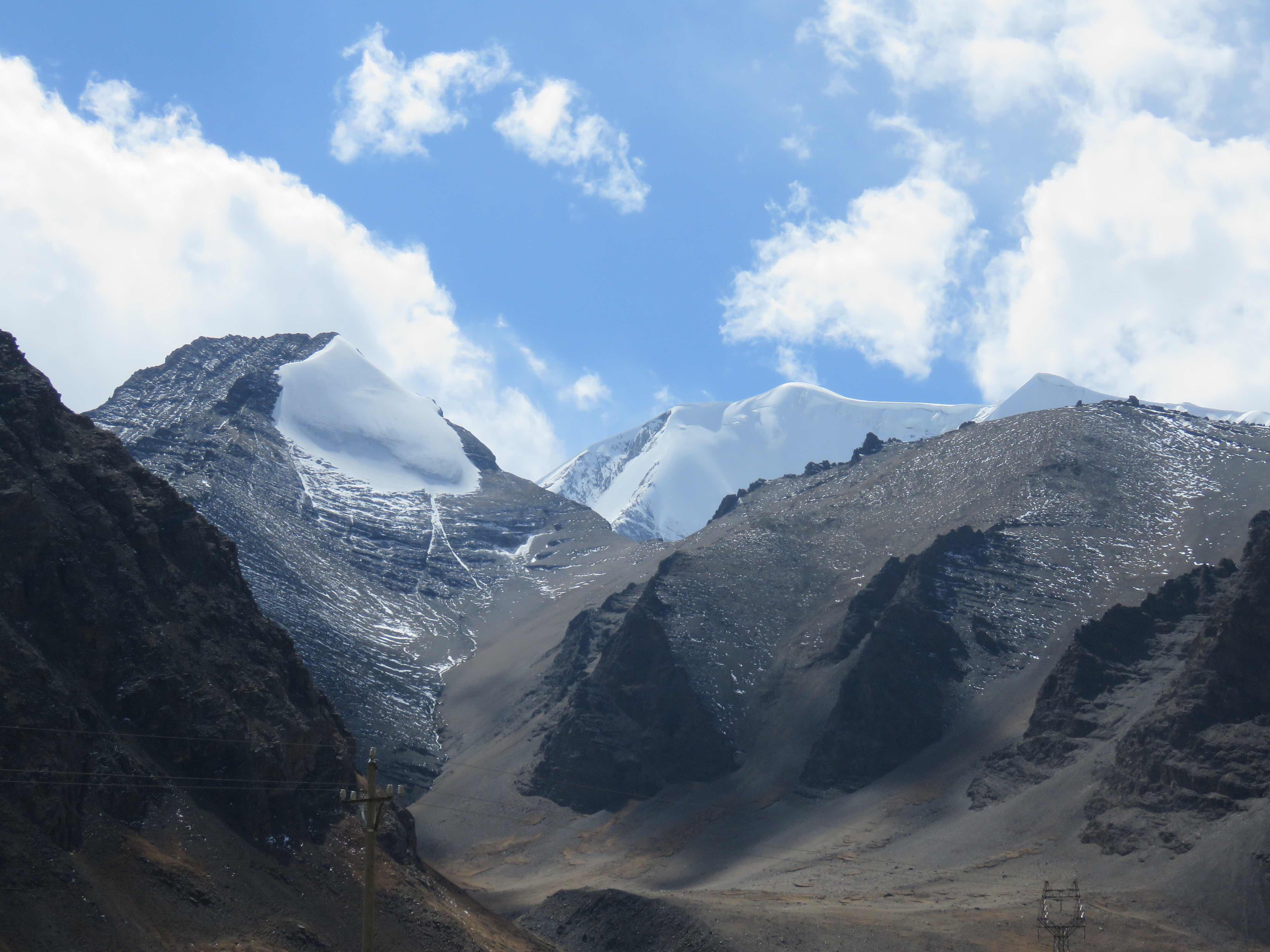
Sheep, ice and a snow peak of the Himalayas showing through 

Climbing up to 17,121 feet. The last bit was a real scramble 

It was tough but felt great to make it to the top

A little rest was in order after that exertion 

Looking down,  way way down

Eric and Peter making their way down from the peak in the background 

Tiny village along the way

A hotel that other than location would never get stayed at.  Owned by the Chinese government and suffice it to say they do not care about service in any way shape or form.


Shigatse

We started our day on October 19th walking through the old town of  Gyangze as the town started their day.  Butchers were cutting meat beside the road and farmers were milking their cows in their homes.  Walking this the narrow cobblestone streets we were greeted warmly with smiles and waves.  The people are all so friendly.  Even the simplest of homes are decorated with very ornate paintings on the outside and all the windows are framed in black to keep the bad spirits away as they have been for centuries.  The people here have held on to their superstitions for hundreds of years.  Cows were tethered outside front doors and the women were coming outside to taps to get water yet there were solar powered street lamps in places.  Piles of dung were lined up for winter fuel.  A marvellous array of sights.  We carried on to the Pelion Chode Monastery like so many others had been so horribly damaged during the revolution but luckily it’s center piece the main stupa was spared and it’s round guided roof glistens in the sunlight.  We climbed to the top and even took part in some stamping and dancing with the locals which was part of replacing some of the stone work on the stupa.  This monastery also had one of the oldest collections of old clay Buddha’s in the world. They were absolutely stunning.  Here the monks were enterprising and instead of forbidding photos they charged a fee and were doing very well.
We then travelled through the countryside to Tibet’s second largest city of Shigatse which is at 12,792 feet.  After settling into our hotel and a delicious lunch we visited the Tashilumpo Monastery which is the home of the Panchen Lama. It houses a massisive Buddha which is quite impressive as well as the gold burial stupa of the last Panchen Lama. Here are guide gave us a very interesting lesson on the traditional and still widely used method of sky burial for the Tibetan people.  After 49 days no mention or even picture of that person is ever used again.  At our get together Yam gave us a great talk on the history of Buddhism and how it had come from Hinduism and how the different sects had developed over time.  Confusing but very interesting..
We spent the day of October 20th exploring outside of Shigatse.  We visited a farming village which we walked around where a lot of the locals were out putting a fresh coat of white wash on there homes and repainting the black around the windows as next week is the Buddha festival and they want everything to look good.  Each home has a large courtyard and a pen where they bring their animals in at night.  We then drove up to a monastery at 14,700 feet to enjoy our lunch over looking the farmland below. Hard to imagine the work it took to build this monastery in this location  in 1429.  After lunch we visited a typical farming home.  That was certainly interesting. The typical home is two stories high and the bottom level is used to overnight some of the animals as well as to dry some of the meat and such.  There was some dried yak tongue hanging there which apparently they just slice off pieces like jerky.  Not the least bit appetizing.  Upstairs the big open room we first entered was very basic but beautifully painted. Apparently neighbors and families all get together and do this and they truly are artists.  The kitchen was hugh and was the main gathering room with its central dung stove.  Bedroom was communal and the quote bathroom was open air with four holes in the floor though a commode had been put over one hole for grannie.  In Tibet it is quite common for marriages to be polyandry which is for the woman to marry in the case here all the brothers so that the property stays in the family.  In this home the wife was married to three brothers and at this point they have three young children though it is not uncommon to have large families.  It will be unknown who the actual father is. Was a unique experience to see into this world.
In the late afternoon Eric and I strolled through the market of Shigatse just enjoying the sights and people.  Little children loved to say hello and one little girl insisted on giving us each an apple.  It was so sweet.  Friendliness abounds.  Women tapped me on the shoulder to say hello.  I know it is because I look different than them but certainly nice to witness such warmth in a foreign country from people who want nothing from you other than a smile in return.


Early morning milking as we walked through the village 

Cows tied outside many homes and dung drying on the window for the winter 

Every home was elaborately decorated with beautiful painting even in what appeared to be poor areas

Pelkor Chode Monastery 

The ever present prayer wheels and in this case only one dog. There were dozens of stray dogs in Tibet and they tend to hang around the monastery because they get fed there.

The great halls always have so many things hanging from the ceiling.  They are all permeated with incense and I do wonder if they ever get cleaned 
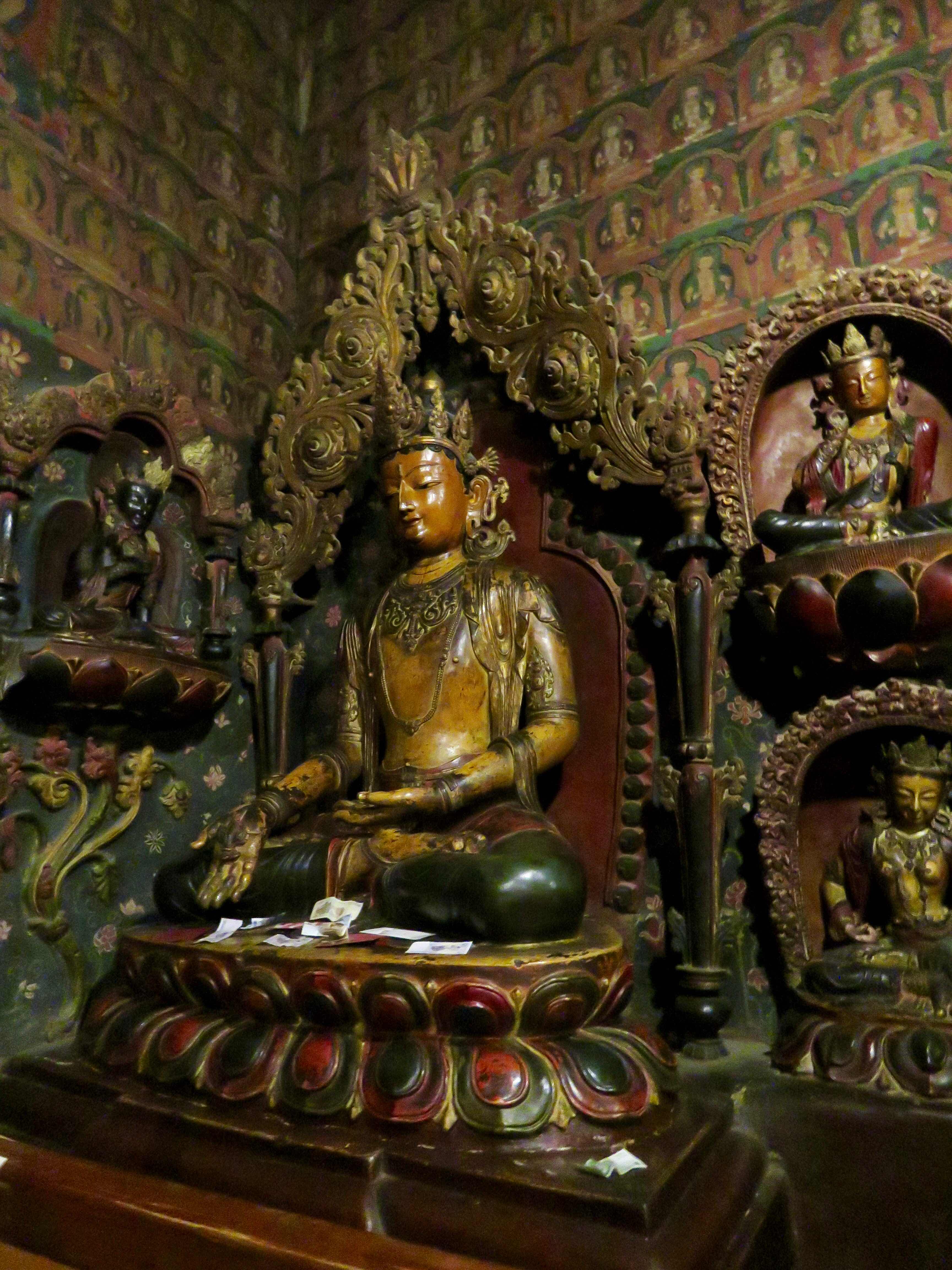
These beautiful clay Buddha coated with shellac date from the 15th century and I think were the most impressive statues we saw.

The monastery nestled into the hills

This is a barley mill we stopped at along the way. Powered by water still how they are doing their grinding today.

One of the many bathrooms we had the pleasure of using. Never again will I take western washrooms for granted.

Tashilunpo Monastery

This lady asked me to take her picture so how could I not

I do not think he could have fit another thing on this load
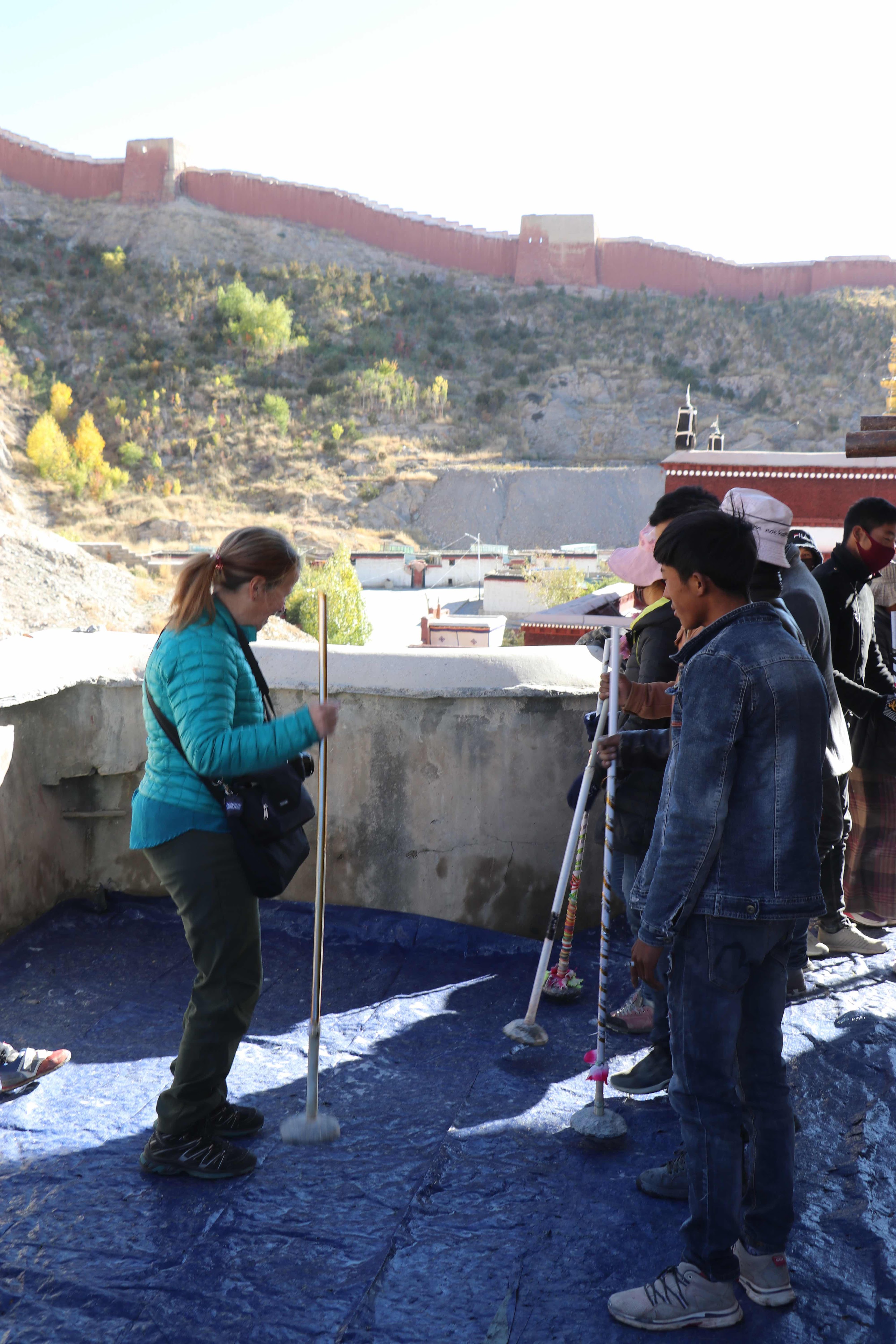


Helping the locals stamp rocks at the monastery.  Chanting was involved and it was fun

Dry barren land in places

Large herds in the middle of no where

This gentleman was adjusting his prayer flags as the next week was a special Buddhist celebration and your home had to look good 

The Tibetans put decorations on their animals to keep them happy

Loved this homes yard with the family vehicle cow and childs toy all together 

Some of us carry back packs and others milk

Grandma and little one

Monks just hanging out

Yaks often blocked traffic on the roads

The out buildings of the farm house we visited 

The main room of the home.  The hole in the floor is for ventilation.  All the painting is hand done and quite beautiful 

The kitchen with the dung stove in the middle for heat and cooking.  Seating all round for the extended family. The whole house was very dusty as it would be very hard to keep it any other way

The open air washroom
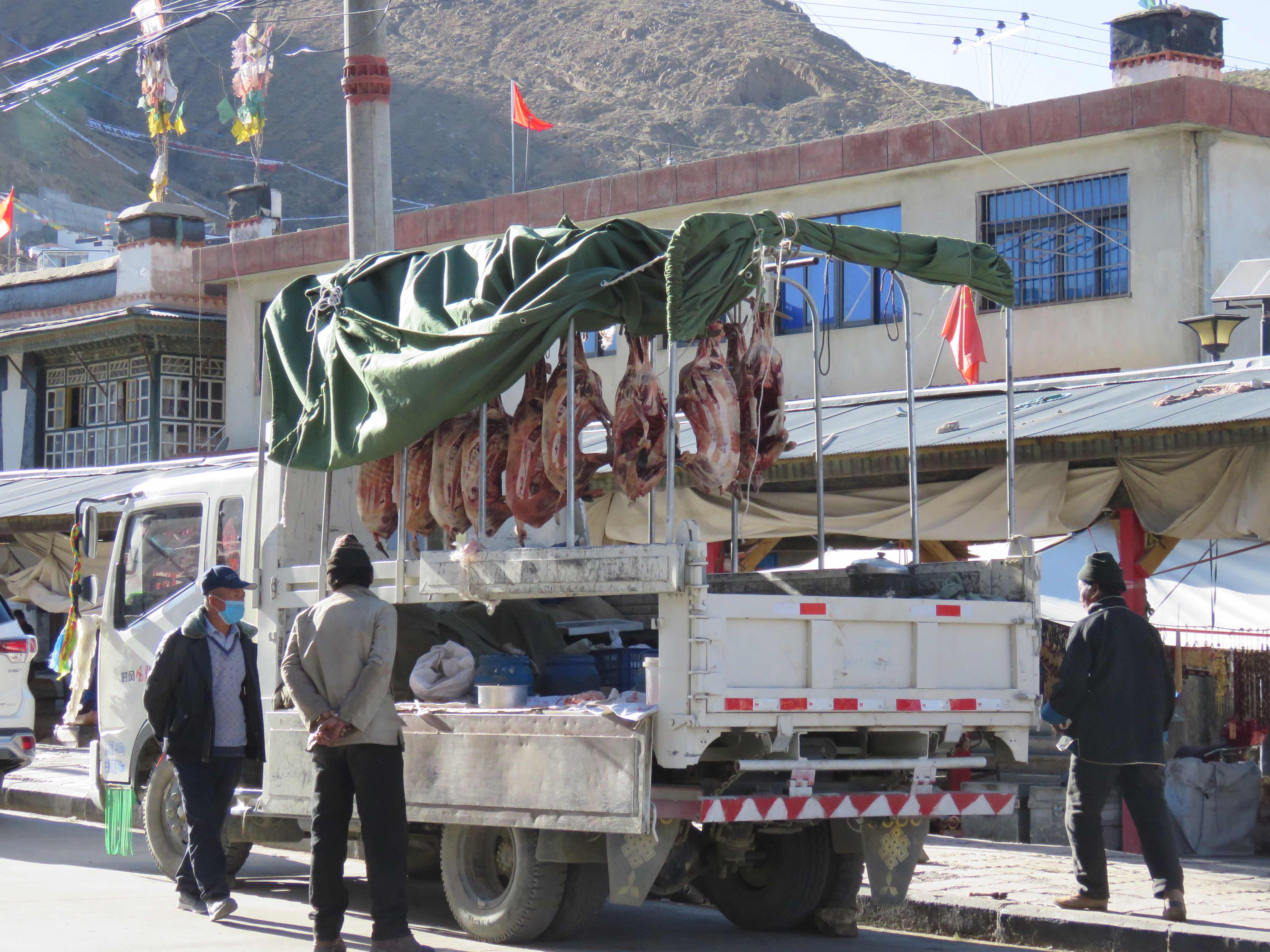
A travelling meat market

Butter tea anyone?

Travel to Gyangze

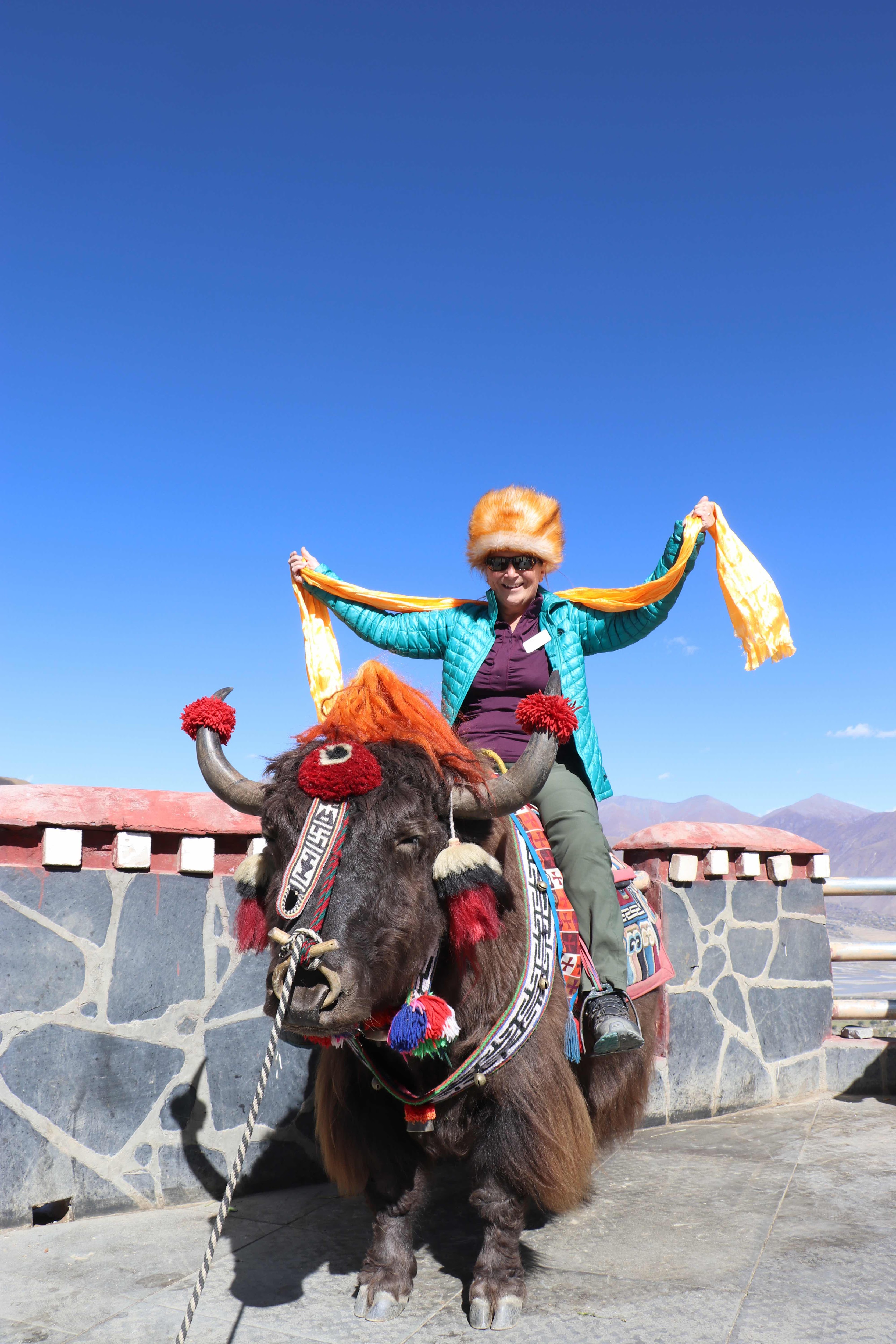
Today October 18th we bid Lhasa farewell to go and explore Tibet. Hopefully acclimatized we were ready to climb to new heights.  The rest of our journey is to take place in cars with three people and a driver in each so will be different. For today Eric and I were with Yam so were very lucky as we got a lot of extra information plus he spotted some native animals that the others unfortunately did not see.  We started our drive along the Tsangpo River which is surrounded by farmland on both sides.  Here not only do the drivers have watch for other cars but also for cows and yaks which wander at will onto the roads.  The shepherds herd them on foot with slingshots.  They obviously get to be good shots.  We then started a magnificent hairpin turn drive up to 15,7000 feet.  Part way up at a lookout where we stopped to take pictures enterprising locals had set up picture opportunities with yak and with the local Tibetan mastiff.  When I saw a fellow with a Tibetan mastiff on the road before reaching this site I first thought it was a lion.  The pictures were too good of an opportunity to pass up so we did partake along with some wonderful ones of the valley below.  We then continued up to the top of the pass where we were treated to the most spectacular site of the sparkling turquoise waters of Lake Yandrok surrounded by are peaks dotted with the occasional small village and the looking down to the far end some spectacular snow covered peaks rising into the clear blue sky.  It simply took your breath away.
We descended down the pass to the lake shore where the advance crew had set up a wonderful lunch right beside the lake looking out at the peaks.  Anything would taste good here.  After lunch it was up up and away until we stopped for a walk to view a hanging glacier. Thick walls of ice hanging off the side of a mountain. Spectacular.  We reached a height of 16,432 feet before starting our descent through the dry farmlands of the Nyang Valley.  We stopped along the way to see the wild blue sheep and the mountain deer though they are so well camouflaged that one needs a keen eye.  The farmland was so dry but there were hundreds of sheep mixed with cows and yaks.  We saw several farmers picking up dung by hand which they lay out on their fences to dry and use for fuel.  
We arrived in Guangzhou which is the third largest city in Tibet and will be our home for the night at 12,956feet.  The hotel is definitely more of a local Tibetan style but that is why we are here.


We really noticed that the only trees were those that were planted as we were above the tree line but the barren hills had a beauty of their own. Hard to capture the colours on film

I don’t think I will take up yak riding. They are very wide and I know it would be hard to stand up if you stayed on one for very long

I have to say that these Tibetan mastiffs were pretty darn cute but darn huge

Very few farmers in Tibet use machinery.  Hard way to get by

River in the valley still has some water from the monsoon season in August 

Very mountainous country. Reread Seven Years in Tibet on my way here and it really made me appreciate his trek once I saw the landscape 

The colour of Lake Yandrok was incredible. The lake is glacier fed and many kilometres long

Our first look at a snow covered peak of one of the mountains of the Himalayas 

Eric enjoying the view from the top of the pass

Little villages were nestled all through the countryside 

Land flattened out in places and wherever possible was planted with grains

These mountain deer blended so well into the rocks that it took us a bit to spot them even when the guide first pointed them out. 


Glaciers hanging onto the sides of thee mountain 

These blue sheep are wild and protected in Tibet

We hiked up to the glacier in the distance.  The air was certainly fresh.  The tent like structures in the foreground are made of prayer flags and can be seen everywhere 

This river cut through the very dry landscape and 5e banks were used for planting and for grazing the animals.

The old fortress in Gyangze was visible from our hotel and though it is in very poor repair and thus no one is allowed to visit it looked quite spectacular at night. Amazing what a little light can do