Saturday, 11 January 2020

Antarctica, Penguin Island

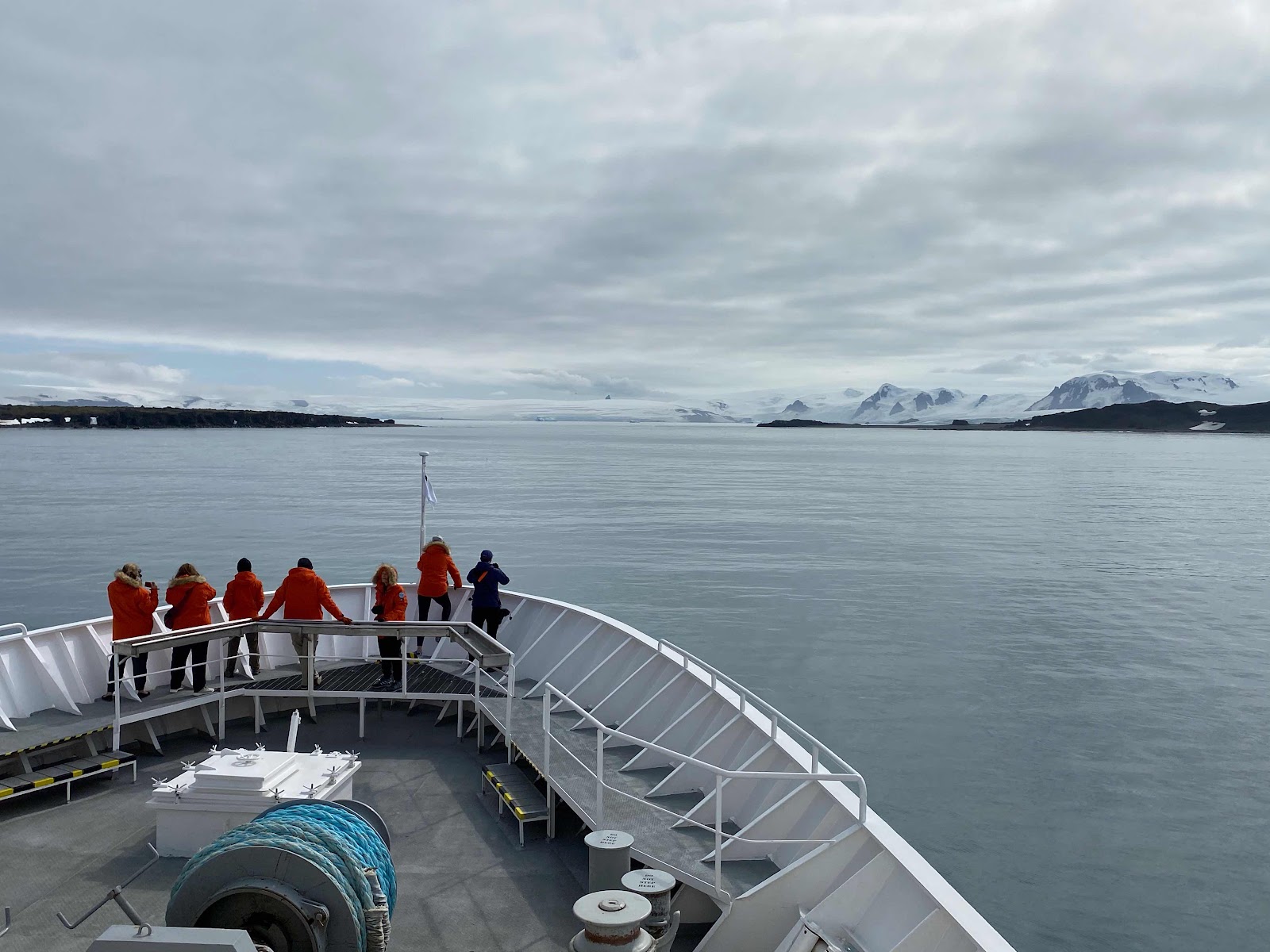
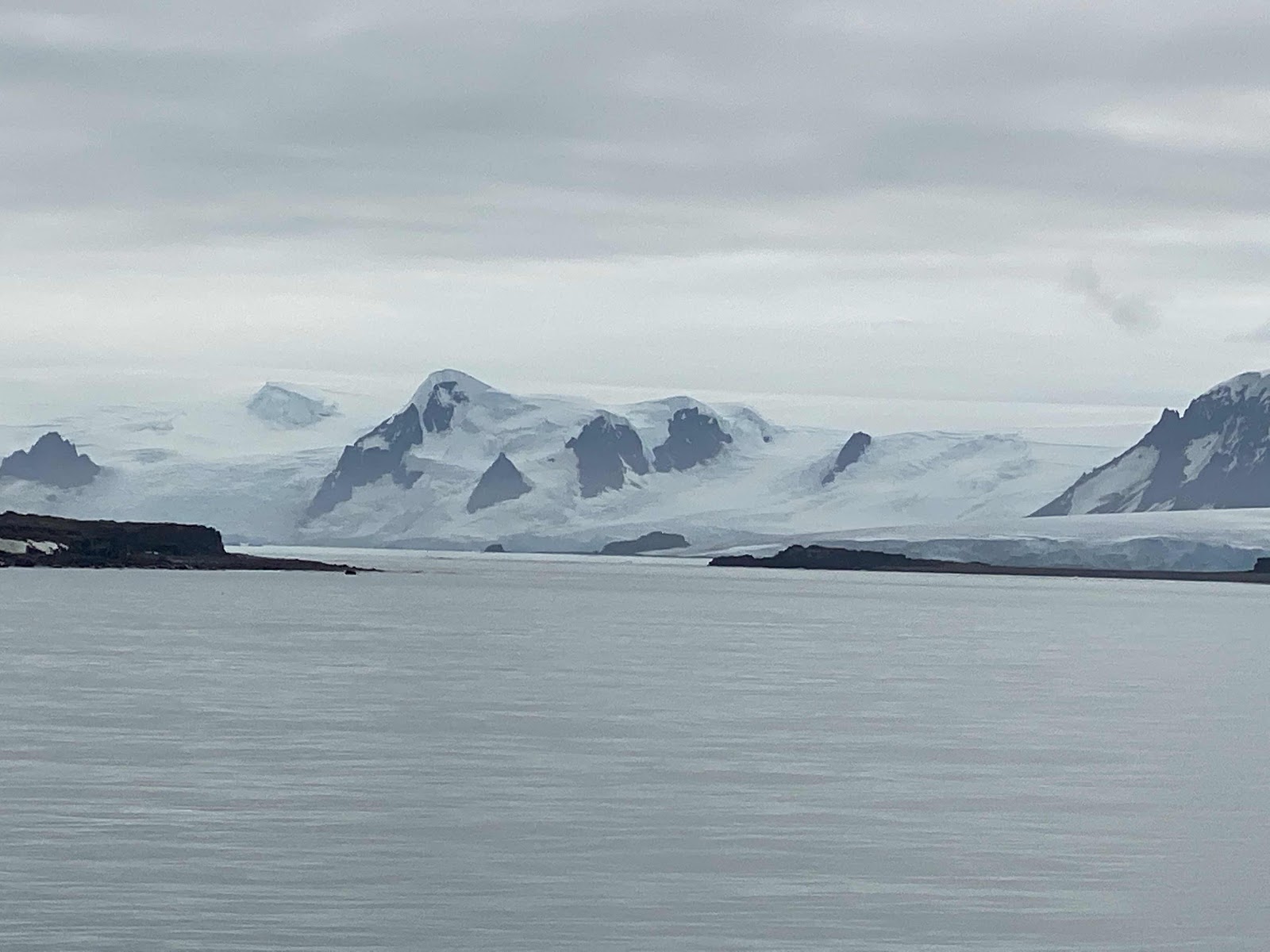
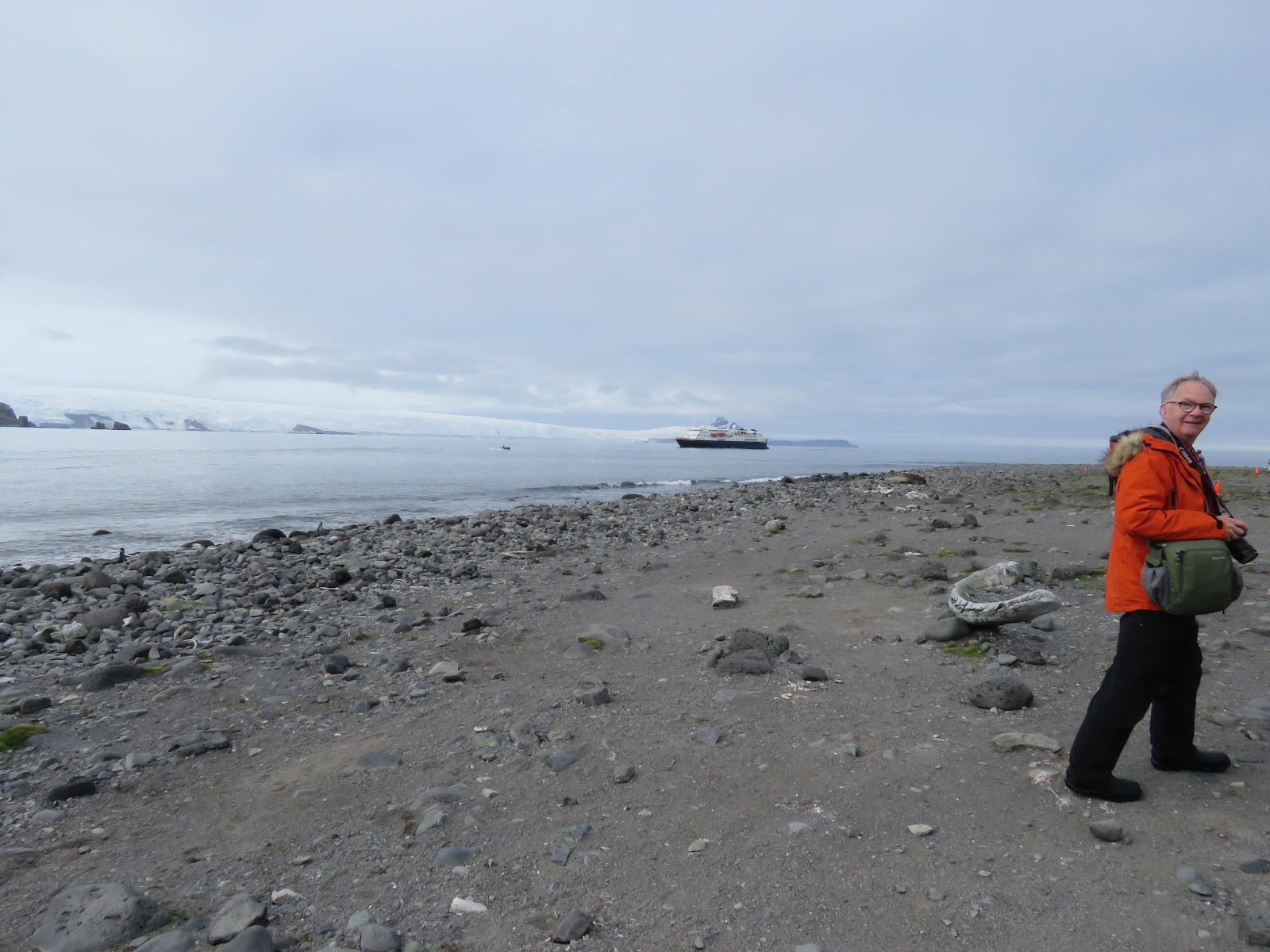
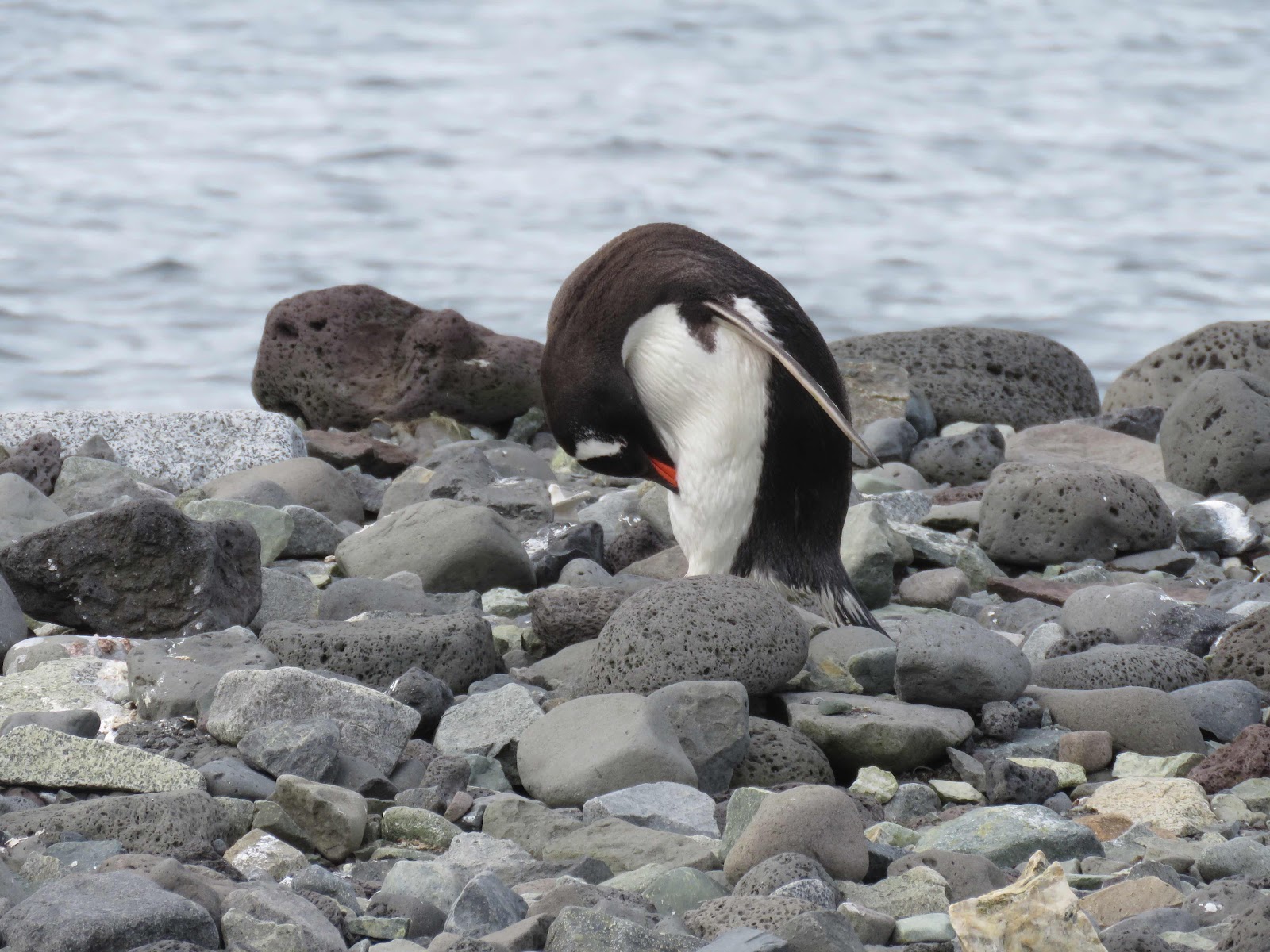
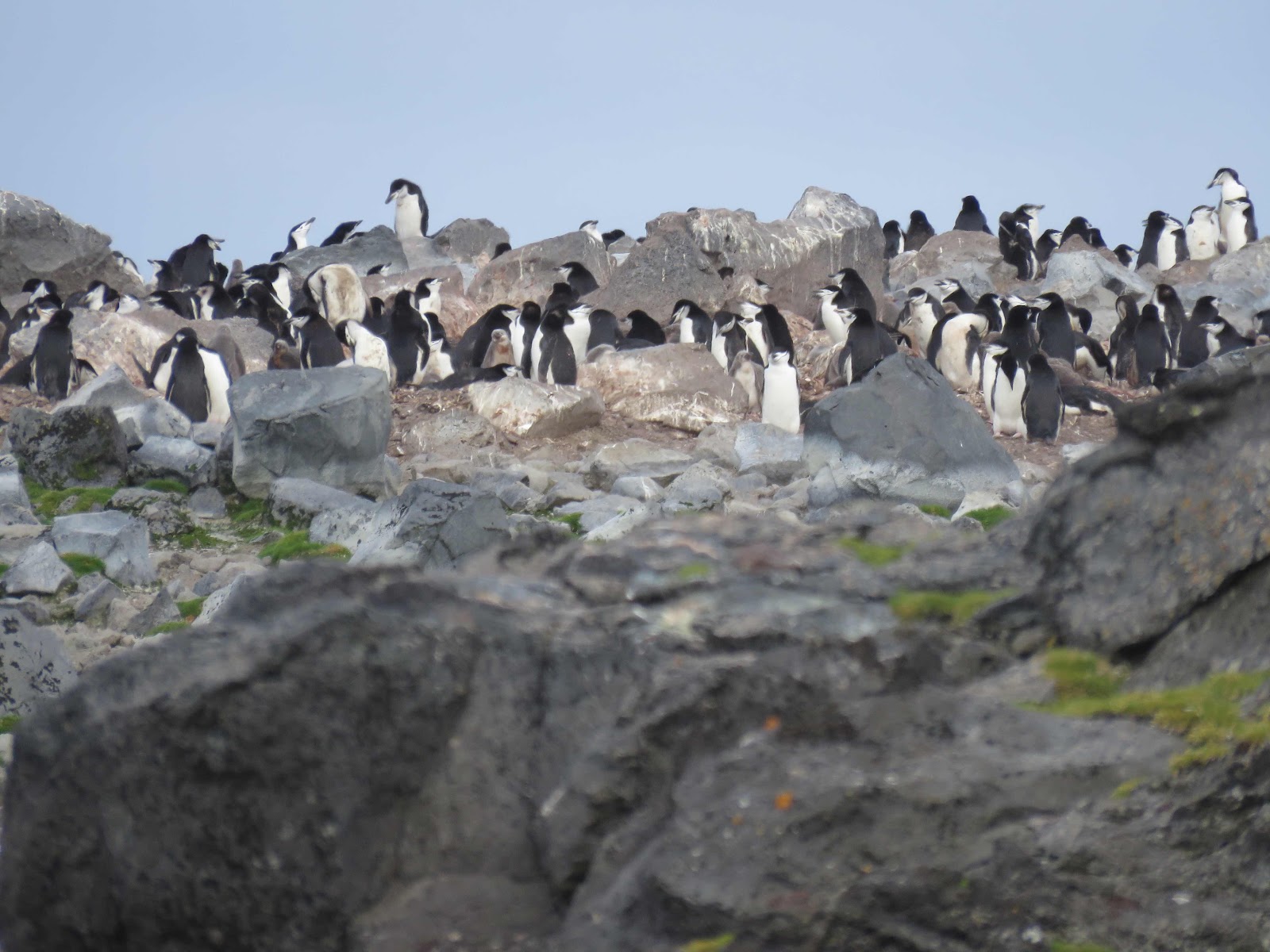
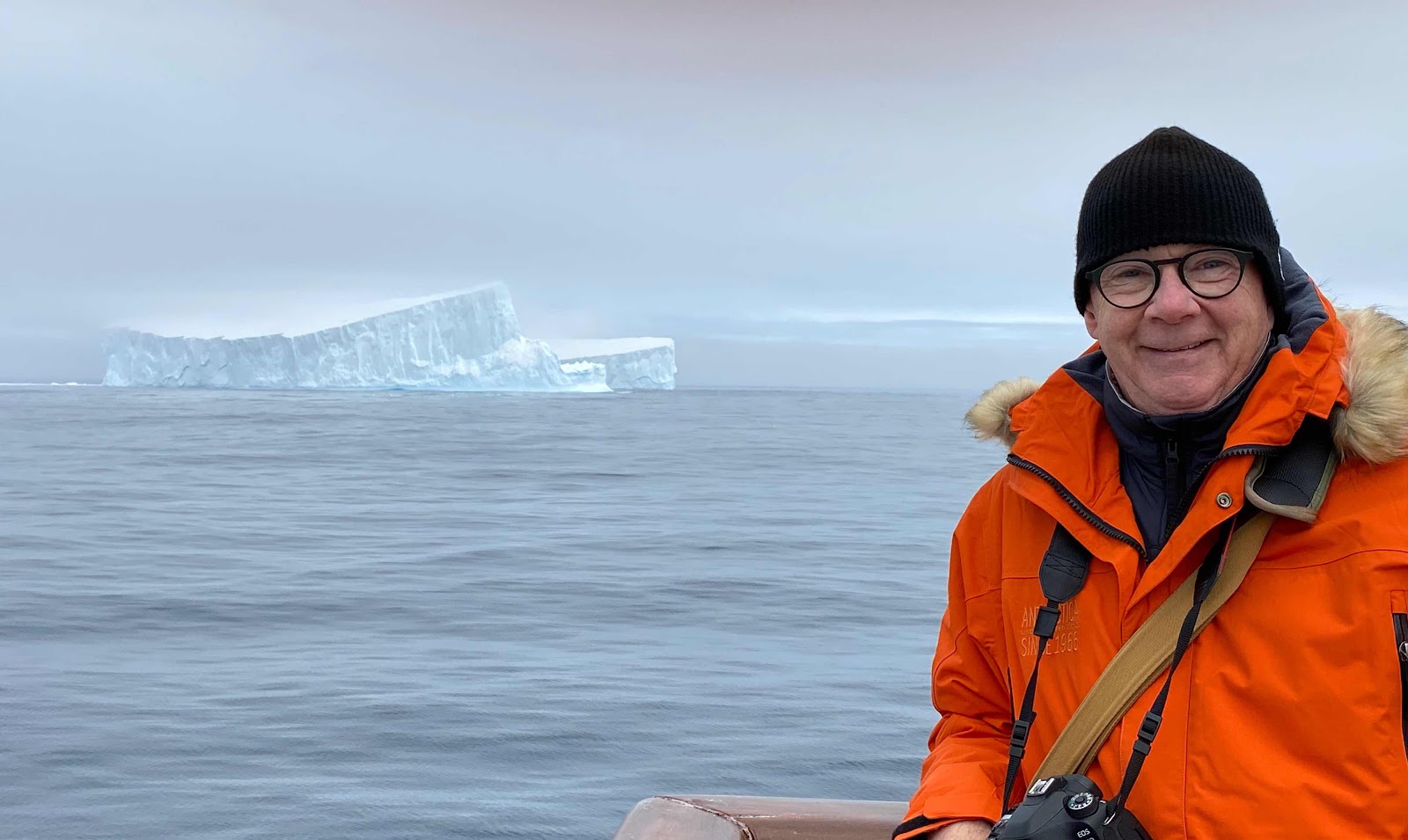
At last we saw land and it was announced that we would be going ashore on our first excursion to Penguin Island which is a dormant volcano which last erupted 300 years ago.  It is home to a large chinstrap penguin colony and that was the exciting reason for our visit as well as it would be the first place we would touch ground in Antarctica.  The penguins only come ashore for two months a year in the summer to breed and spend the rest of the year out in the ocean so this is definitely the time to come and see them. As we approached shore in the zodiacs we could see multitudes of penguins jumping through the water just like dolphins and more were waiting on shore to greet us.  We kept the required distance but as they have not read the manual many of them came hopping by at very close range making for wonderful photo opportunities as well as giving us a really good opportunity to see them (and smell them) at arms length.  Mixed amongst the hundreds of penguins were a few gigantic elephant seals who really paid us no heed at all.  We got the time to just stand there and absorb our surroundings and let it sink in where we actually were.  Never in my wildest dreams when I was studying geography so many years ago in high school did I ever dream that I would have the opportunity to visit all the continents in this amazing world of ours yet here we were standing an island of our seventh continent with more landings to come.  How truly blessed we are!


Land was a very welcome sight after crossing the Drake Passage

The mix of ice and exposed rock is quite dramatic 

First steps in Antarctica 

Whale bones of all ages are scattered on the beach. Nothing is touched or removed from this pristine area

Being watched over by a brown skua that hang around to try and snatch the penguin eggs.  The low miss like plant in the background is one of only two plants that grow in Antarctica 

This young elephant seal eyed us but other than that was not too concerned 

So entertaining to watch the penguins waddle and hop along

When you have an itch you have to scratch

The chinstraps are aptly named for the black strap under their chin

Penguins colonize on the areas where the snow has melted as they need the rocks to lay their eggs

Elephant seals in the background and equines live harmoniously as penguins are not on their diet 

A stray Gentoo penguin mixed amongst the chinstraps

An Antarctica sunset at 1030 in the evening 


The Drake Passage

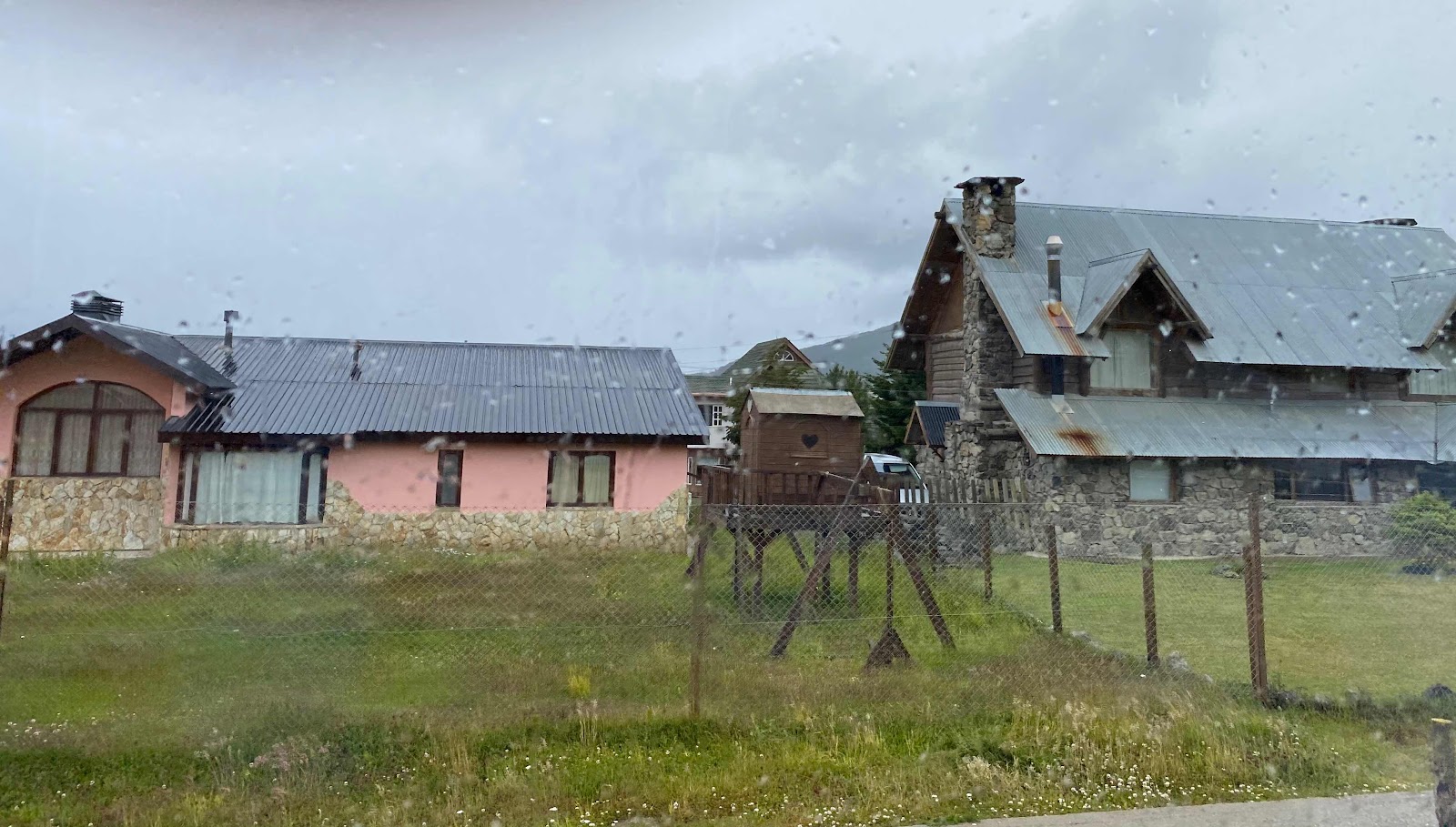
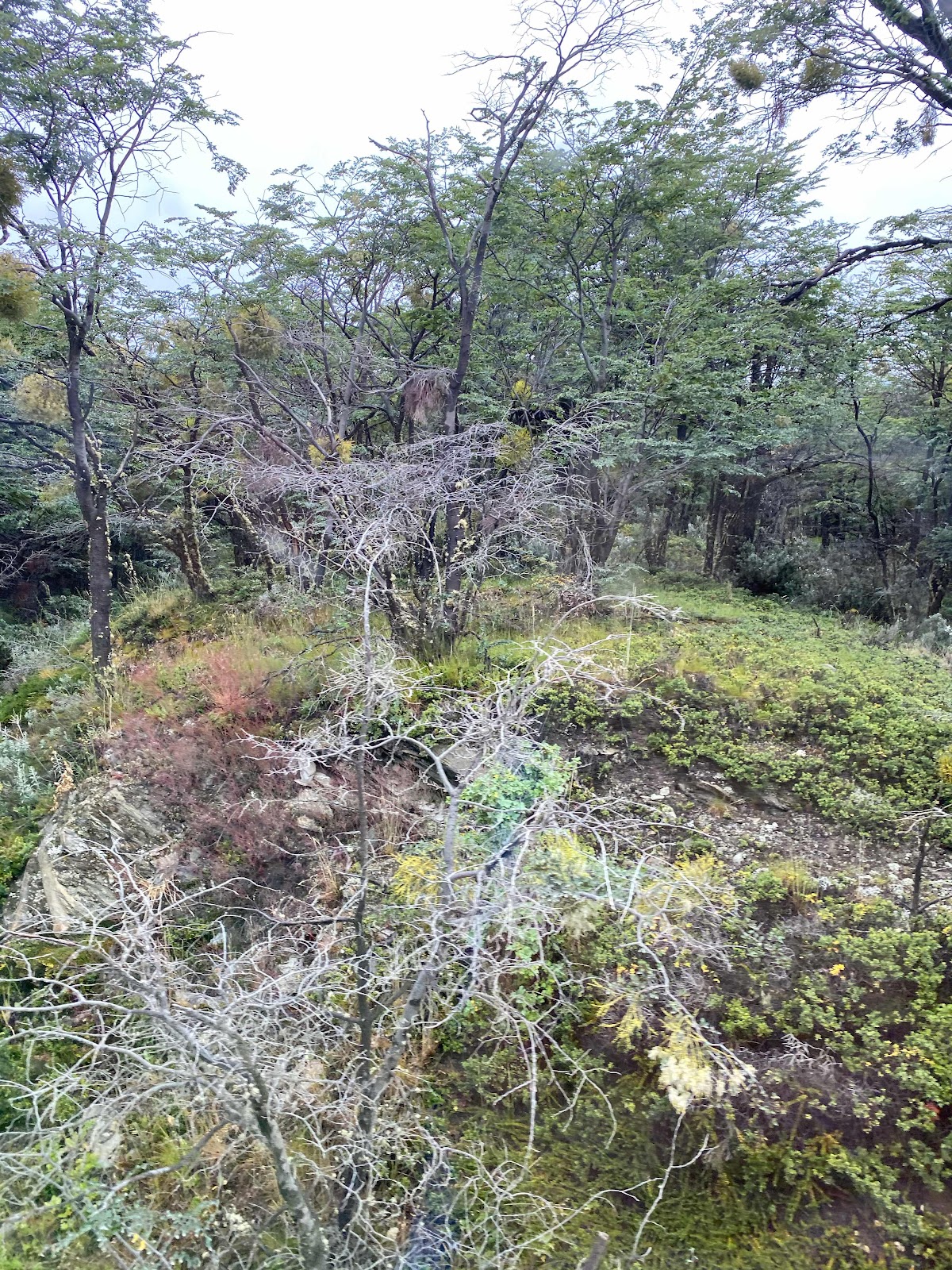
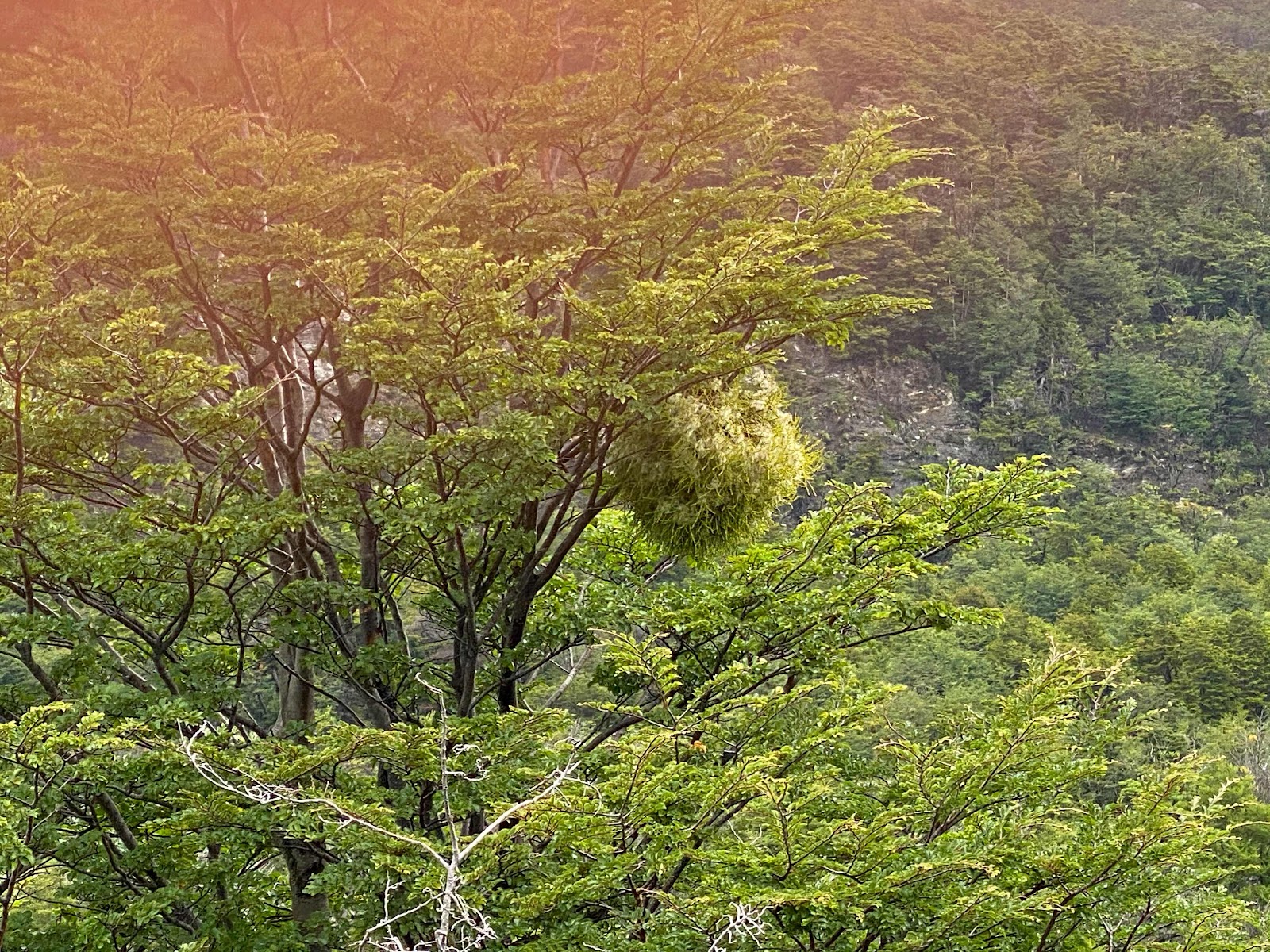
Wednesday, January 8th we truly set off on the start of the adventure we were looking forward to.  We left Buenos Aires early in the morning for a charter flight to Ushuaia, Argentina which is the most southern most city in the world and where we embark on the ship to Antarctica.  Upon arrival in Ushuaia we drove through the town where 75% of the population is less than 25 years old due to an incentive program by the government to move here which has brought many young families.  We then went on a scenic drive through the most southern forest where the trees though being old are not very big due to the climate which only ranges from 0 to 10 degrees all year round.  Boarding a catamaran we took a sail on the Beagle Channel to see some of the surrounding area and bird life.  Unfortunately the weather was not too cooperative so visibility was not the best.  At 5 PM came the moment we were waiting for as we boarded the National Geographic Explorer for our trip south.  Our first hurdle would be to cross the Drake Passage which is known as one of the most unprotected bodies of water in the world and is referred to as the Drake Lake or the Drake Shake.  Hoping for the Drake Lake we were informed at our briefing before we left the dock that we were in for more of a Drake Shake for the first night which definitely influenced by dinner choices.  An hour out we had to return to port for a medical evacuation as the hotel manager had a medical crisis and had to be transferred to an ICU.  Fortunately he recovered well.  Our first night at sea was very rolly and many passengers were suffering but fortunately Eric and I did have any ill effects though one did have to be careful all day Thursday when walking around the ship as she continued to rock and roll.  Friday the 10th the seas are much calmer and the level of excitement high as we are due to reach the South Shetland Islands of Antarctica after lunch. 


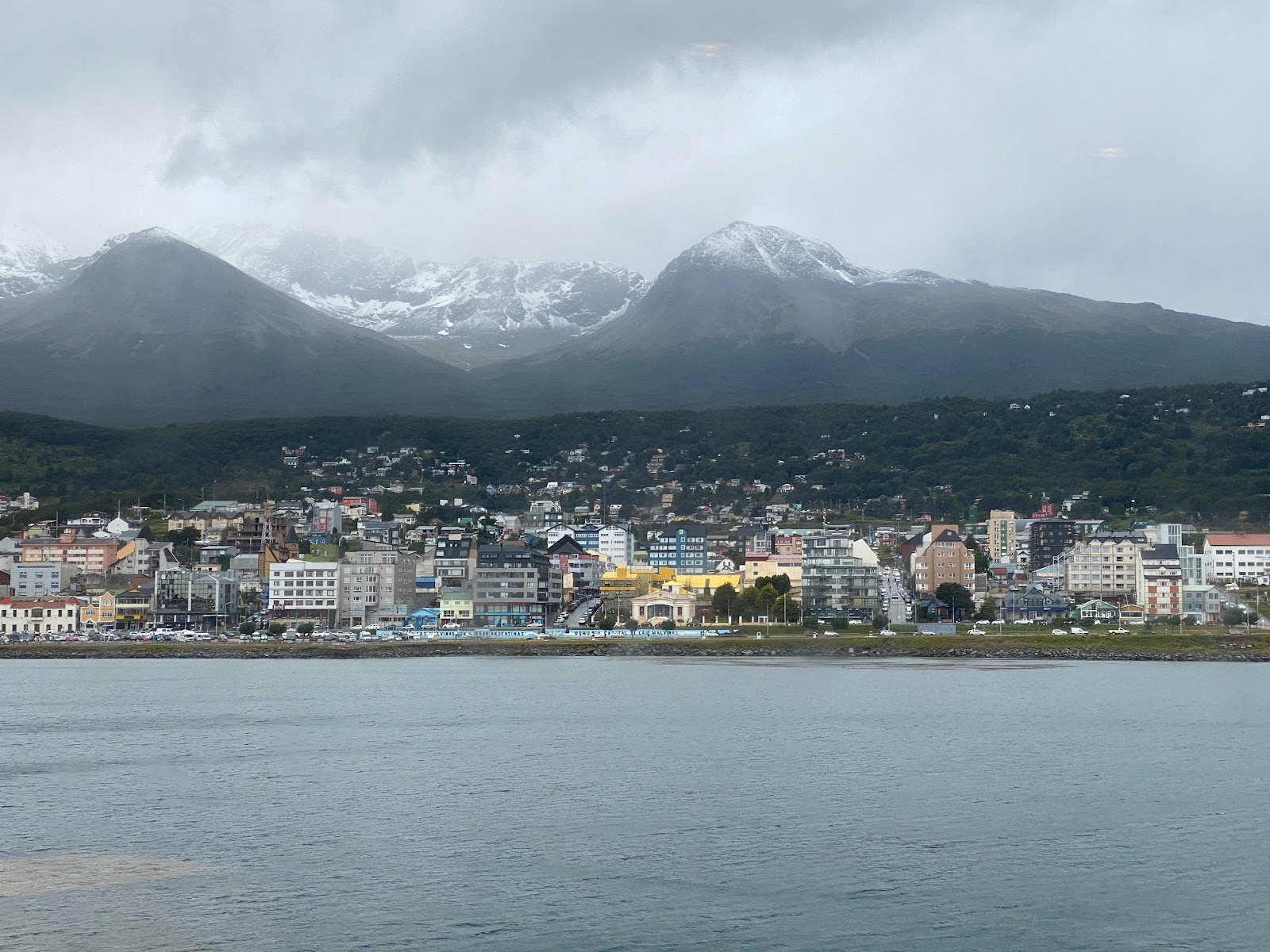
A rainy look at Ushuaia 

The southern most forest on the planet

Peat bogs are interspersed amongst the trees in the forest

The trees were a mix of evergreen and deciduous with only two different varieties 

They refer to this as the end of the trans American highway 

Looking up Beagle Channel

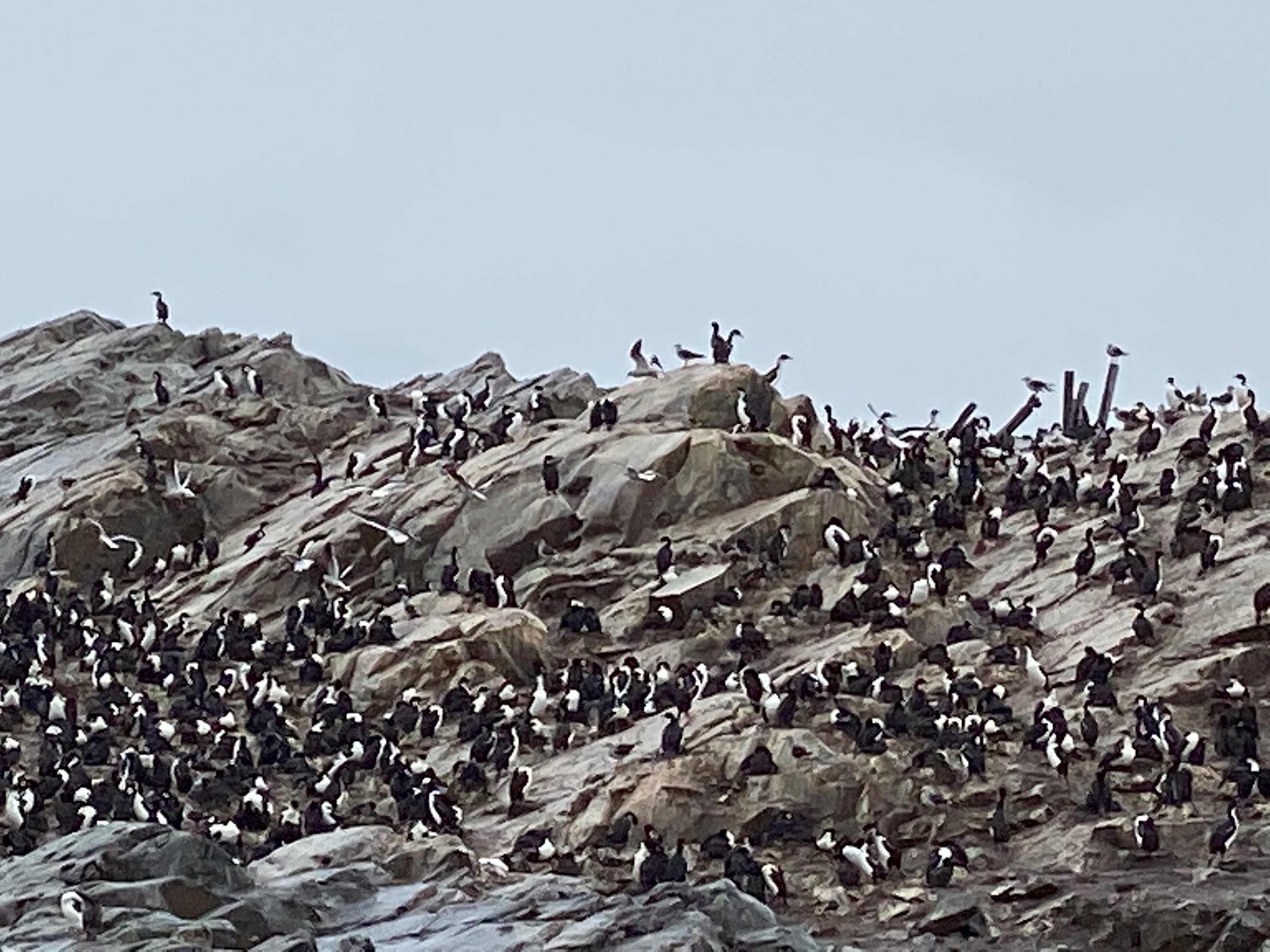
Hundreds of cormorants covered the rocks and many people were sure they were seeing their first penguins and most did not have the heart to correct them

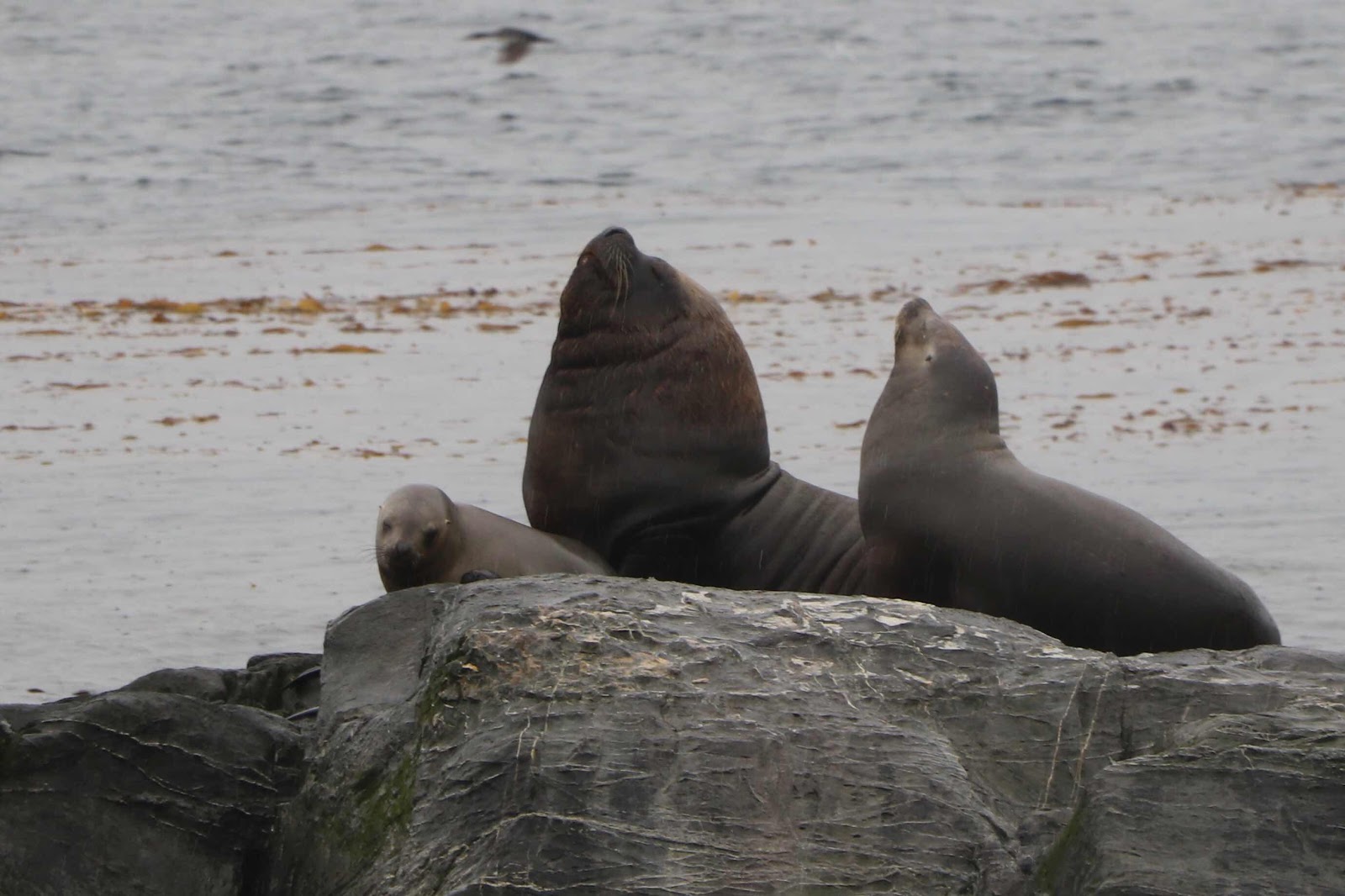
Sea lions greeting us on our way by

Saying farewell to Ushuaia as we get ready to leave the harbour 

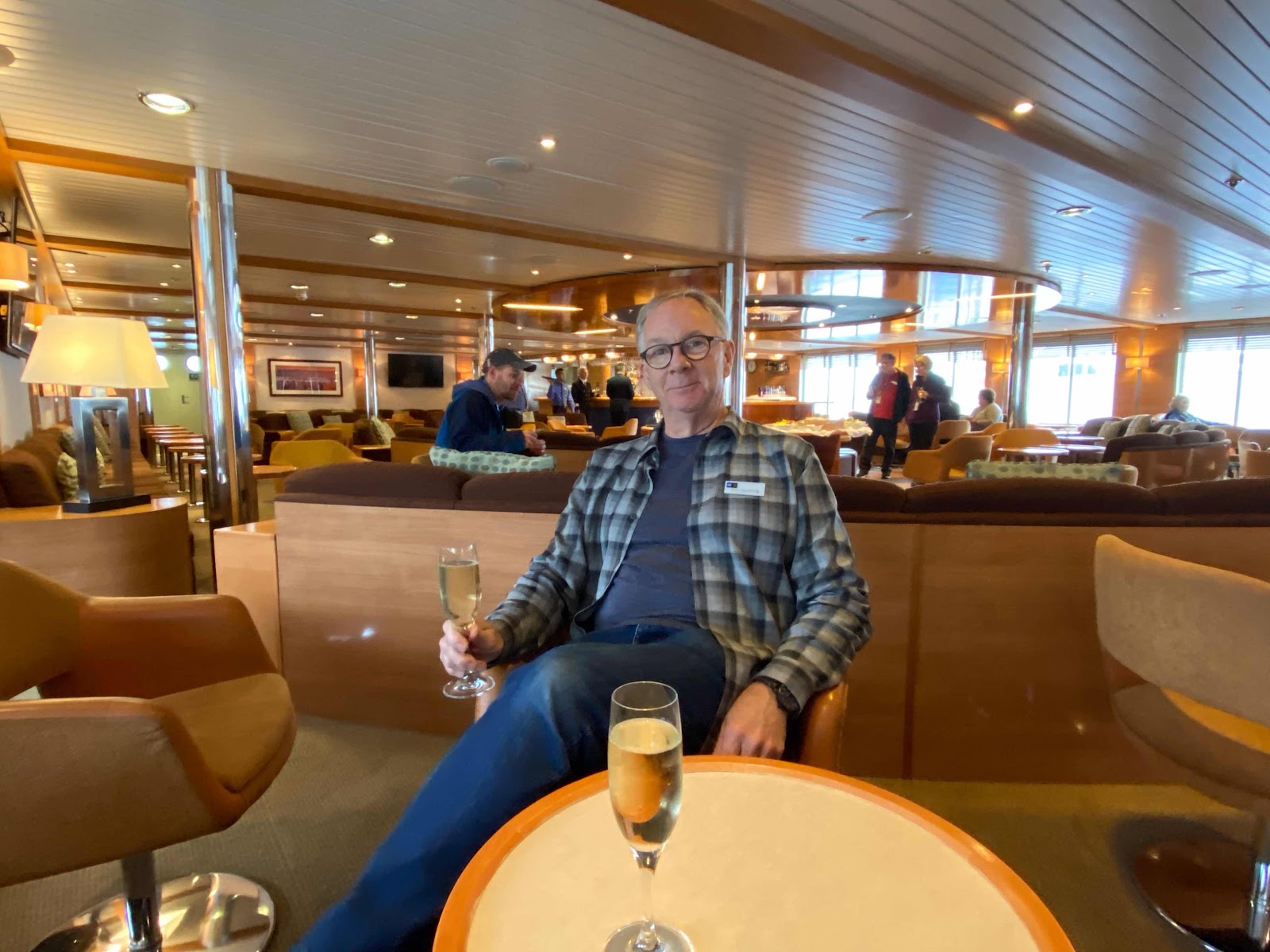
Eric enjoying a champagne as we sail away to Antarctica 

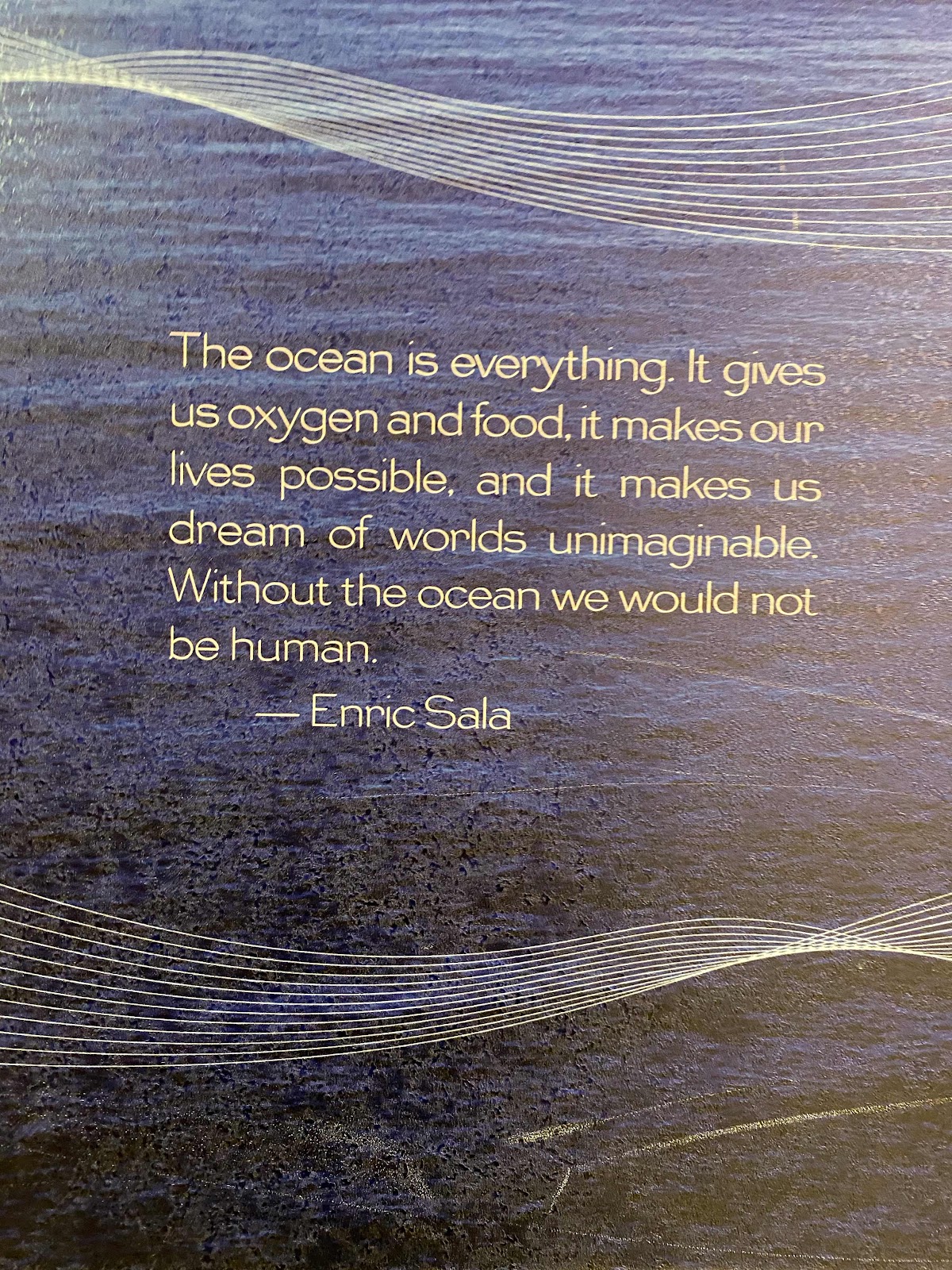
Lovely quote

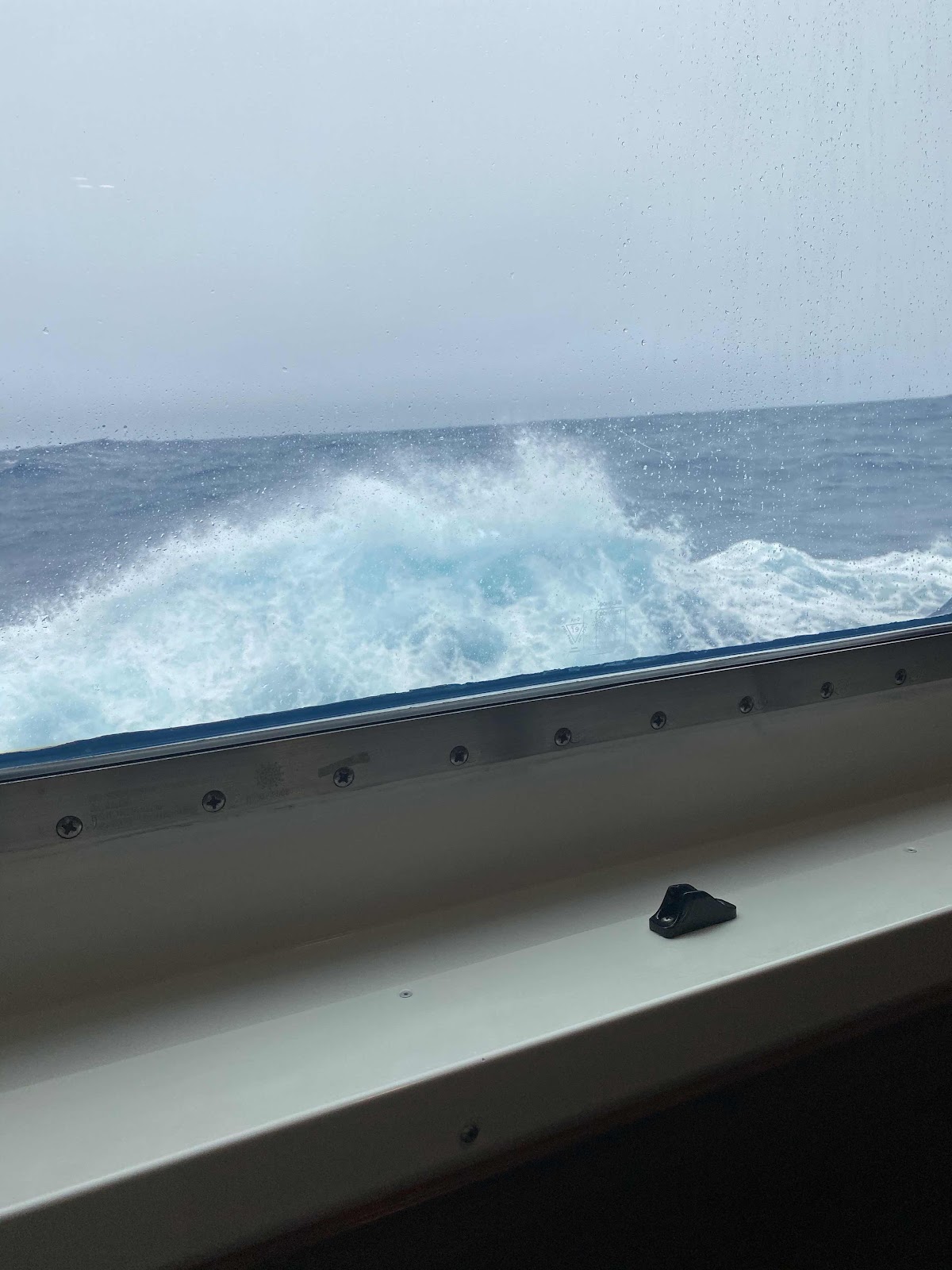
These waves were at  our window on the second floor up

Many were practicing their photography skills on the petrols. We were kept busy with many interesting lectures 

Petrols followed the ship in large numbers

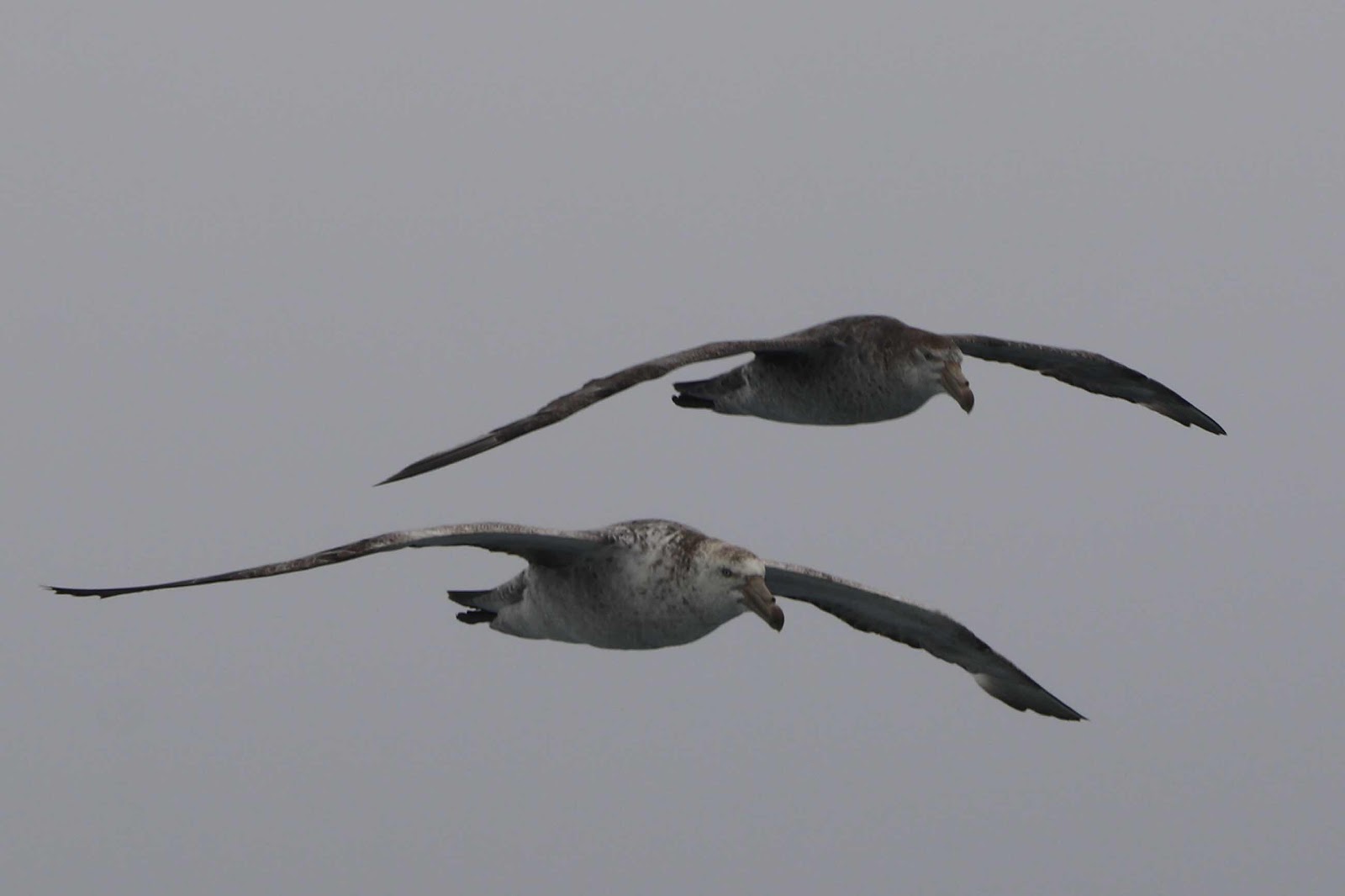
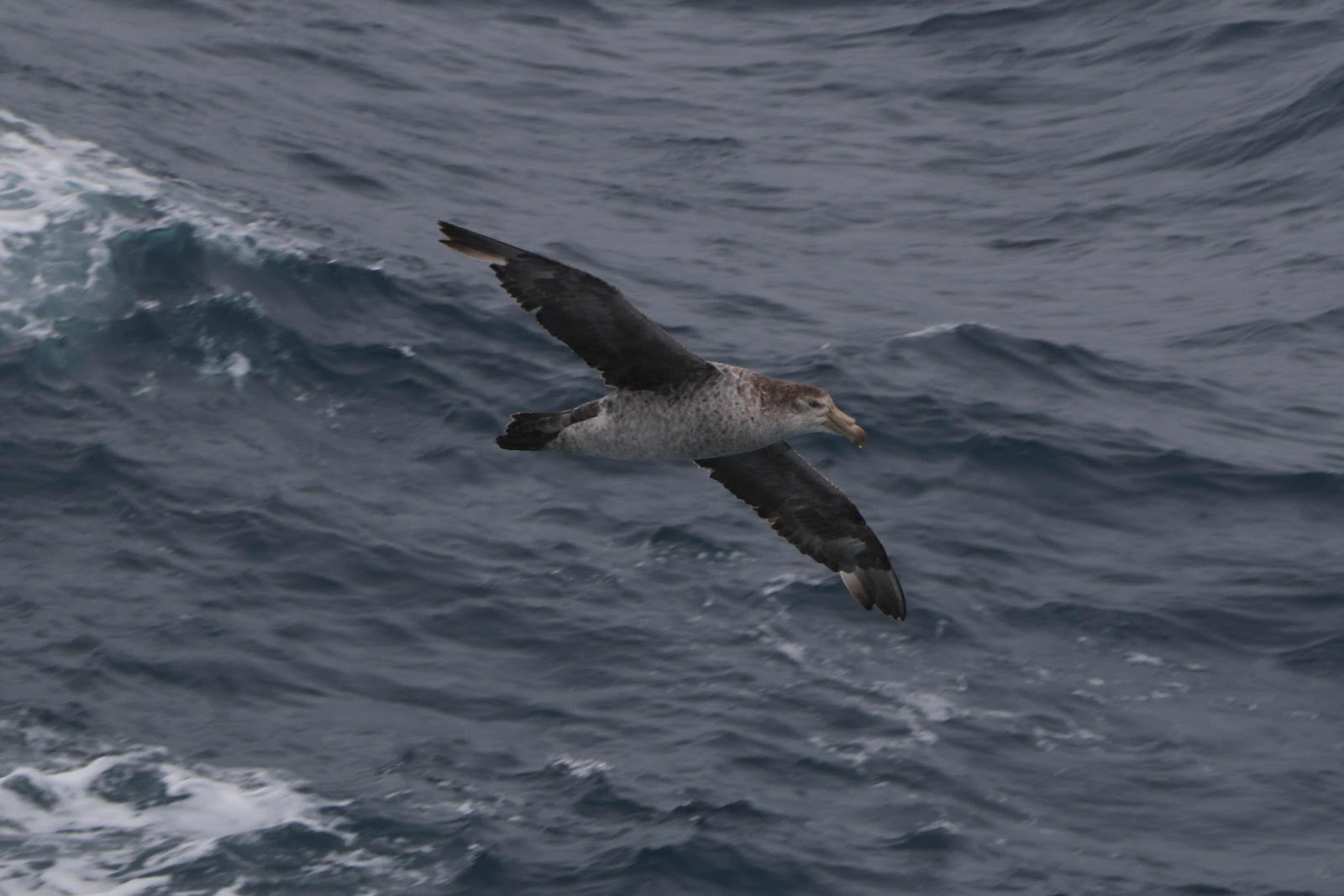
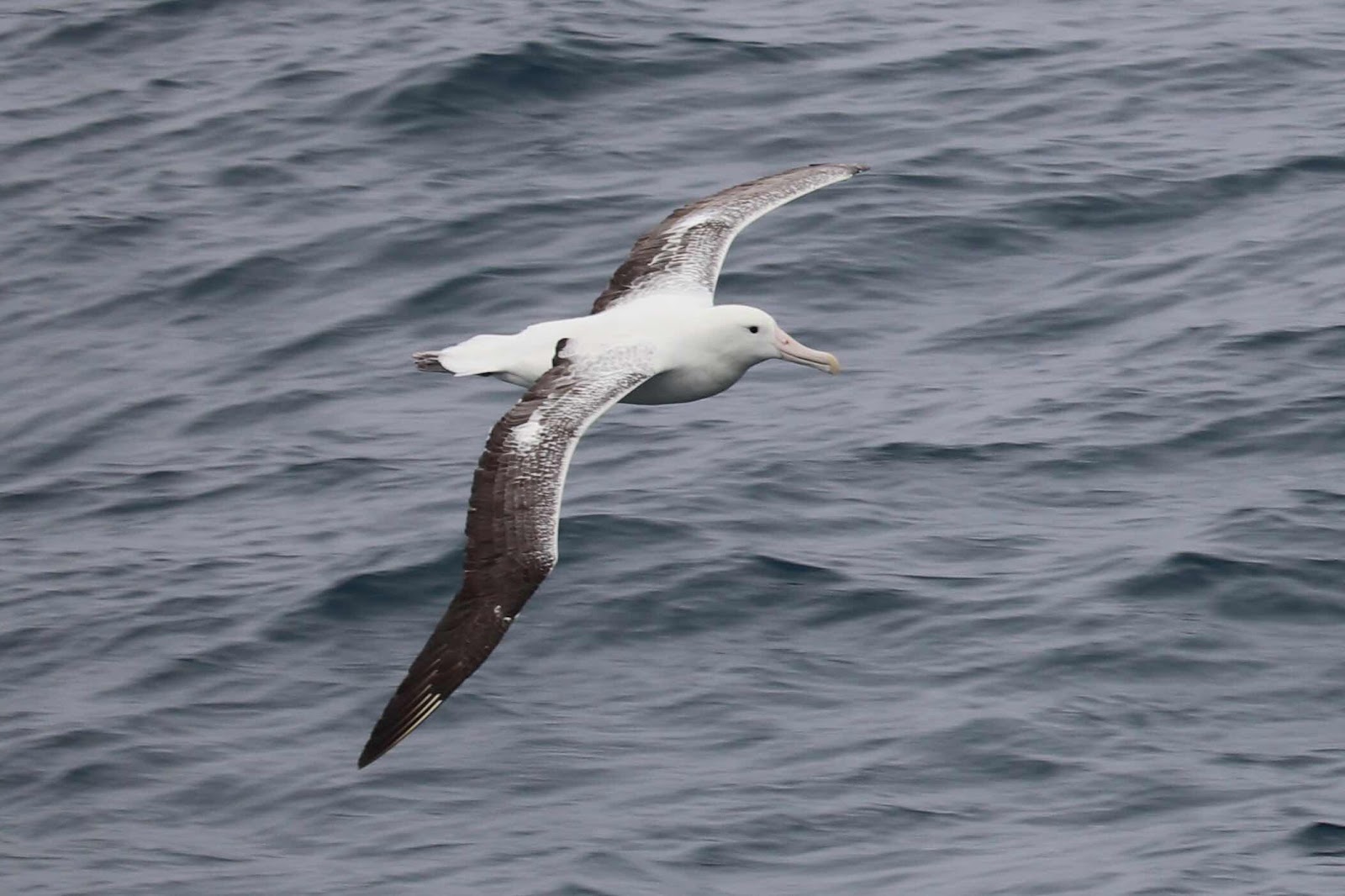
Albatross kept us entertained for a lot of the journey

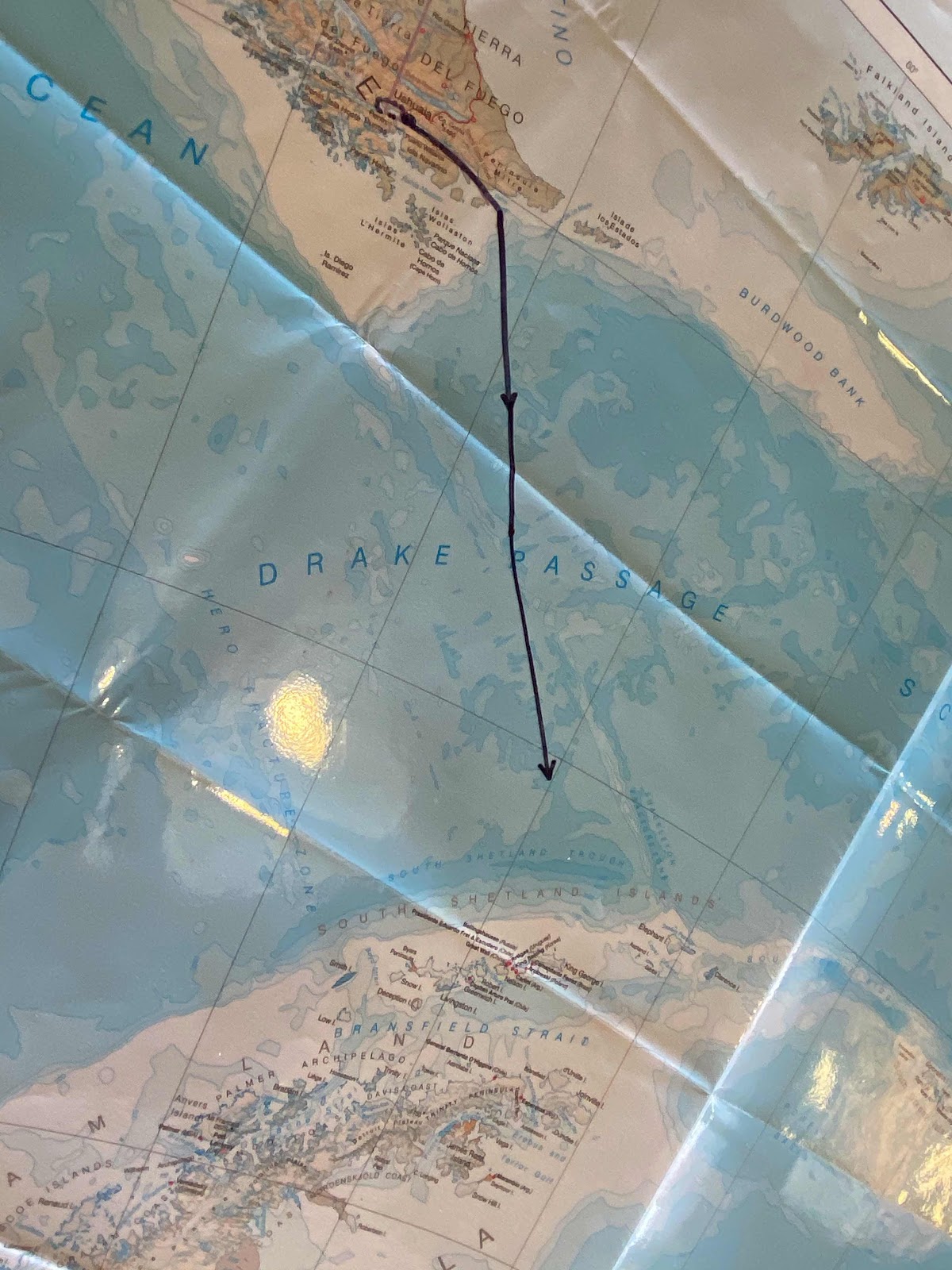
Chart shows where we are going. Does not look far but takes two full days to do the crossing and I believe to some it seemed infinitely longer

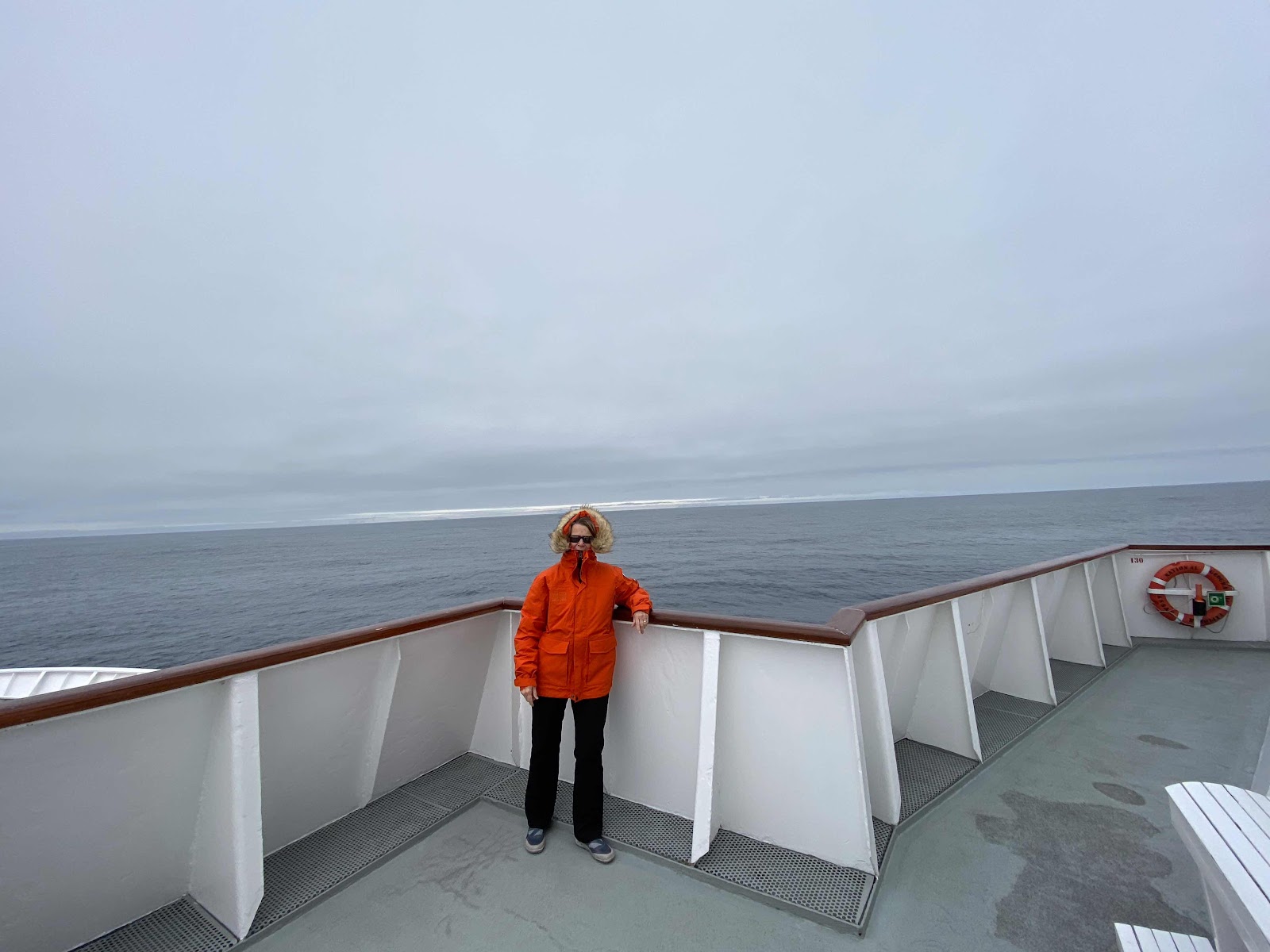
Yes it is very cold out here!

The excitement mounts as e must be getting closer
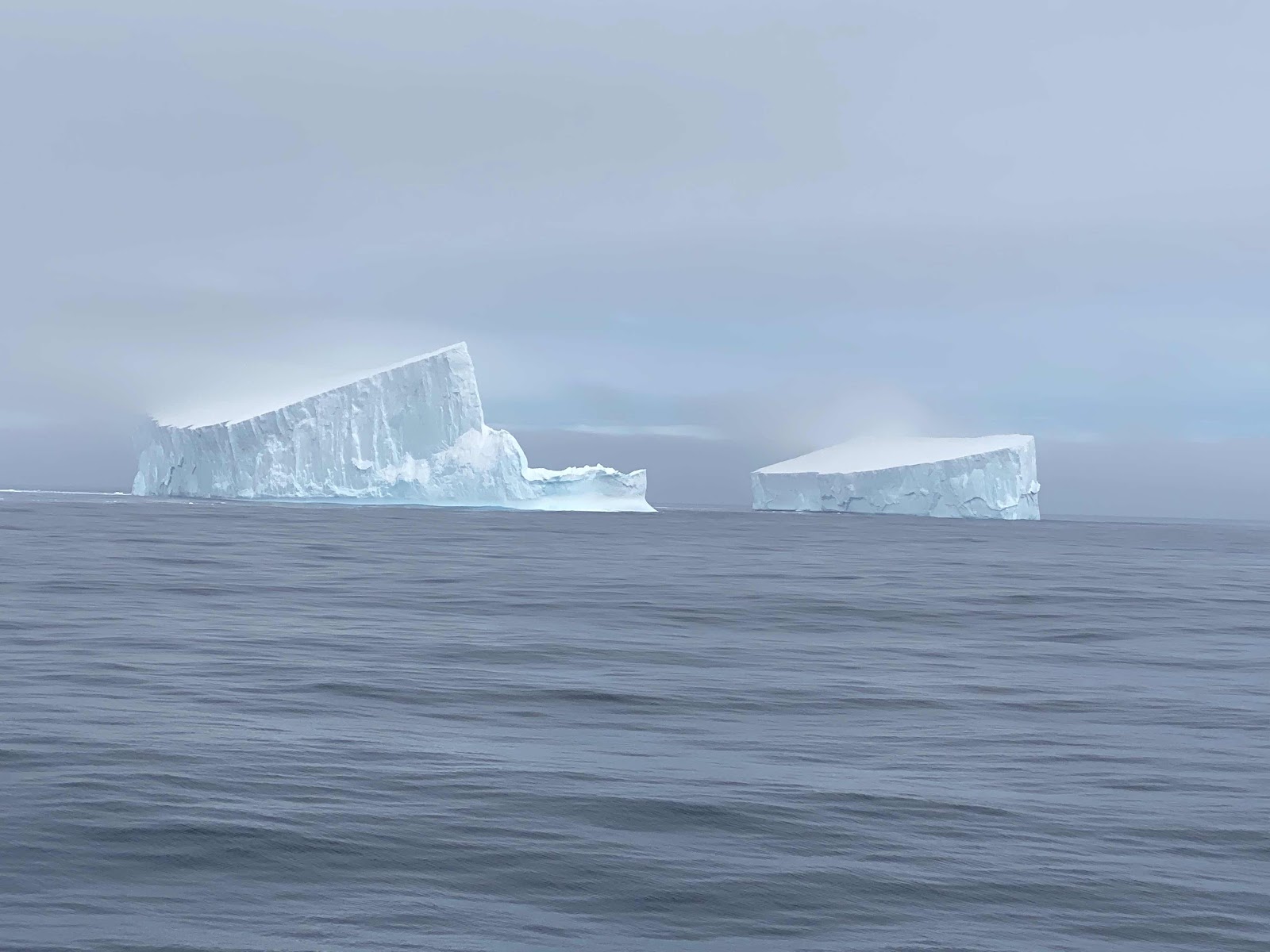
No land yet but these are our first iceberg sightings 

Friday, 10 January 2020

Buenos Aires

We started our next adventure by flying into the capital city of Argentina, Buenos Aires.  A city of 10 million people we were able to get just a taste in the short time we were here but definitely a city worth visiting.  Unfortunately for Argentina they are presently not in a good economic position and it is estimated that 35% of the population are living below the poverty line.  Wages are low and taxes are high so things are tough  on the average citizen.  That being said even though we did see many begging and homeless the streets were clean and the people proud. Lessons could be learned.  The Main Street of the city is the widest Street in the world and has green space and bus lanes down the middle. We wandered through the Recoleta district where massive old mansions are now embassies or converted into apartments as few could afford their upkeep.  Many shops and restaurants line the treed streets and we enjoyed a wonderful meal at a local restaurant with a wonderful Malbec wine from Argentina with a huge ribeye and a couple of appetizers for less than $80.  We wandered through the cemetery which is a history lesson in itself as this is where presidents and those in power are laid to rest. We walked the pedestrian streets, ate empanadas, strolled the waterfront along the old warehouse district and visited the Boca area.  A visit to the Presidential Palace and a couple of cathedrals rounded out our sightseeing.  We went to a dinner tango show which was a definite highlight of our visit to this very cosmopolitan city.  Finally we met up with our National Geographic travelling mates who we will be sharing the next part of our exciting journey with.....our trip to Antarctica!!!
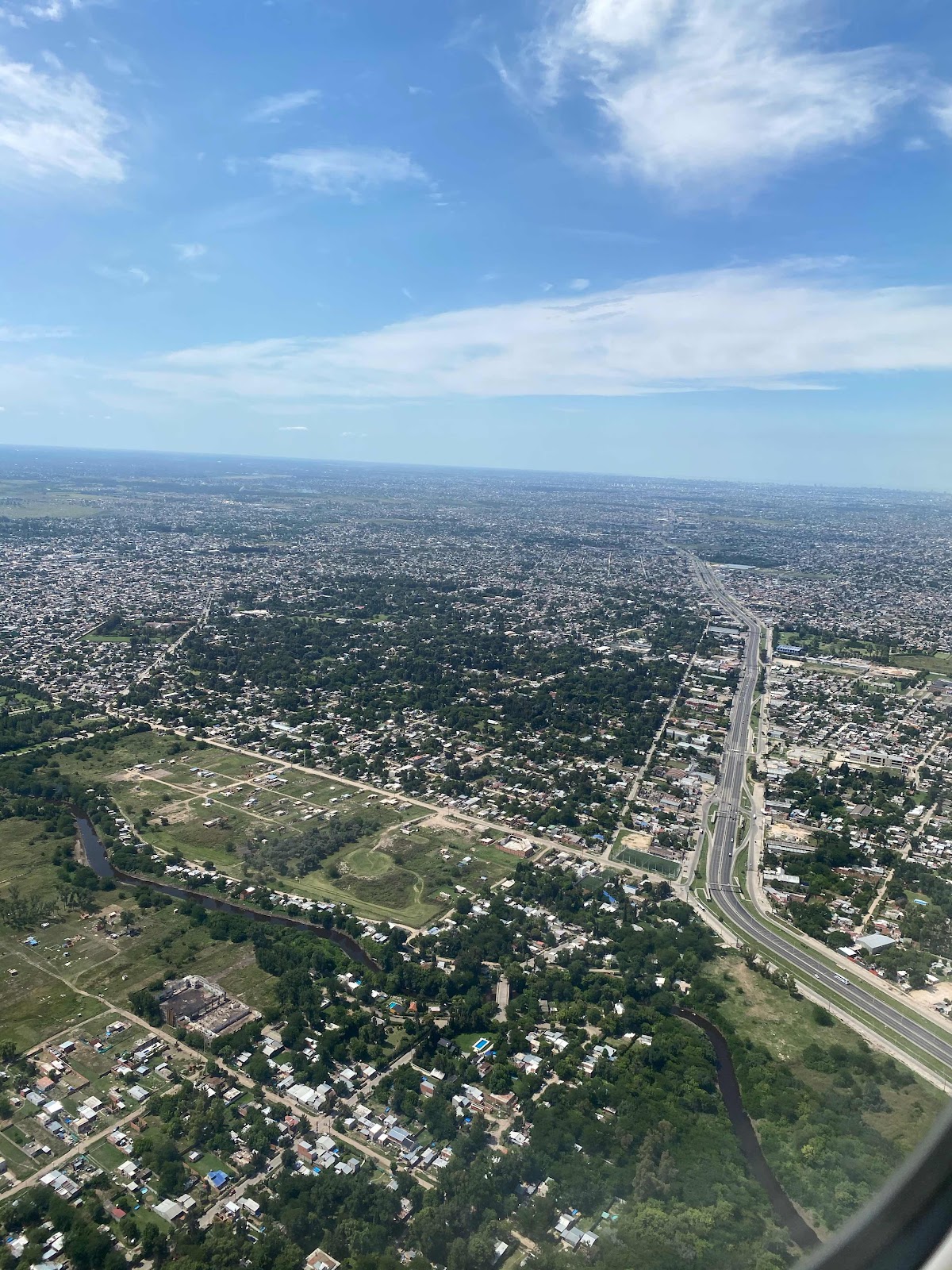


Aerial view of Buenos Aires 
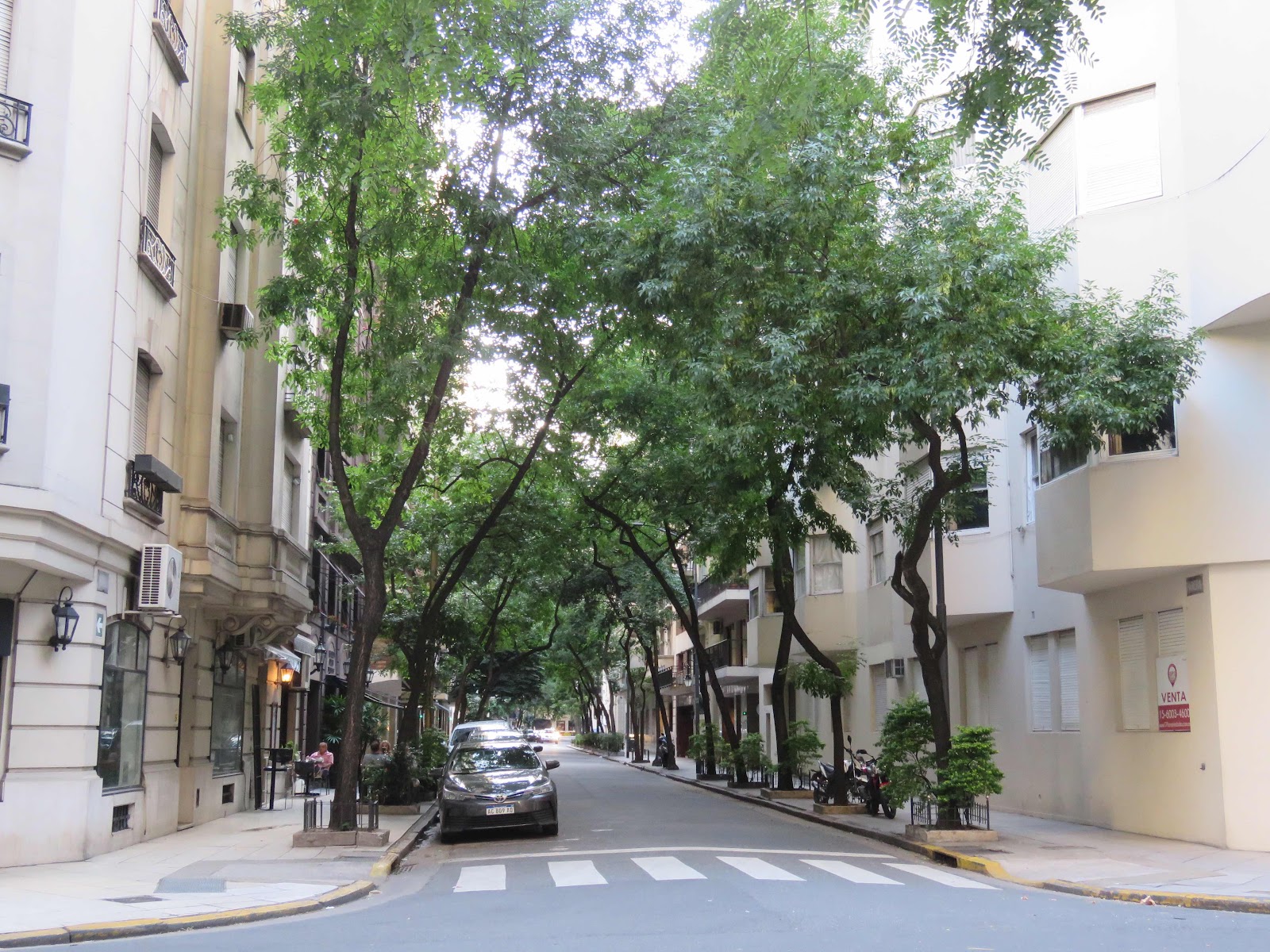
Many of the streets are lined with trees offering welcome shade in the heat and humidity
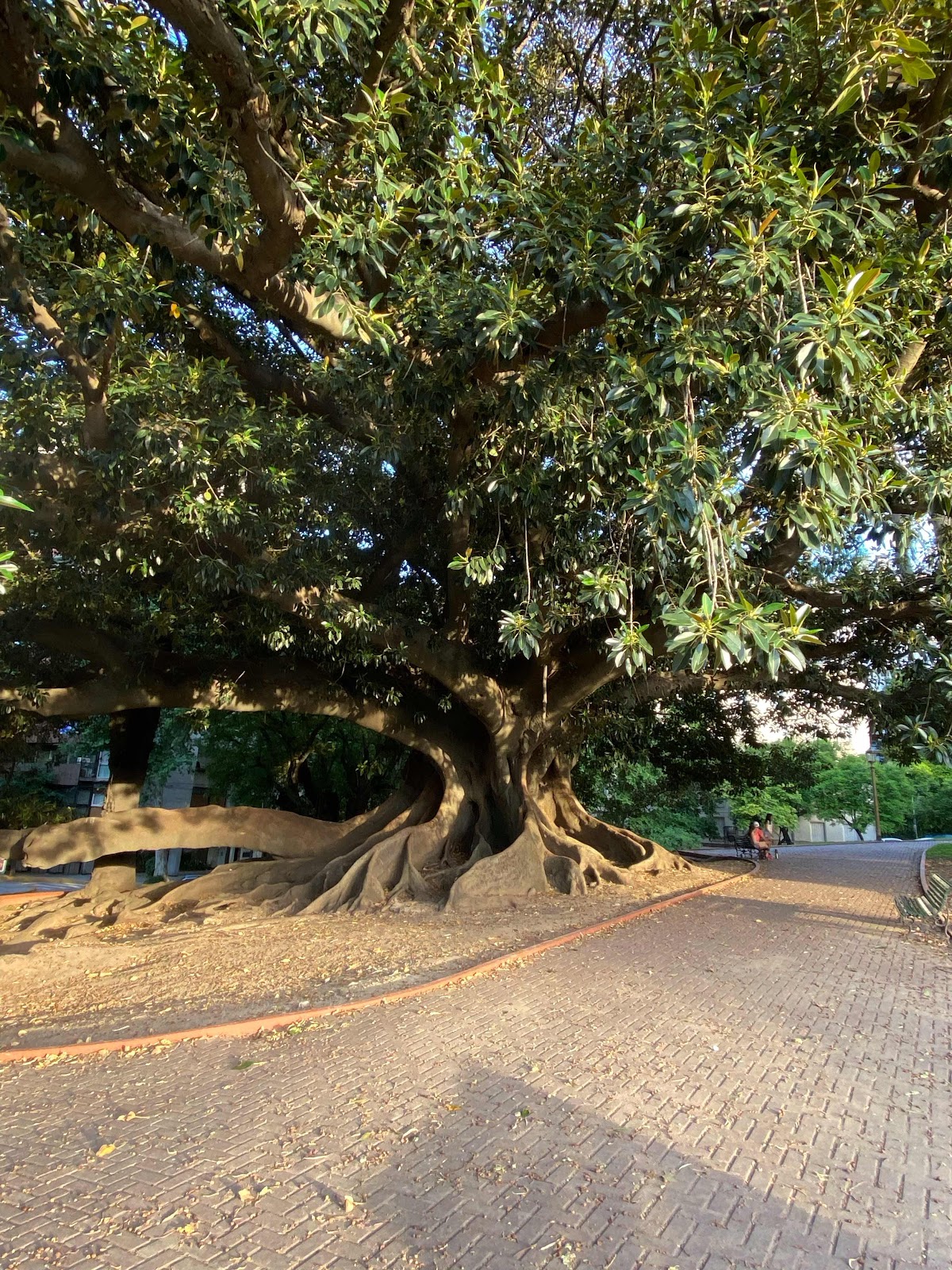
These large trees were brought in from India but flourish here and are quite plentiful in the parks about the city
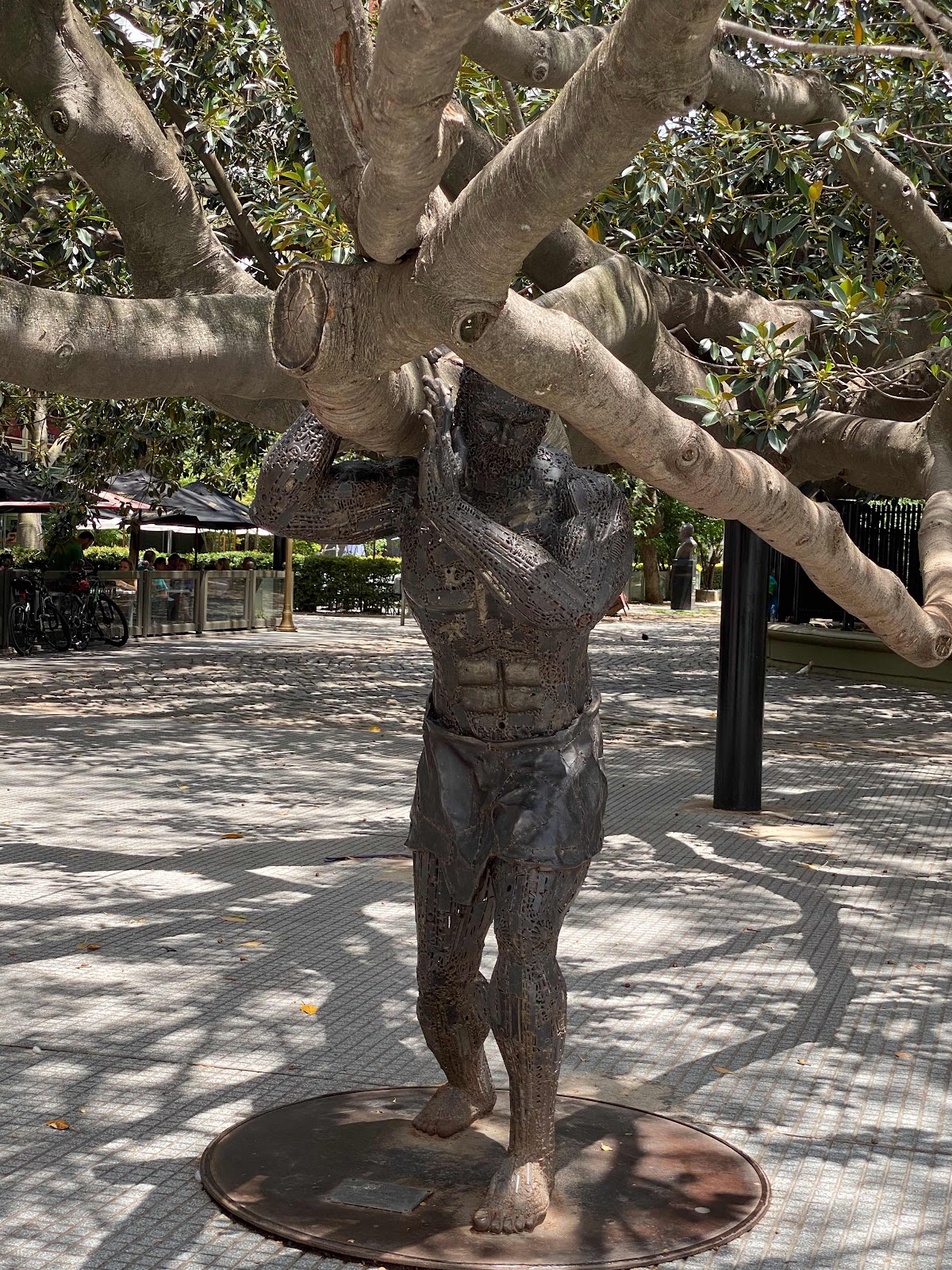
Statutes are everywhere around the city and this one is placed in the oldest tree in the city
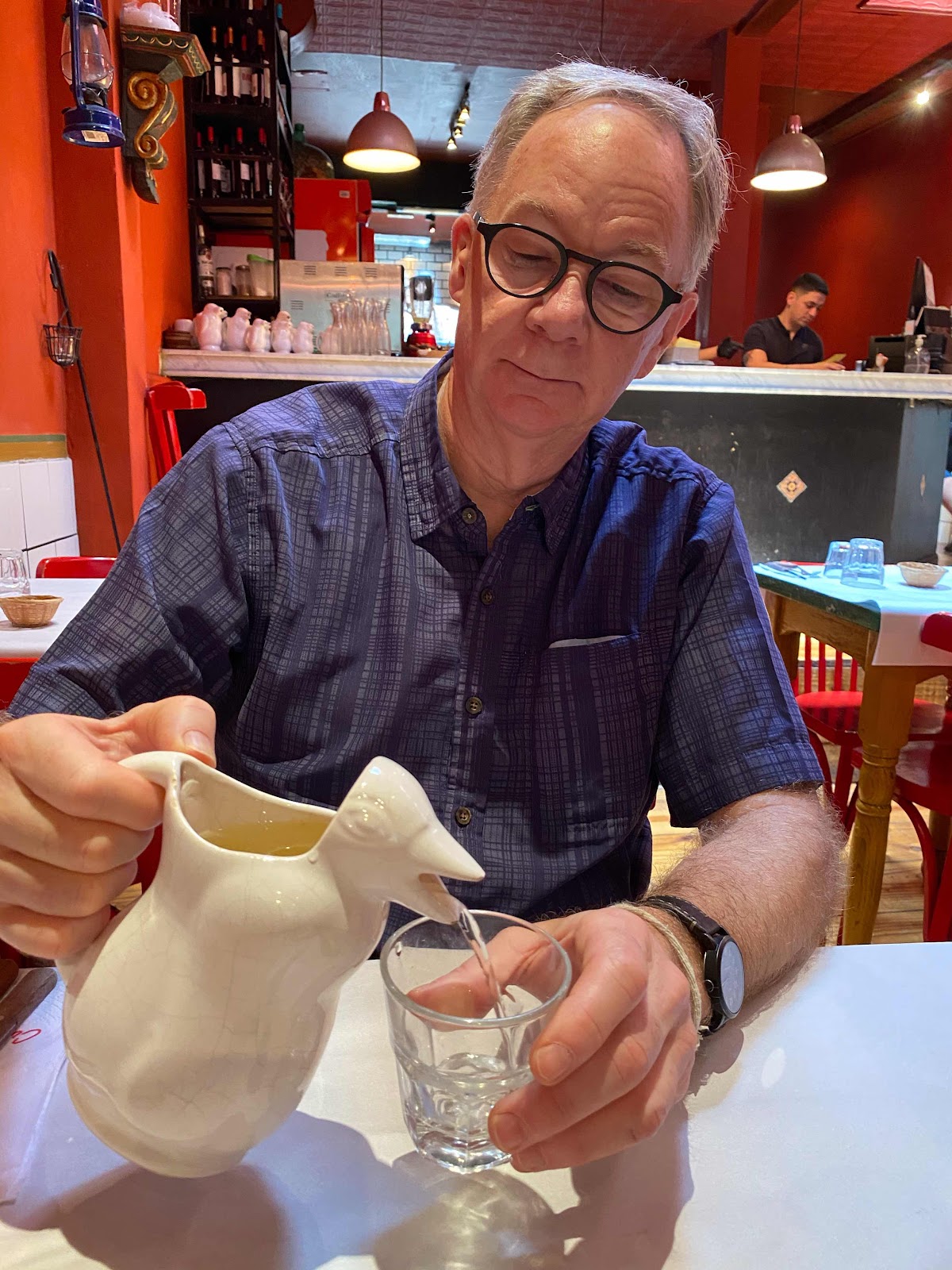
This was our first penguin sighting and he conveniently held wine

The Recoleta Cemetery originated in the 1800’s and the ornate mausoleums hold the remains of the wealthy and famous of Argentina.  Very unusual to us one can see into each mausoleum and the coffins are all visible.

Eva Peron was finally laid to rest here more than 20 years after her death and is the most visited site in the cemetery 
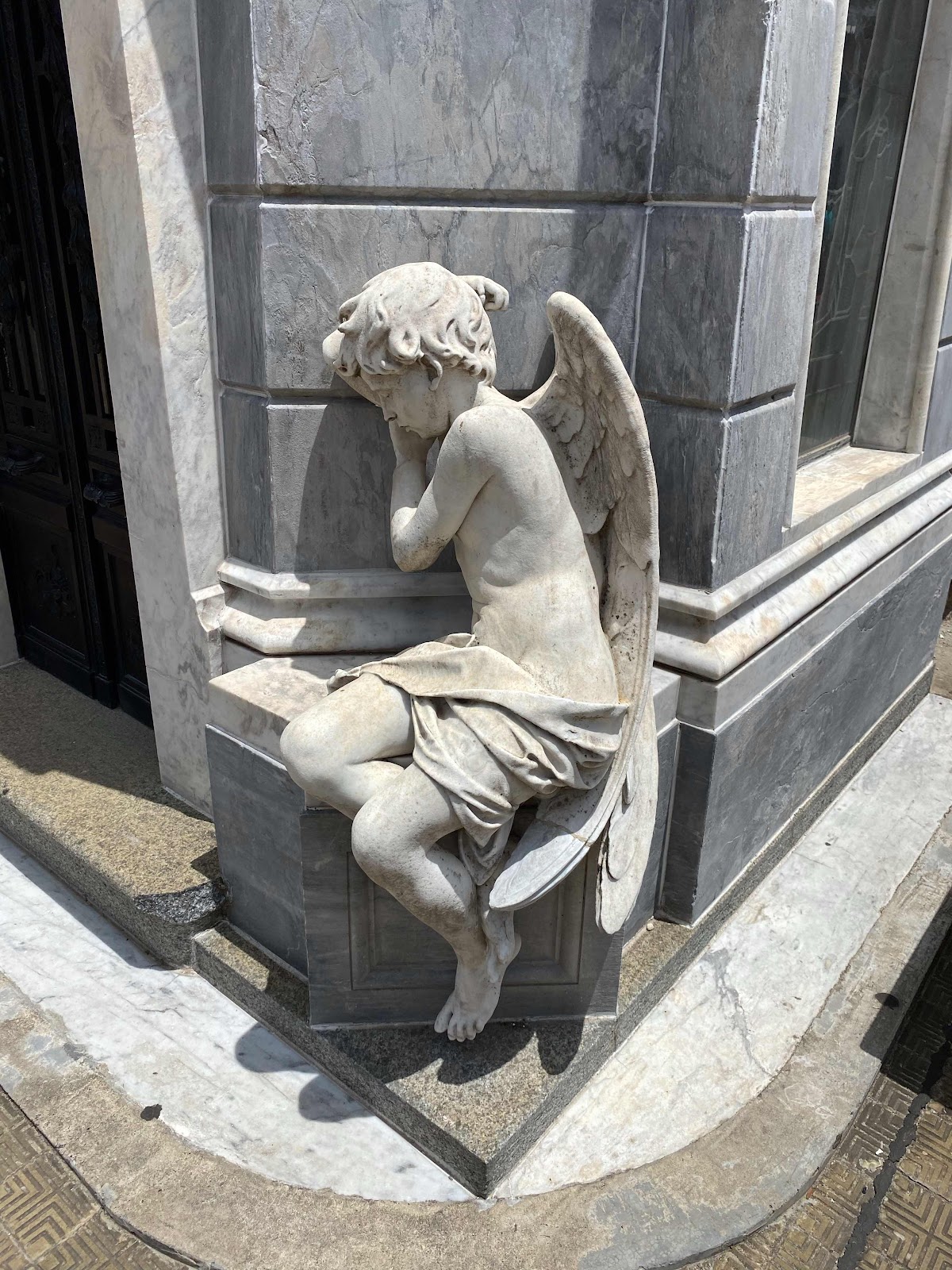
Many of the sculptures in the cemetery were done by the best sculptures in Europe and it was like walking through a museum 
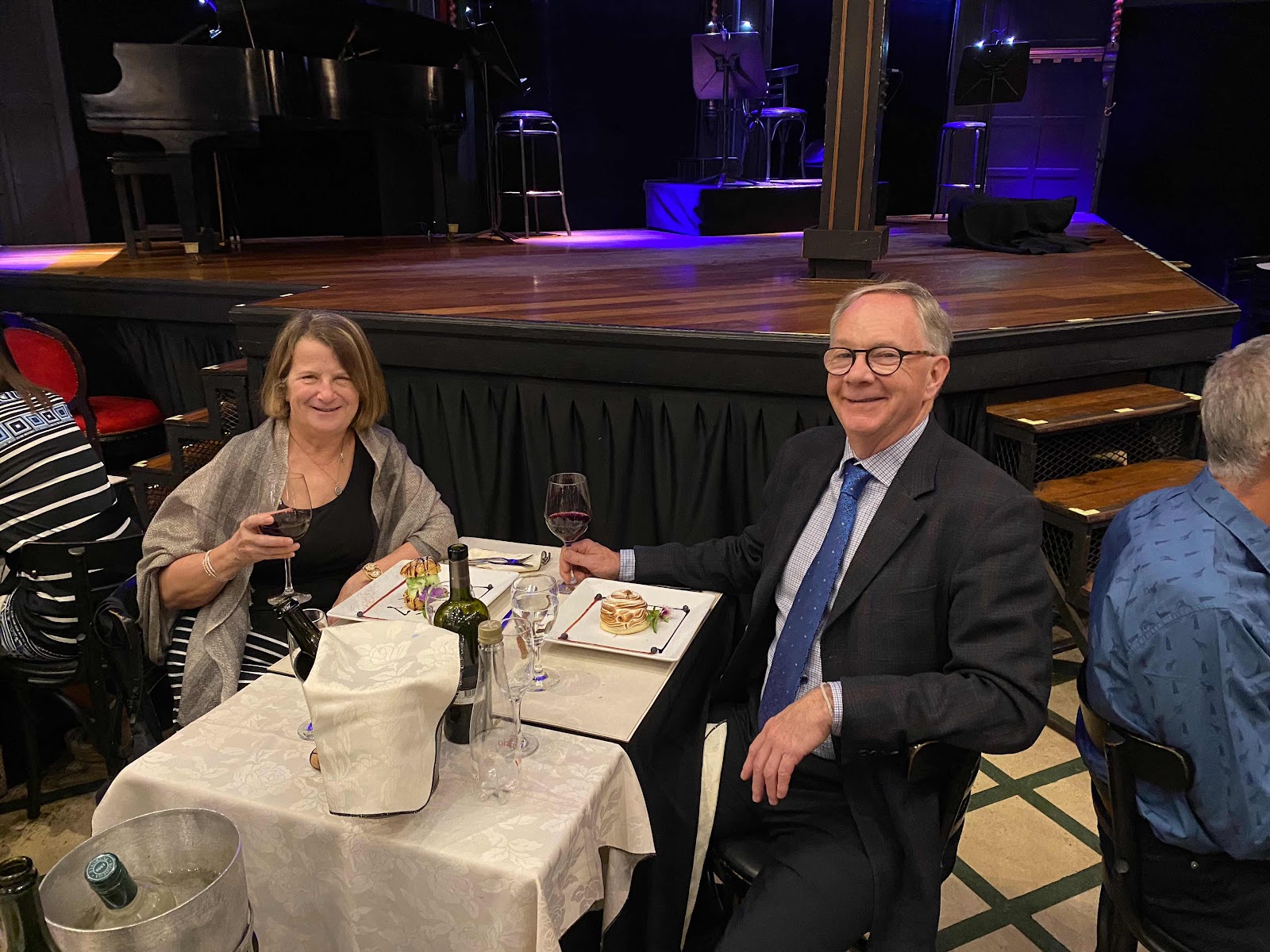
We went to a dinner tango show which was way beyond our expectations. We had front row seating and the dancing was spectacular 
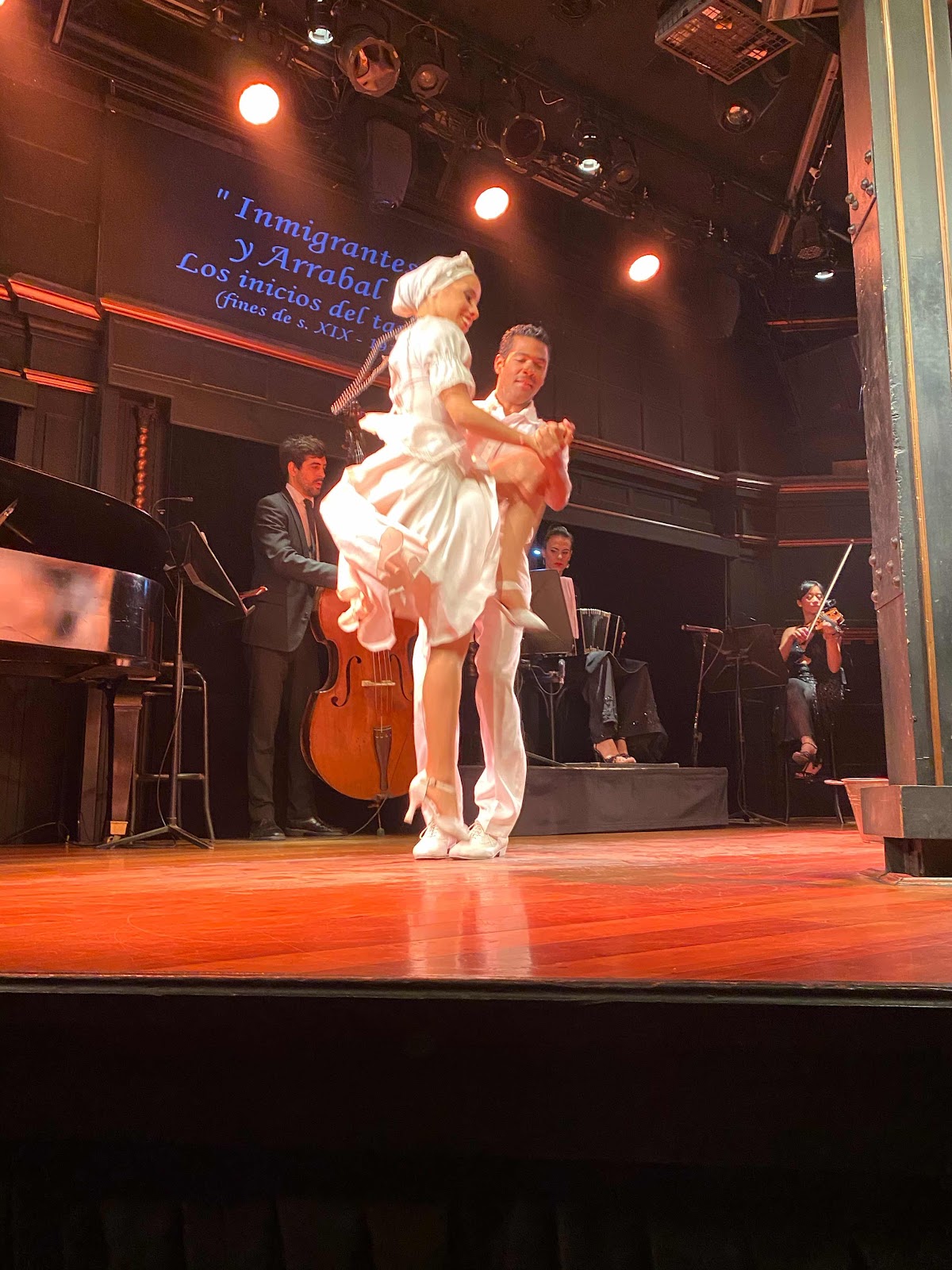
The facial expressions were so much a part of the dance

The way and speed with which the dancers could move their legs was amazing
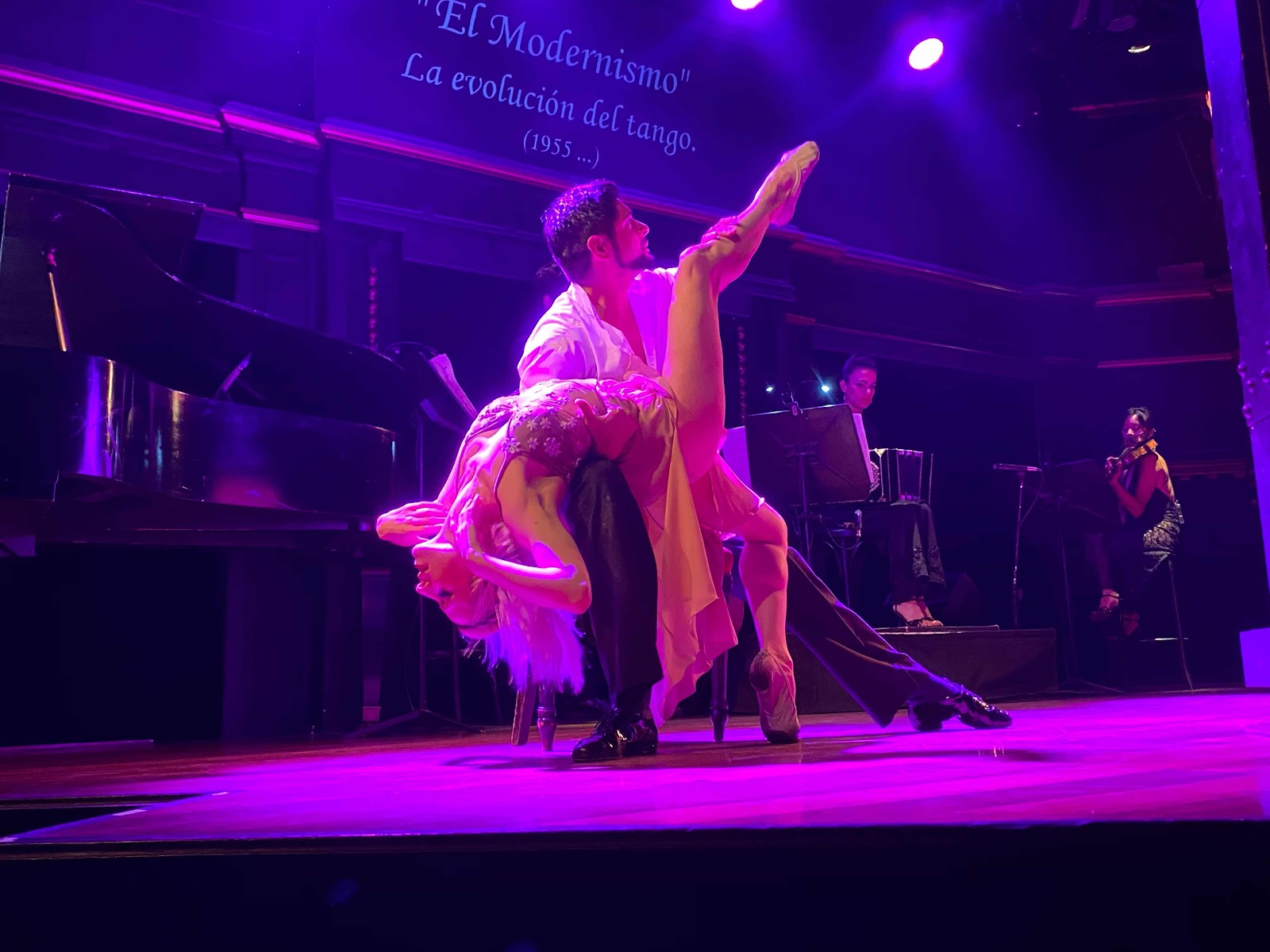
The live four piece band were all true professionals as well to make for a remarkable evening. As Buenos Aires is the birth place of the tango this was something not to be missed and the venue dated back to the early 1900’s adding even more to the experience.
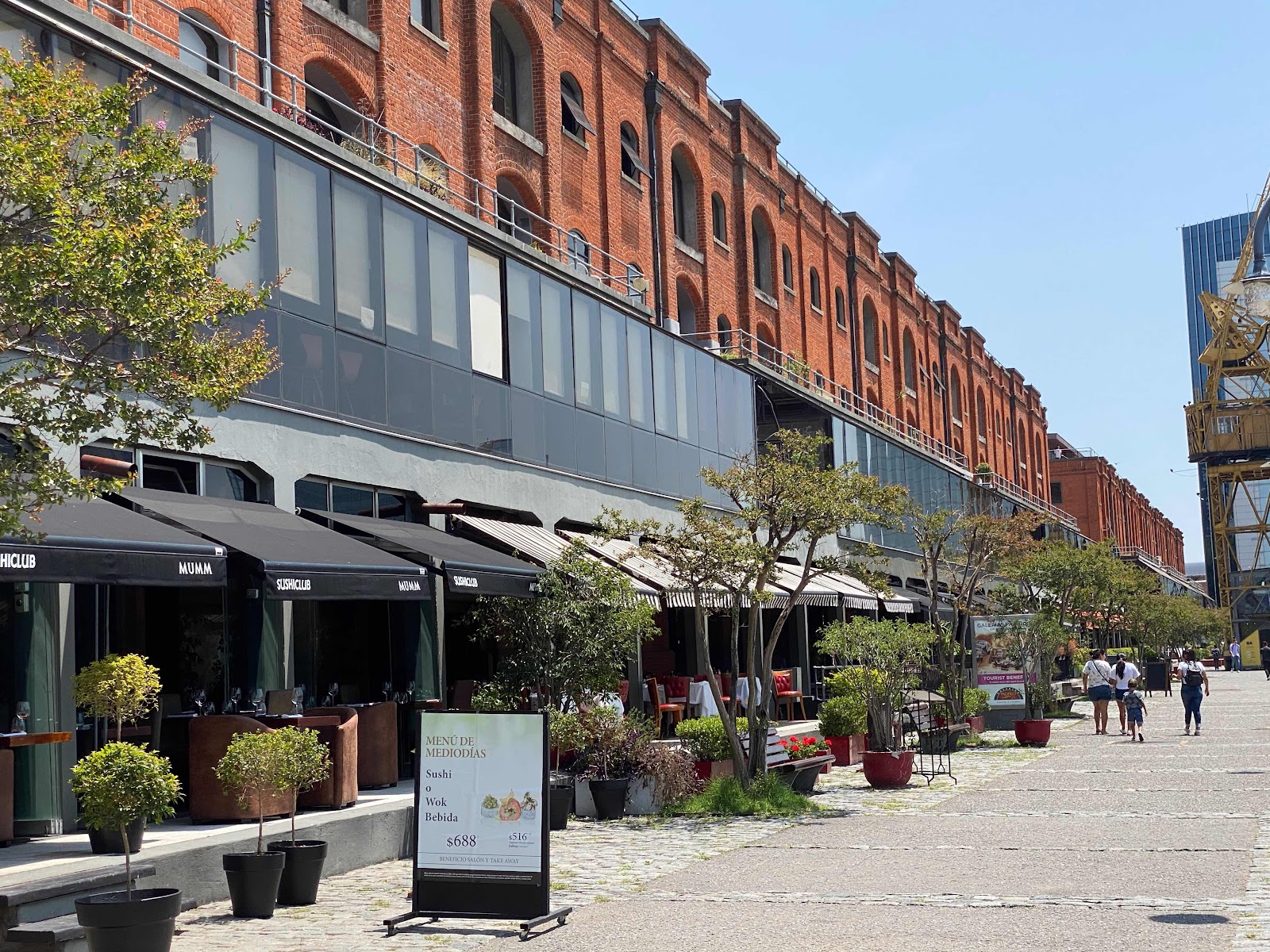
The old dock buildings which had been abandoned for years have now been repurposed as apartments, offices and some of the best restaurants in the city.  A lovely walk all along the harbour.
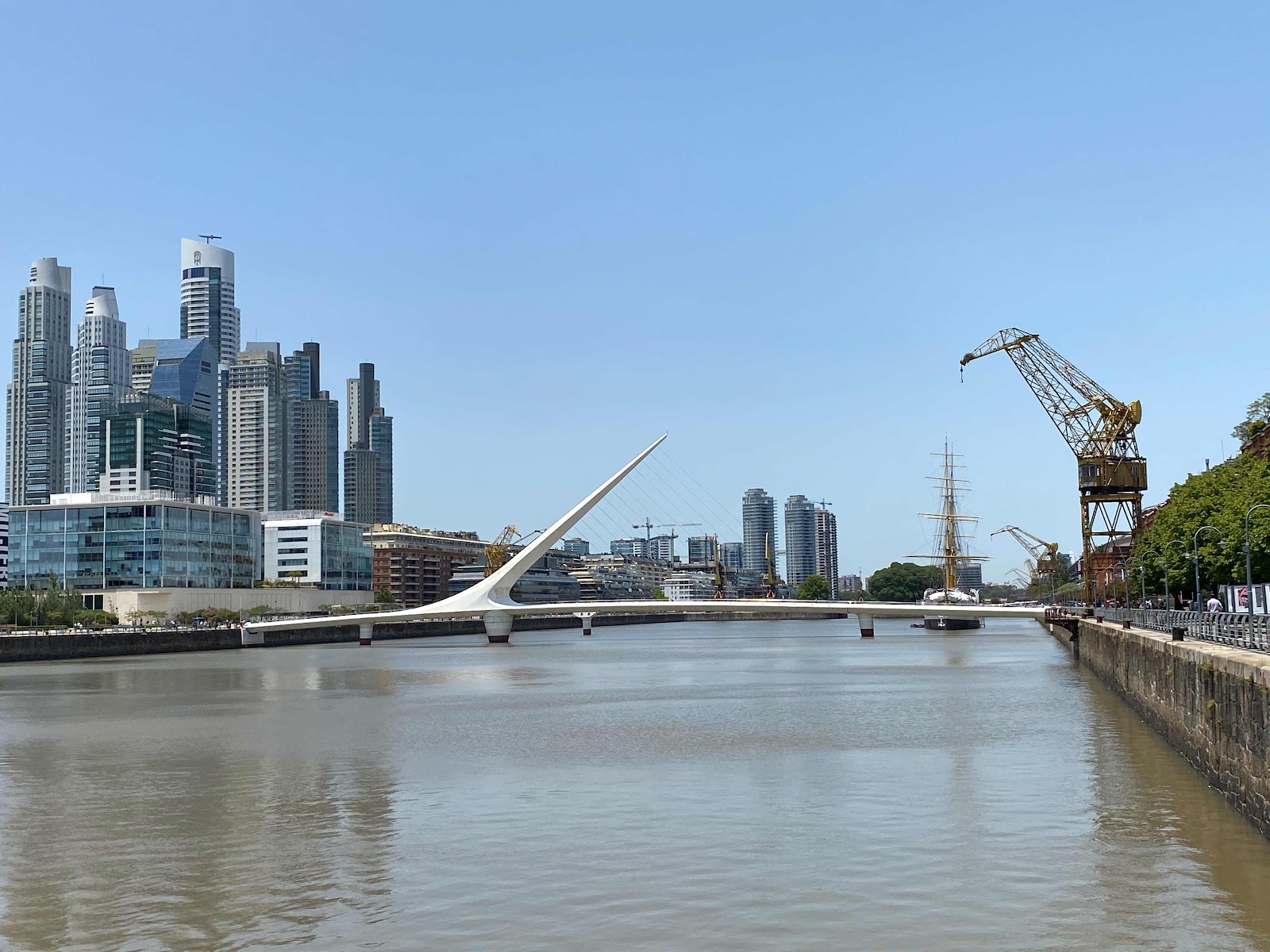
The repurposed harbour now has some of the most expensive real estate in the city 
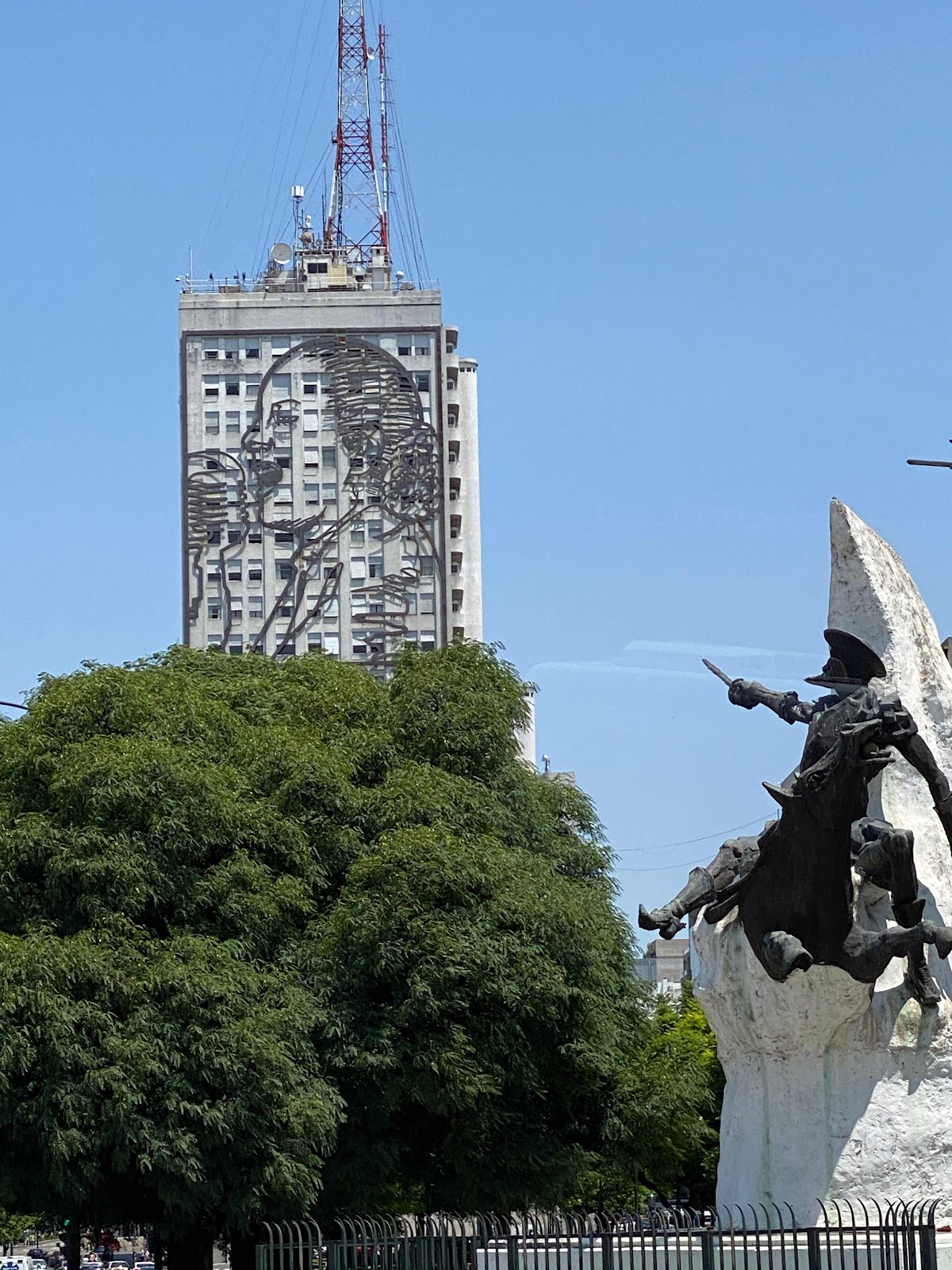
The former president had this image of Eva Peron erected knowing how much she means to the people of Argentina as she was such a strong supporter for the rights of the poor
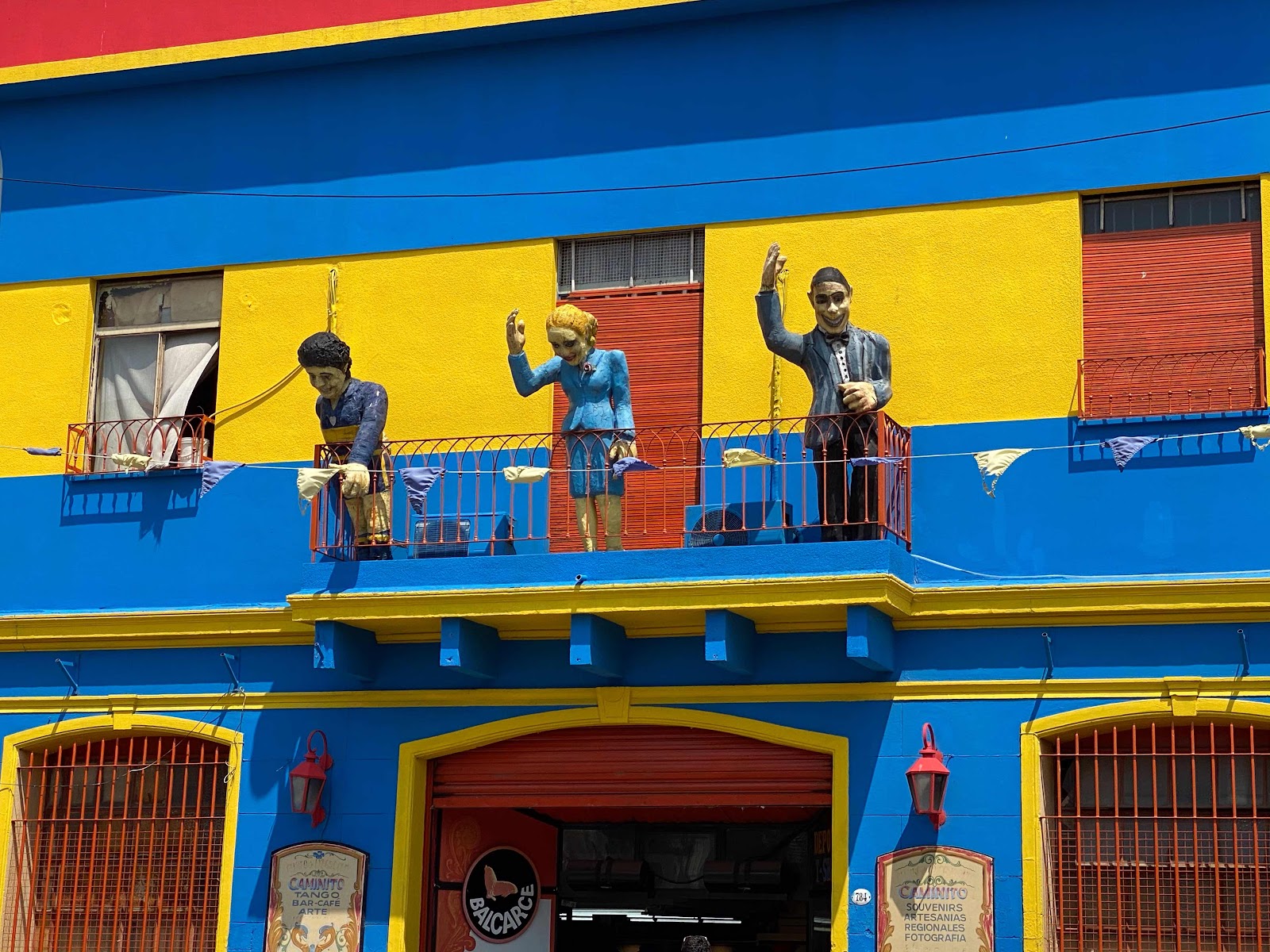
Our visit to the colourful Boca district was fun and full of photo opportunities.  It was in this dock area that the immigrants landed in Buenos Aires and being poor built shelter with whatever was available but painted it bright colours to cover the shabbiness. It is now a major tourist draw though it is recommended that one does not go their after dark
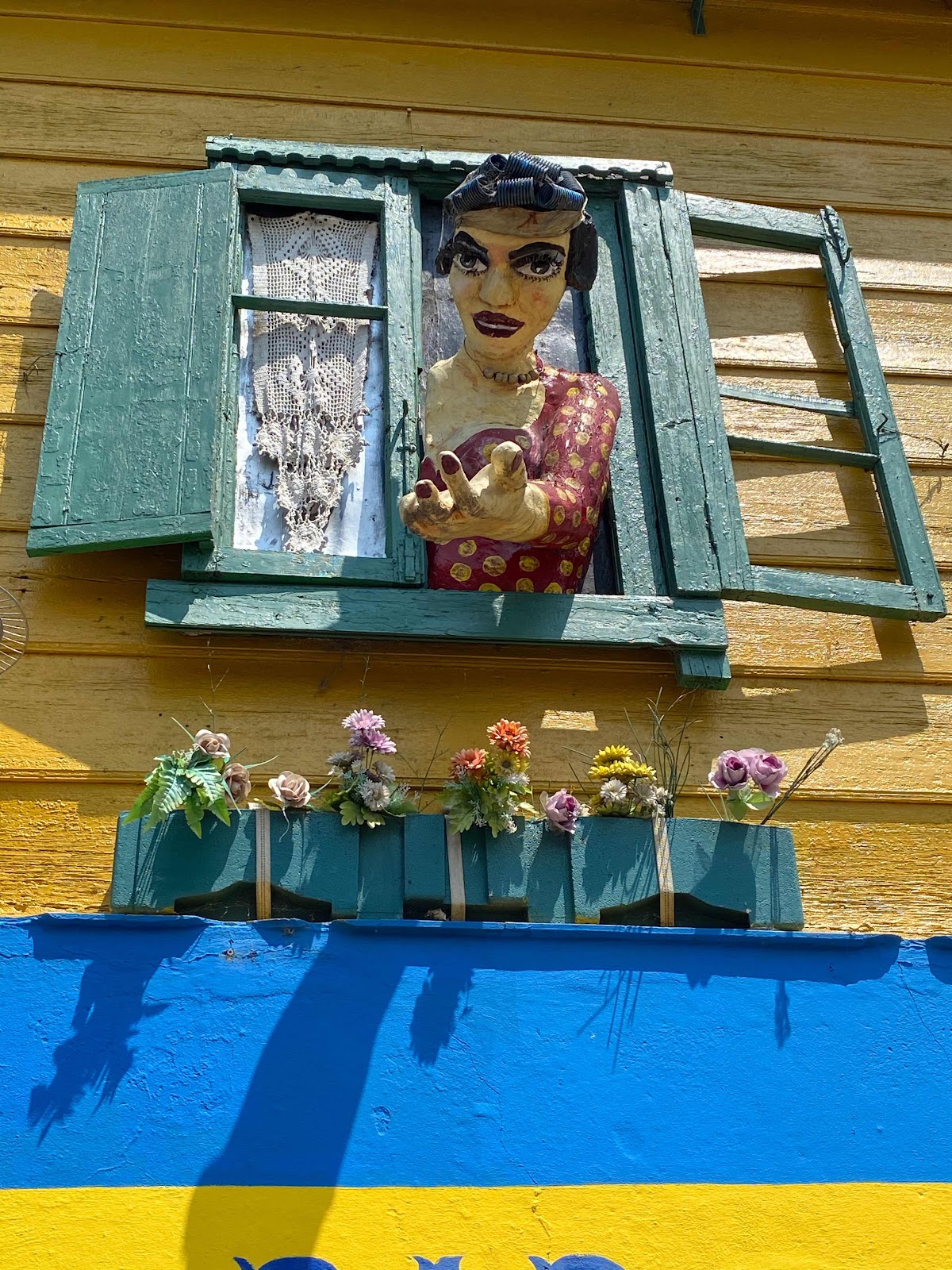
Colourful figures pop out of windows
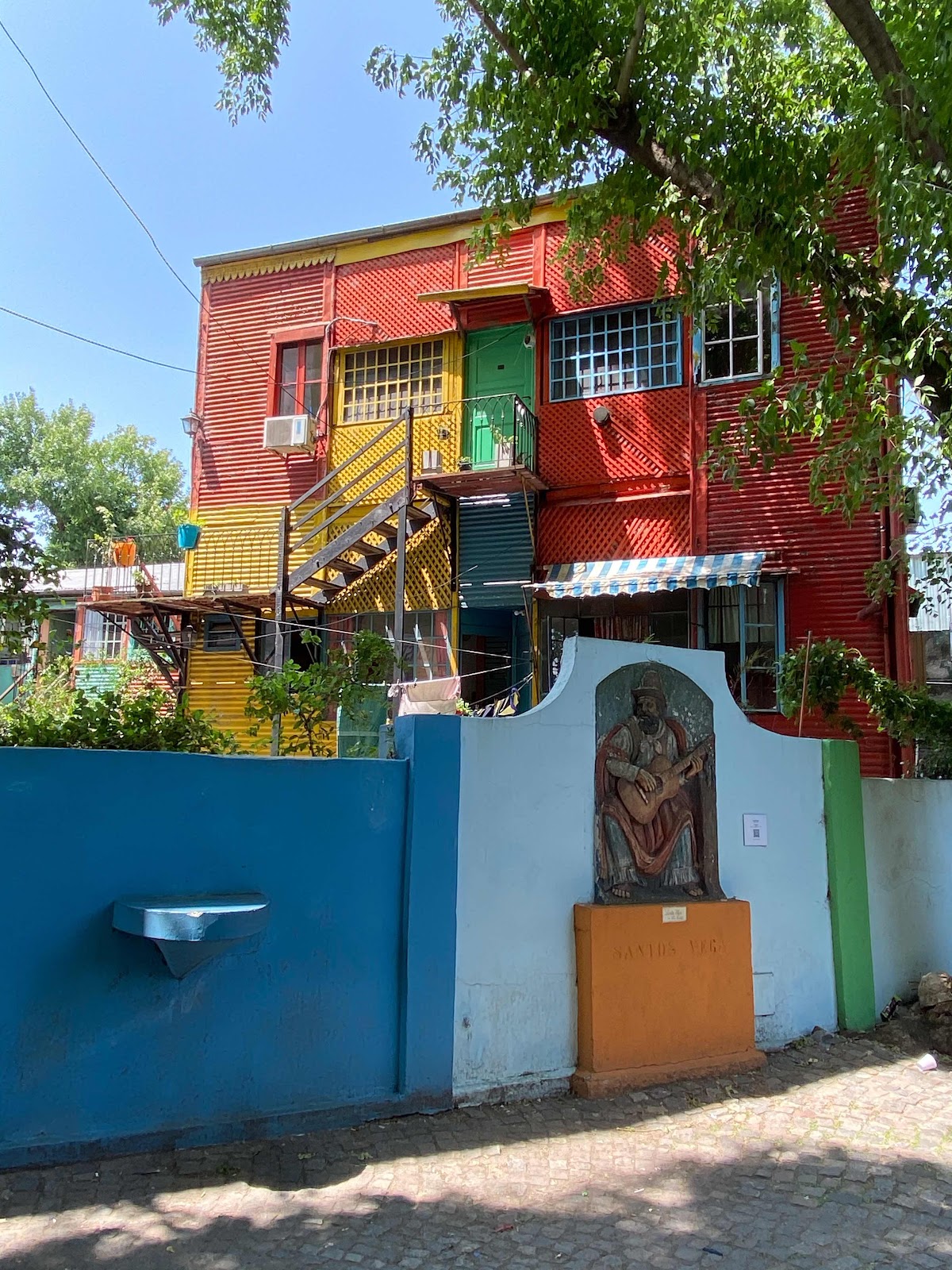
Houses are painted in all sorts of colours
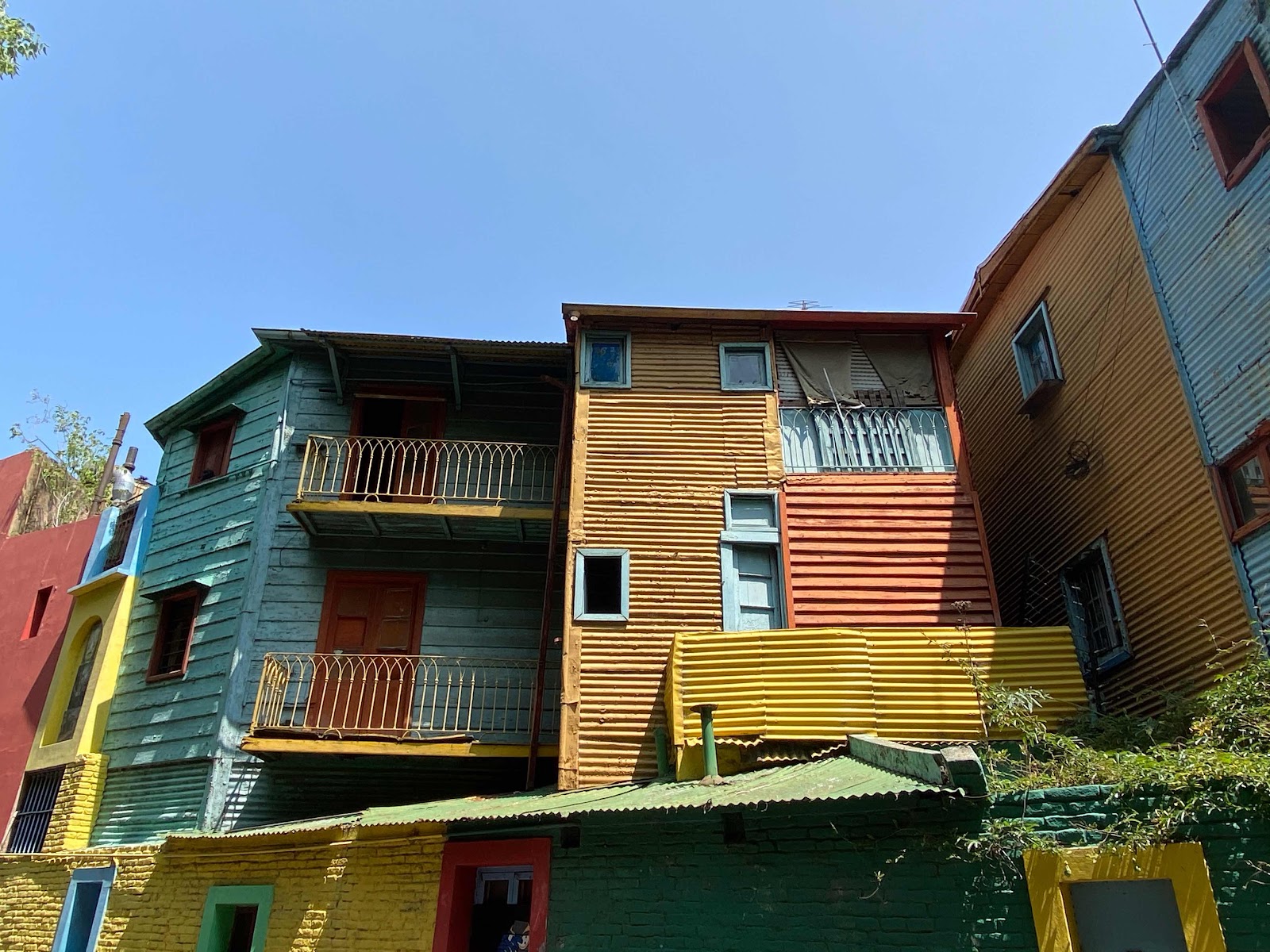
An apartment building of sorts yet one does not have to stick to a colour scheme

Decorative alleyways
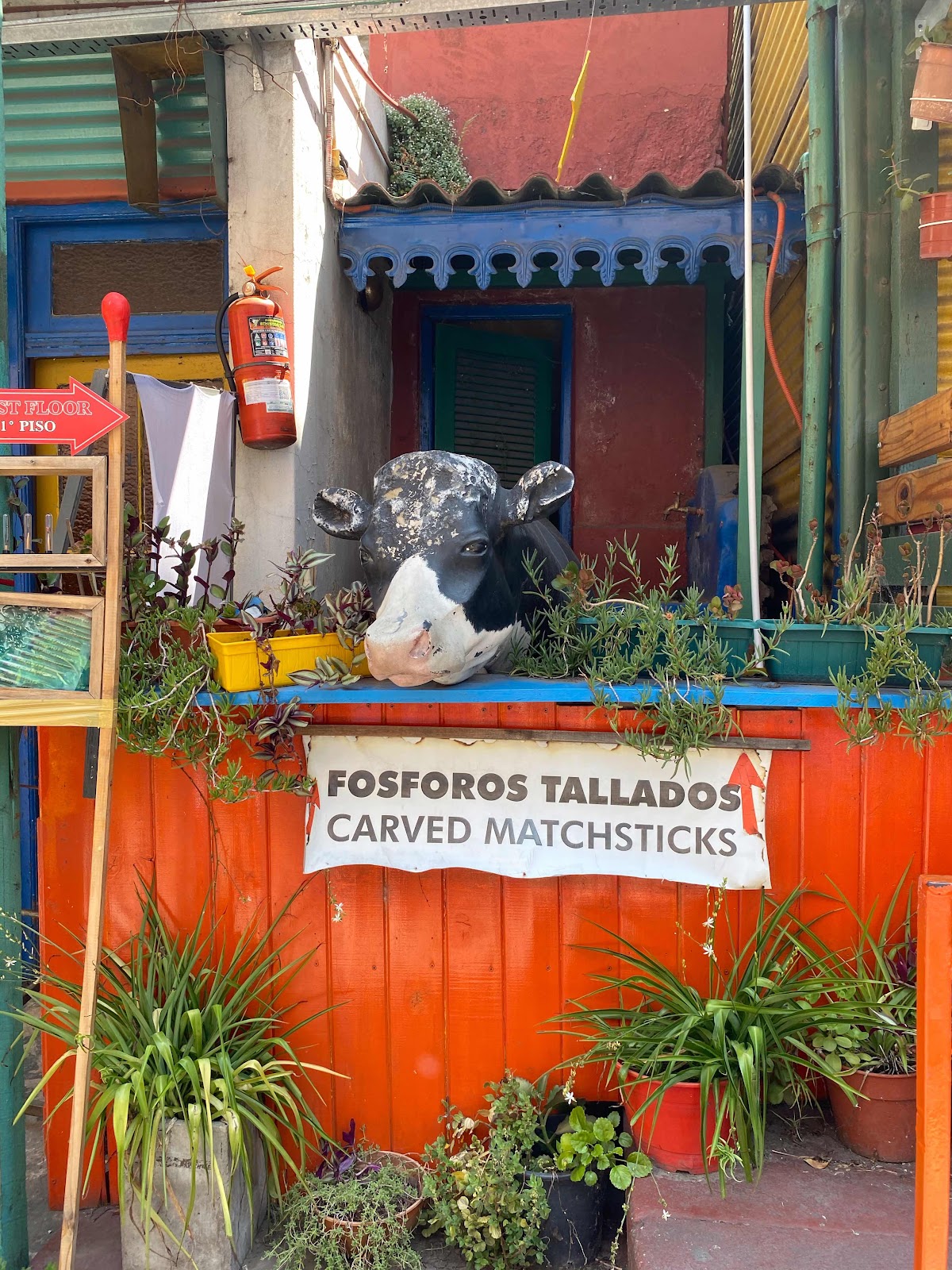
Lots of figurines 
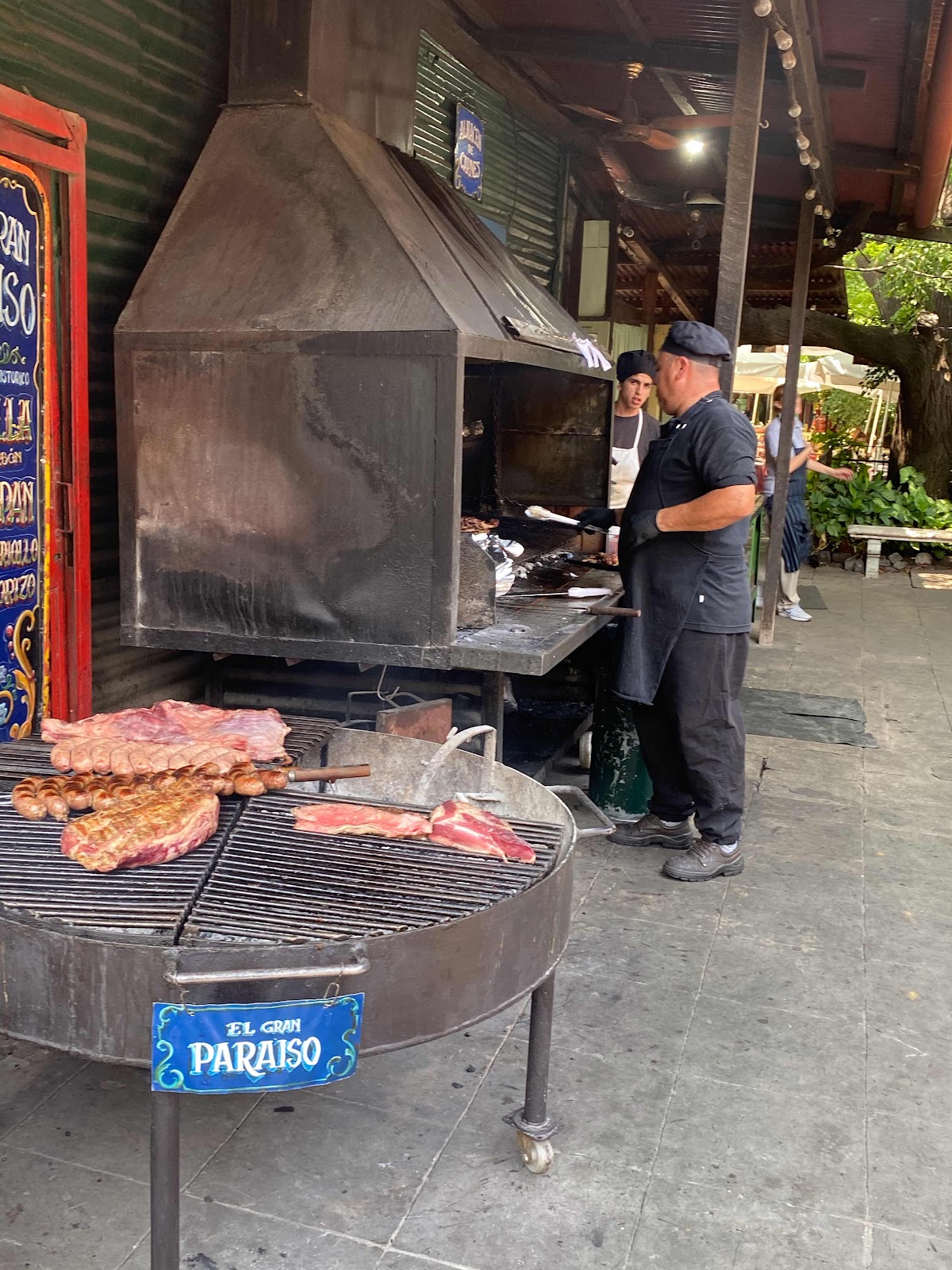
The people of Argentina love their meat and menus are very evident of that

The Presidential Palace though he no longer lives here and flies in by helicopter to the landing pad behind for any official business.  This is the balcony from which Eva Peron gave her famous speech to the people of Argentina.