Friday, 12 August 2022

Cape Dorset

Today July 26th dawned sunny and clear.  What a relief. We zodiacs into the town of Cape Dorset now known as Kinngait.  We were met by a local guide who has lived here for all of her 52 years .  Kinngait is a town of 1600 and is well known for its art, both prints and carvings.  We started our tour at the cultural print building which is a large modern building built in 2017 and is a co-op that any local artist can belong to and use as long as they have lived in Kinngait for 6 months.  Some locals first demonstrated some traditional toys and games as well as some throat singing before we toured the facility. A local artist demonstrated how each print is made by hand. 65 prints of each piece of art are made and the 50 that are the closest in colour etc are kept and sold and the others discarded.  The mould is then no longer used. Now a days they are using slate for the moulds.  The print he made was beautiful but would be thrown away as it was one that had already had 50 copies sold. We would have bought it in a heartbeat.  We visited the community Center where some locals had some wares for sale as well but not the quality of the Print Shop.  The town definitely showed more signs of prosperity than the last we visited as this has both a name for art and tourism giving residents opportunities for income.
In the afternoon we hiked in Milkjuak Park which is across the water from the town  the ground here is very peatty and cushiony to walk on but it is this environment that supports carpets on low growing Arctic flowers which were stunning.  The landscape was dotted with a variety of animal bones which have been left by hunters or other animals.  At the top of the hill there were some archeological ruins of stone houses that were believed to be more than a thousand years old.  What isolation and hardship that must have been!  Down the other side of the hill we came upon an ocean inlet where some ancient kayak stands remained. Kayaks were invented by the Inuit and were there method of hunting on the ocean until the introduction of boats and they would put their kayaks up on these rock stands to protect them from the huge tides experienced up north.  While contemplating the beauty we were treated to a visit by a beluga whale feeding in the inlet.
All and all a great day.
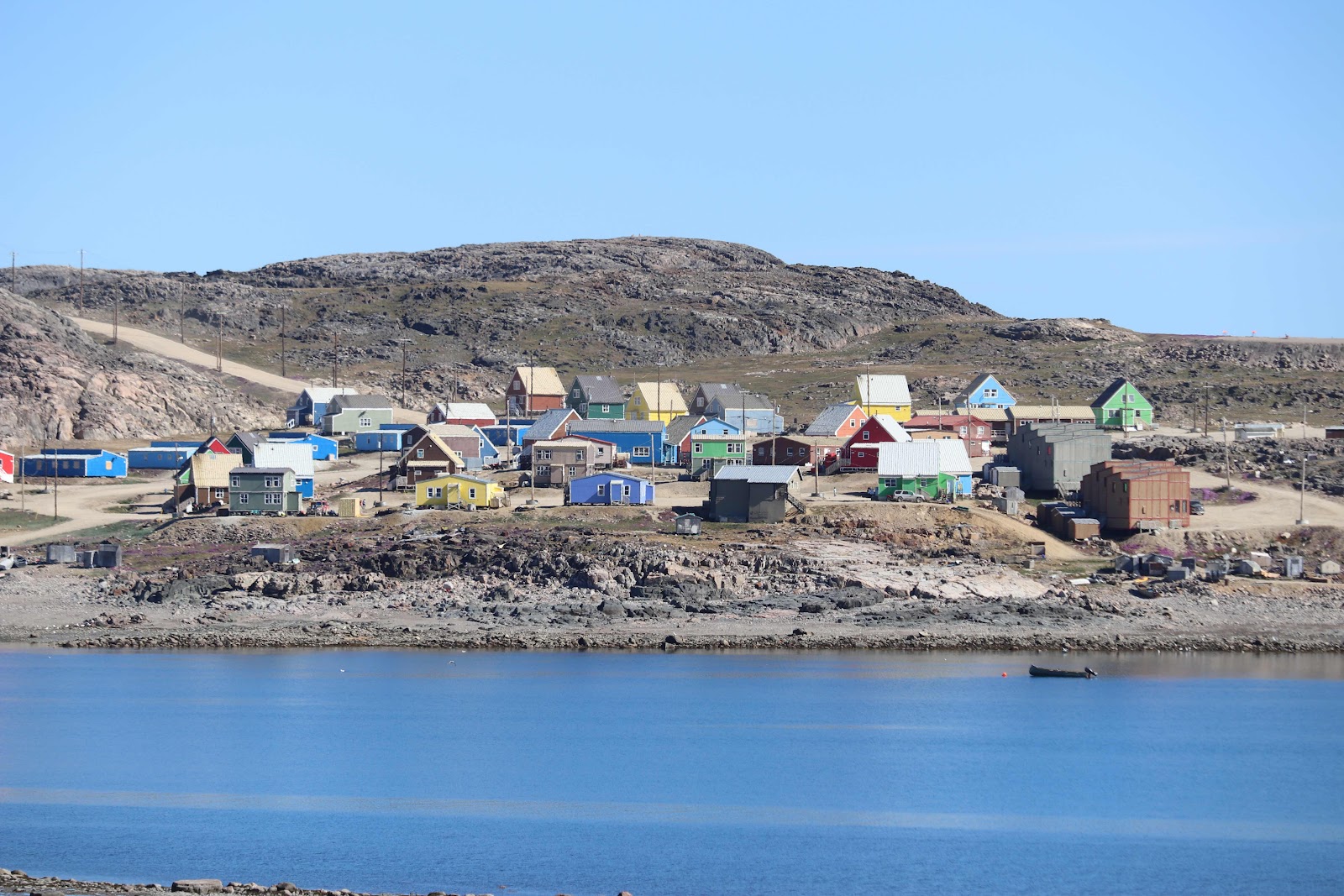

The colourful houses of Cape Dorset. Even from the water one could see that this is a more prosperous community.
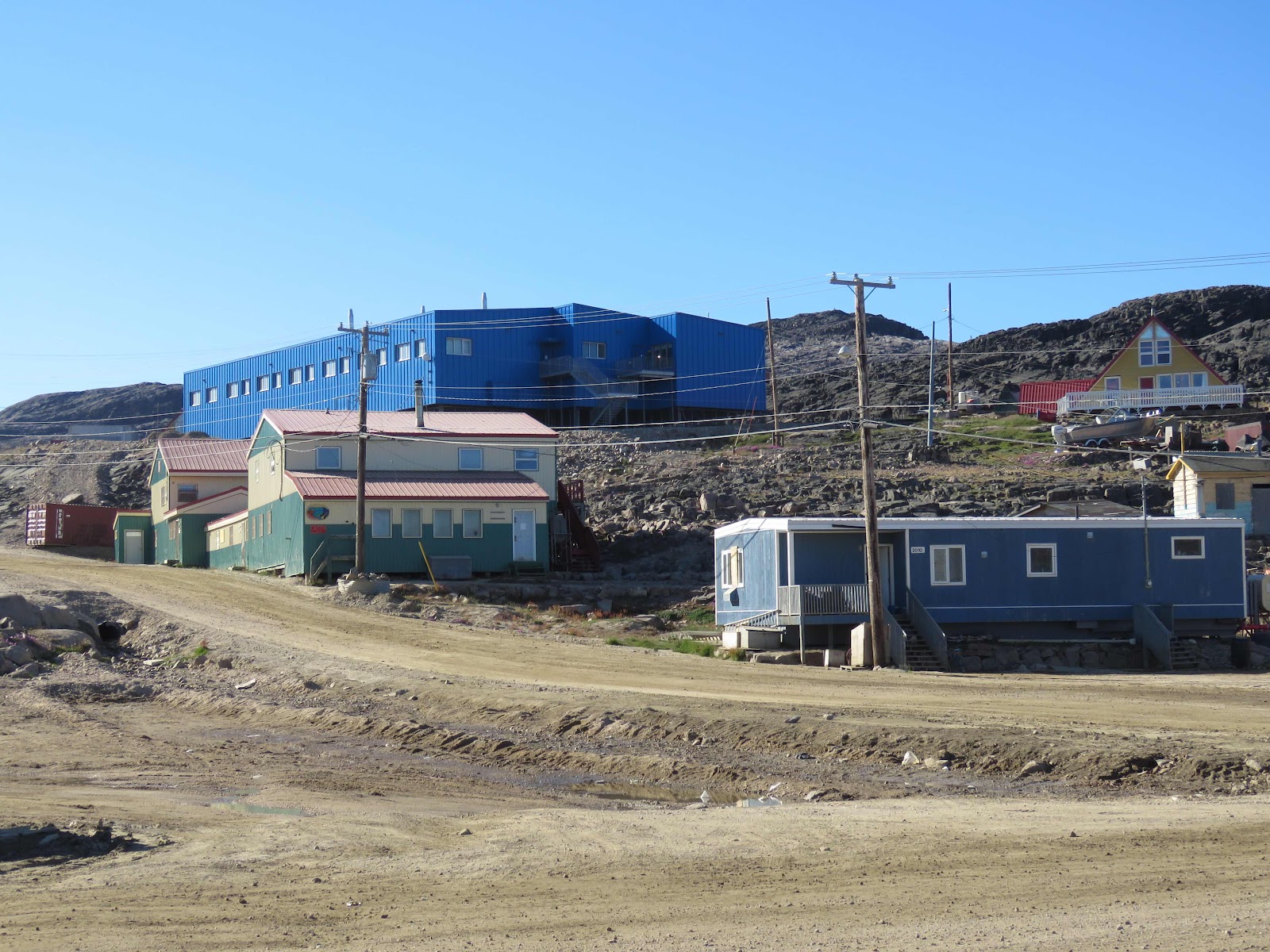
The large blue building on the hill is the modern print co-op replacing the green and yellow one below it.  It is used by many of the artists in the community 
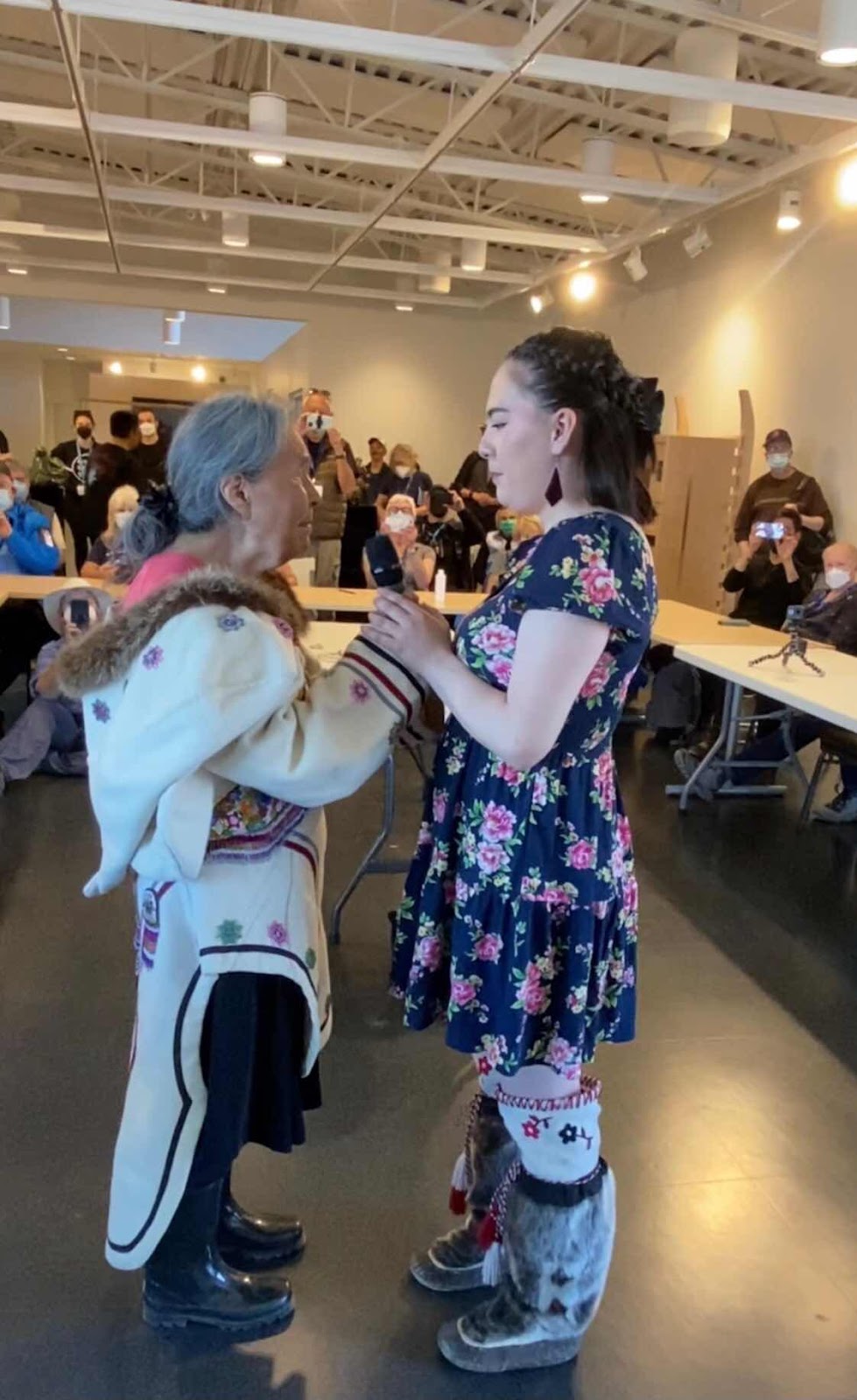
After an introduction to the toys and games of the traditional Inuit this elder and young girl gave us a demonstration of throat singing 
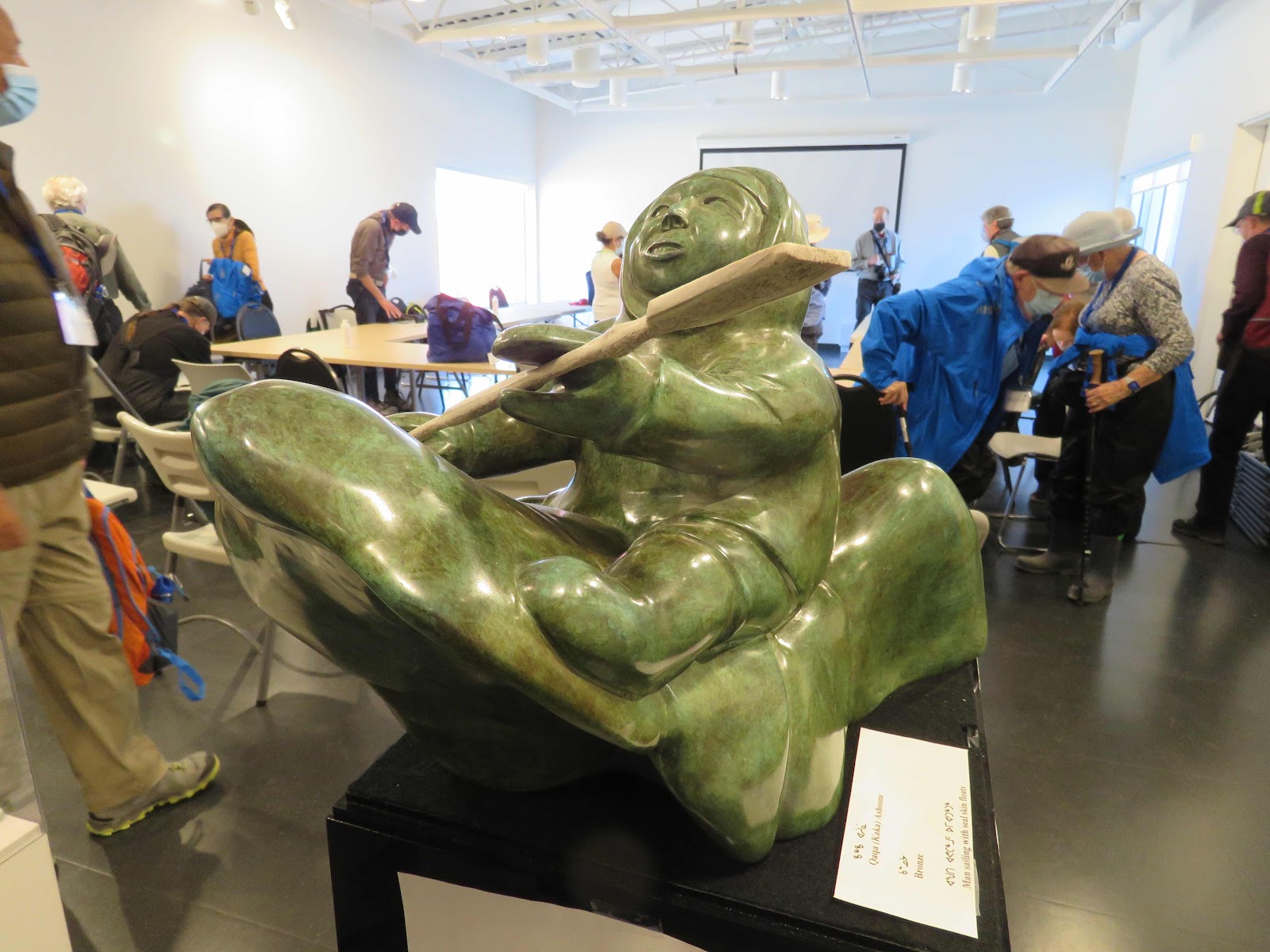
Beautiful carvings on display and for sale
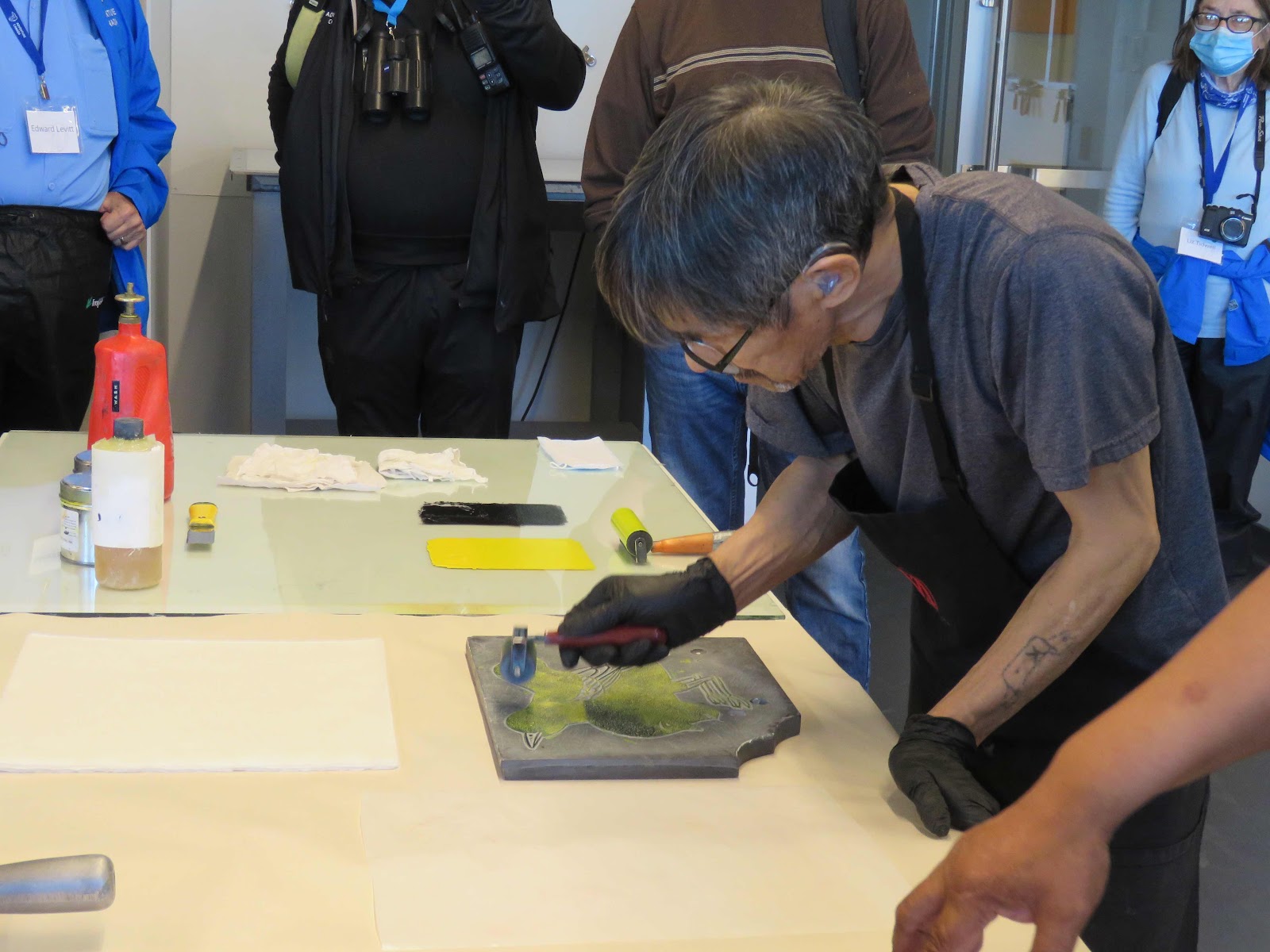
This artist gave us a demonstration on the art of print making. Each print is made by hand

The finished print.  Such a shame it would be thrown away 
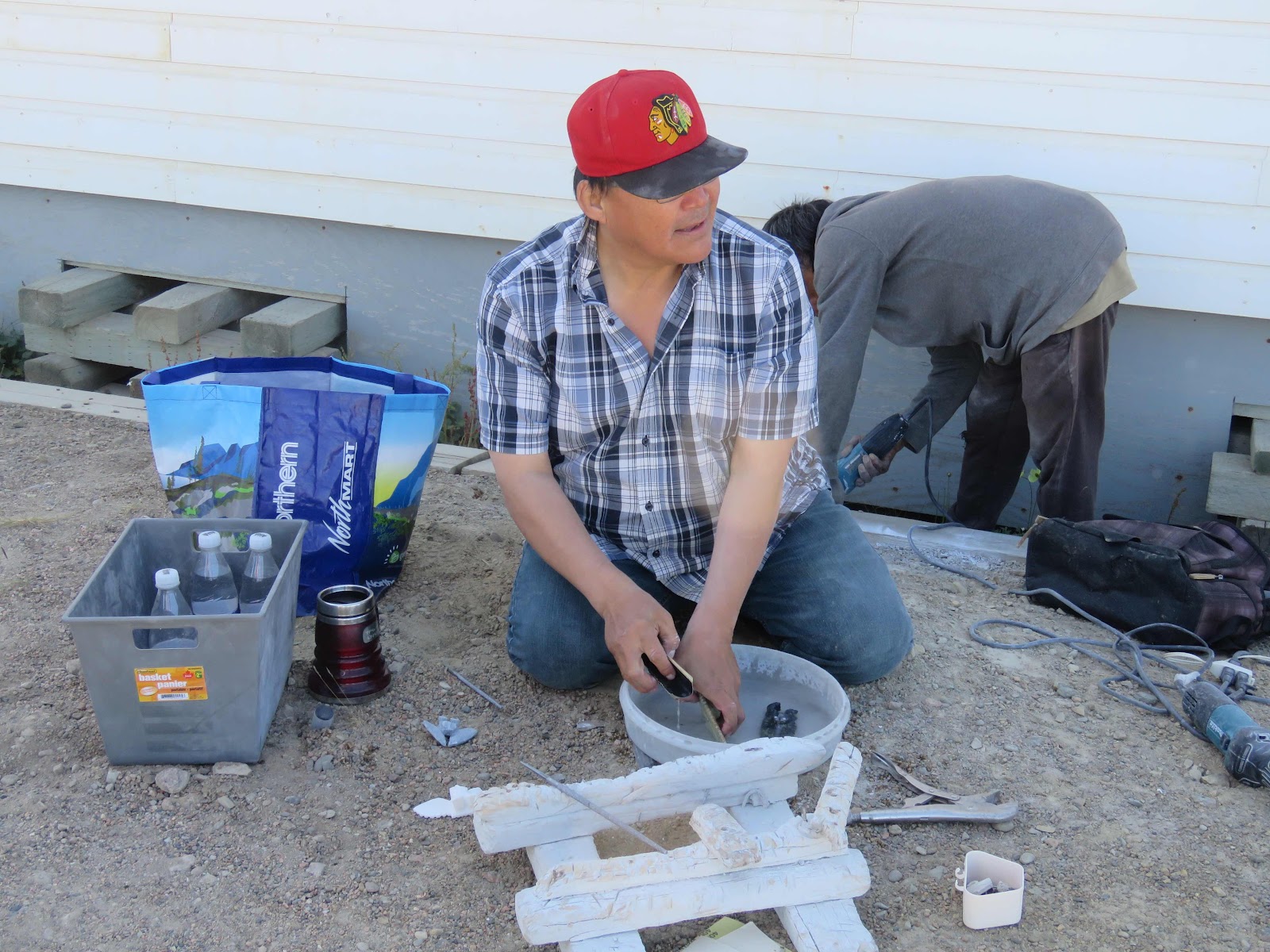
A carver working outside along the roadway sanding some of the pieces he was working on

Colourful community Center where other artists had some of there wares for sale. We were the first ship in three years but Cape Dorset art is sold around the world
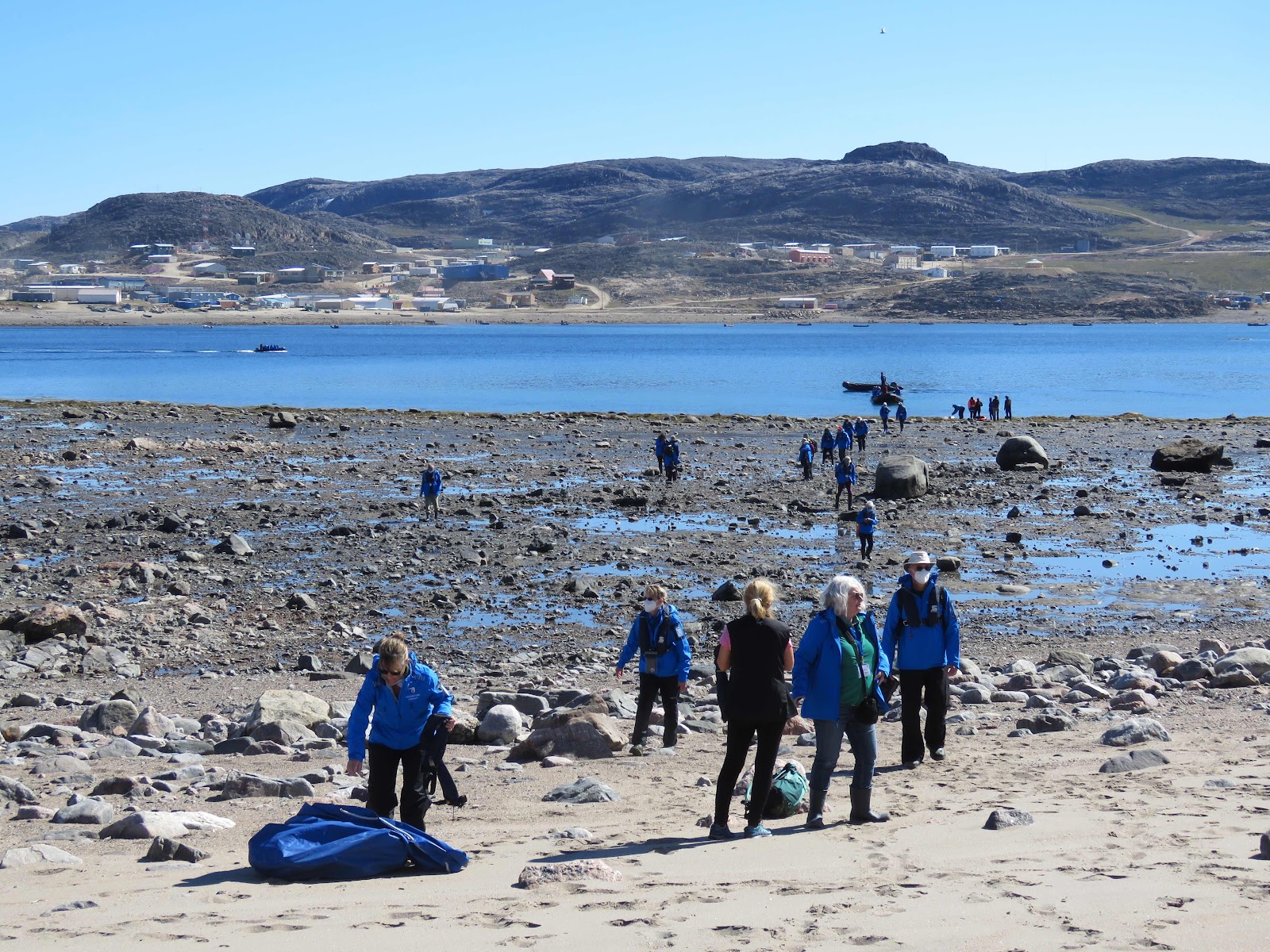
Making our way from the zodiacs up to the park. Tides here are huge and change significantly in an hour or two 

The carpets of purple fireweed resemble small orchids and colourful lichen grow on the rocks

Cotton grass adds a lightness to the landscape.  The cotton is gathered and used to start fires in the home.

The park is an archeological site and this is the remains of an ancient house
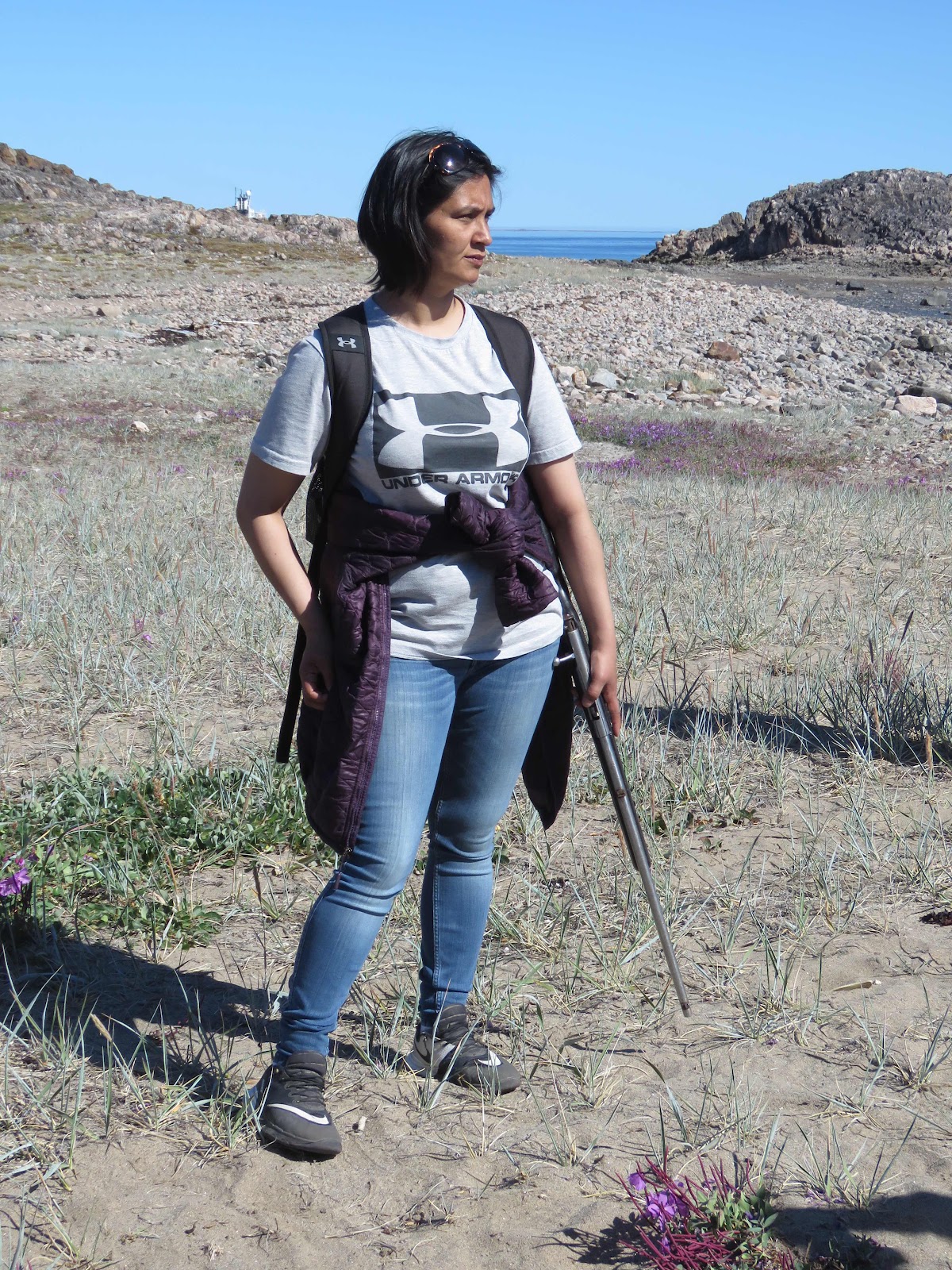
Our guide at the park carried a gun in the event of polar bears and I have no doubt that she knew how to use it

Fields of flowers going to seed had a beauty of their own

This is a ancient kayak stand where the Inuits would put their kayaks up on after hunting and fishing to protect them from the tide and from animals
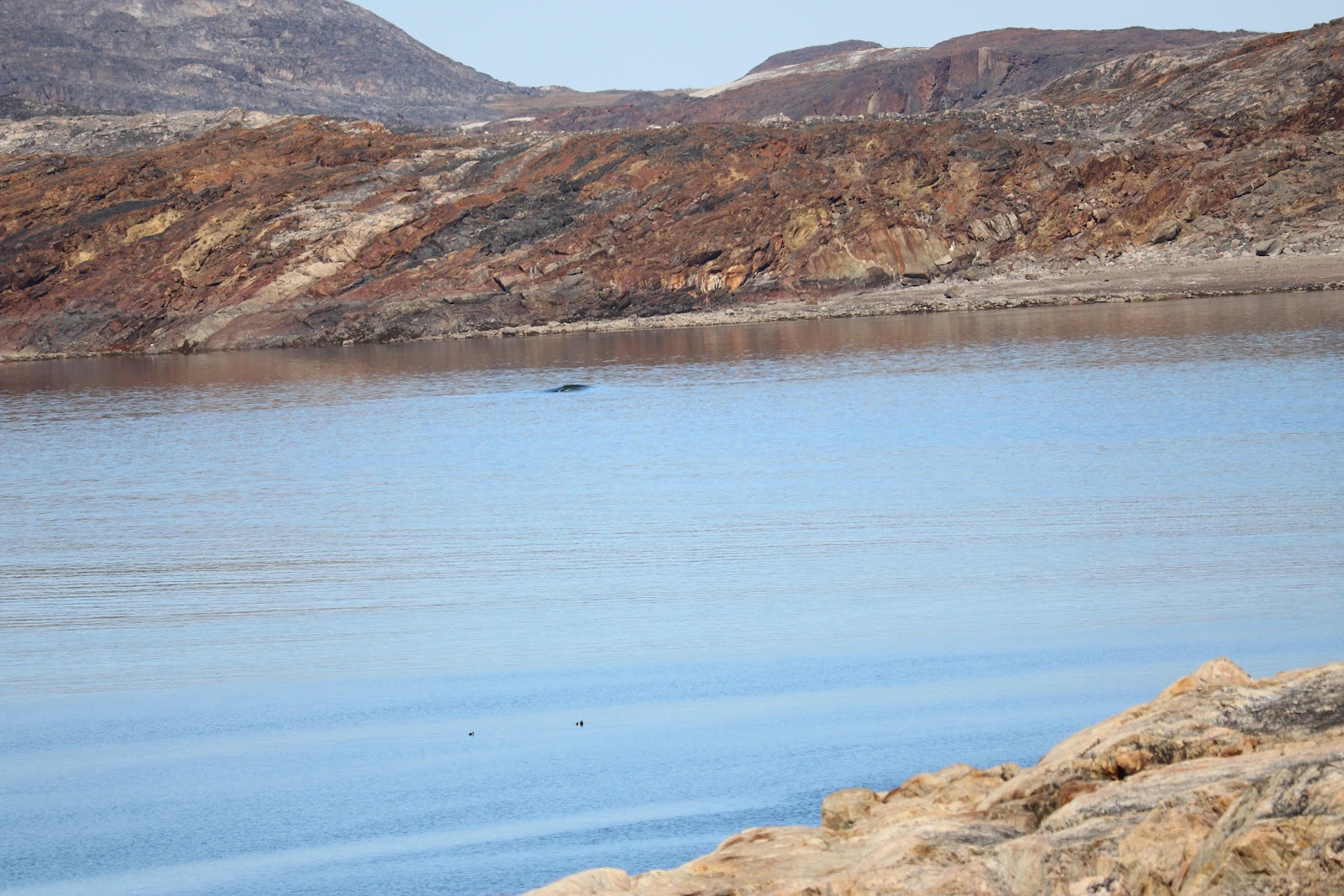
We were lucky to spot a beluga feeding in the inlet. There had been a whole pod of them there in the days before we arrived and the community had had a very successful hunt but apparently they took great care to clean up the beach before we arrived so as not to offend anyone.  It is their way of life.

This walrus head has been anchored in the sea for the creatures to take care of the cleaning so that the carver can make use of the tusks. This walrus was found dead on the beach.
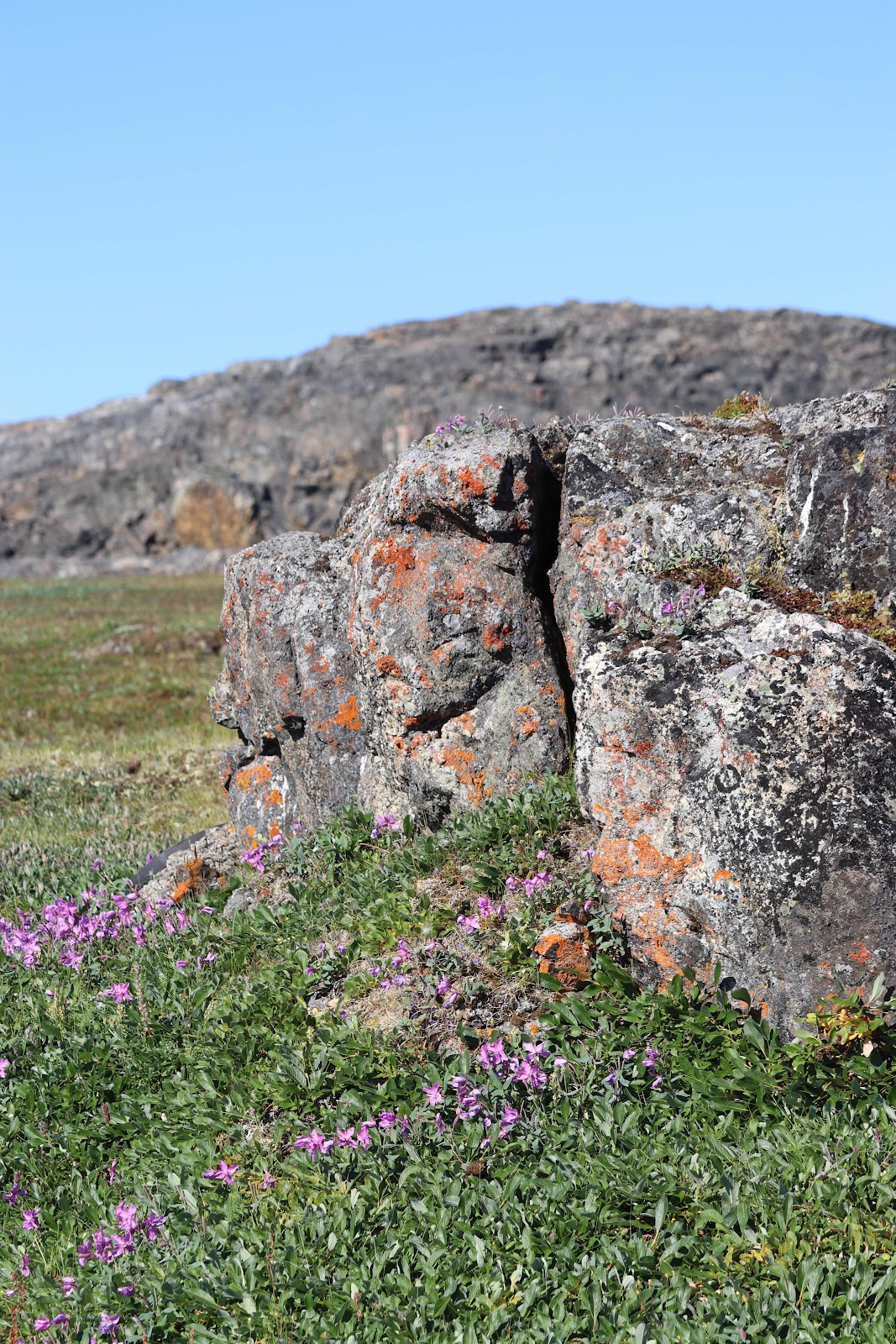
The colourful lichen make a lovely contrast to the flowers and grasses.

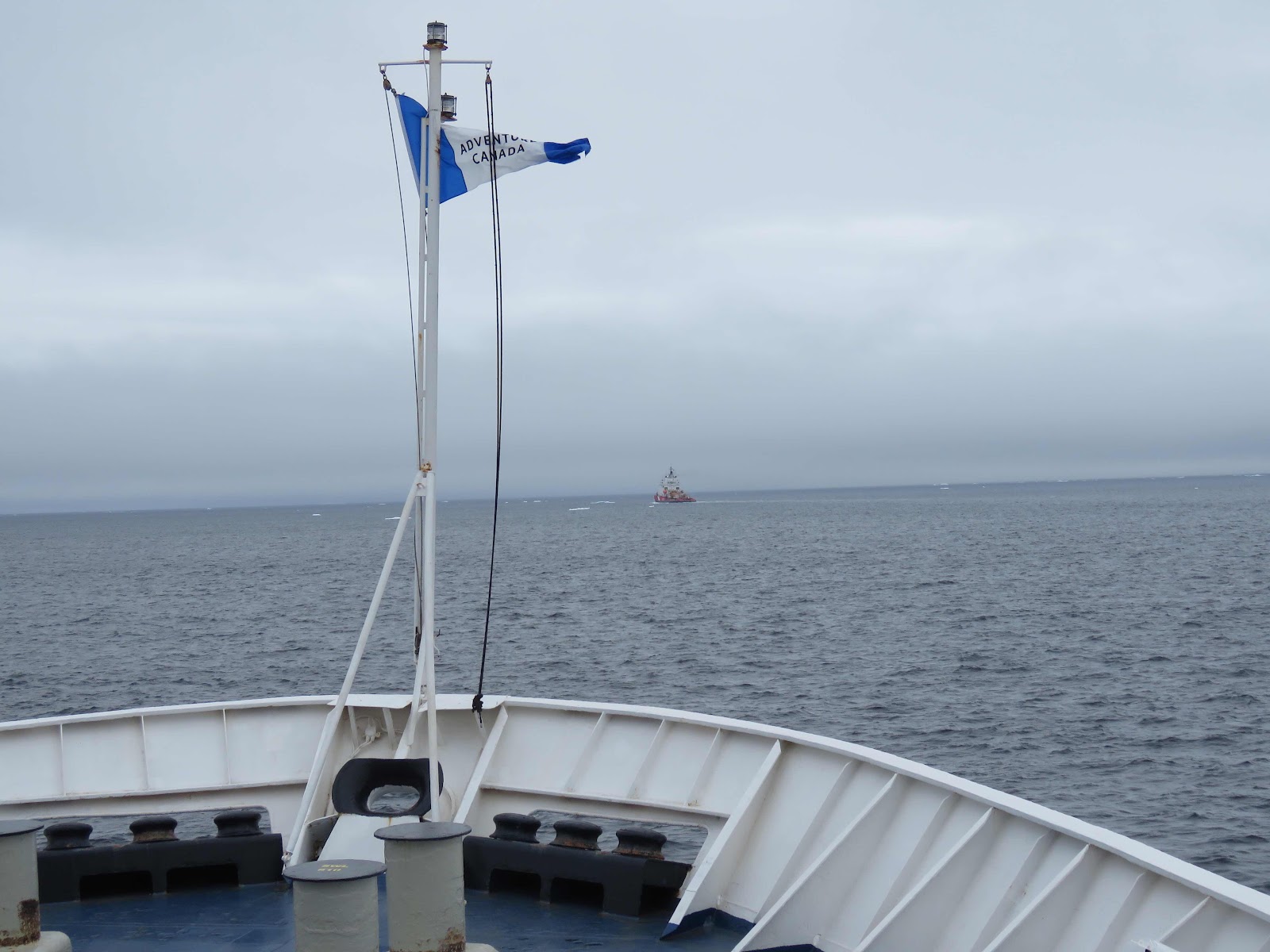




Setting Sail

Anchor was thankfully lifted at 2130 on Friday night after getting the go ahead by Transport Canada.  While we slept we were joined by the ice breaker Terry Fox, which had come to our rescue in Newfoundland, to guide the ship through the ice.  When we woke the Terry Fox was still leading the way but the ice was now down to chunks of sea ice which made navigation much easier and progress quicker towards the Savage Islands.  Unfortunately when we reached the islands the sea were too rough for the planned zodiac trips to search for polar bears.  The day was very foggy and windy so not a great day to be out on deck.  There were some interesting presentations but we are eager to see and experience more of the north. 
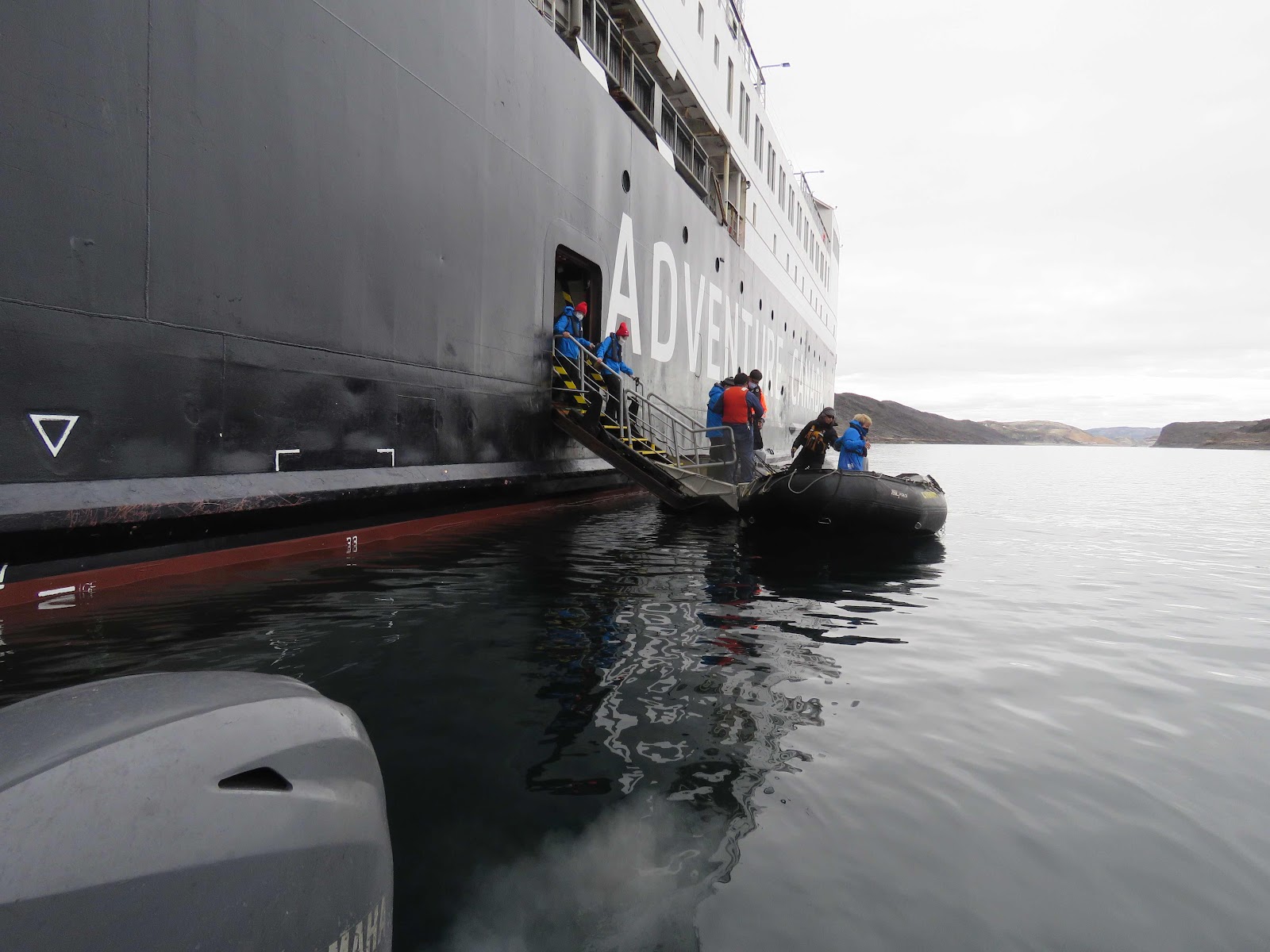
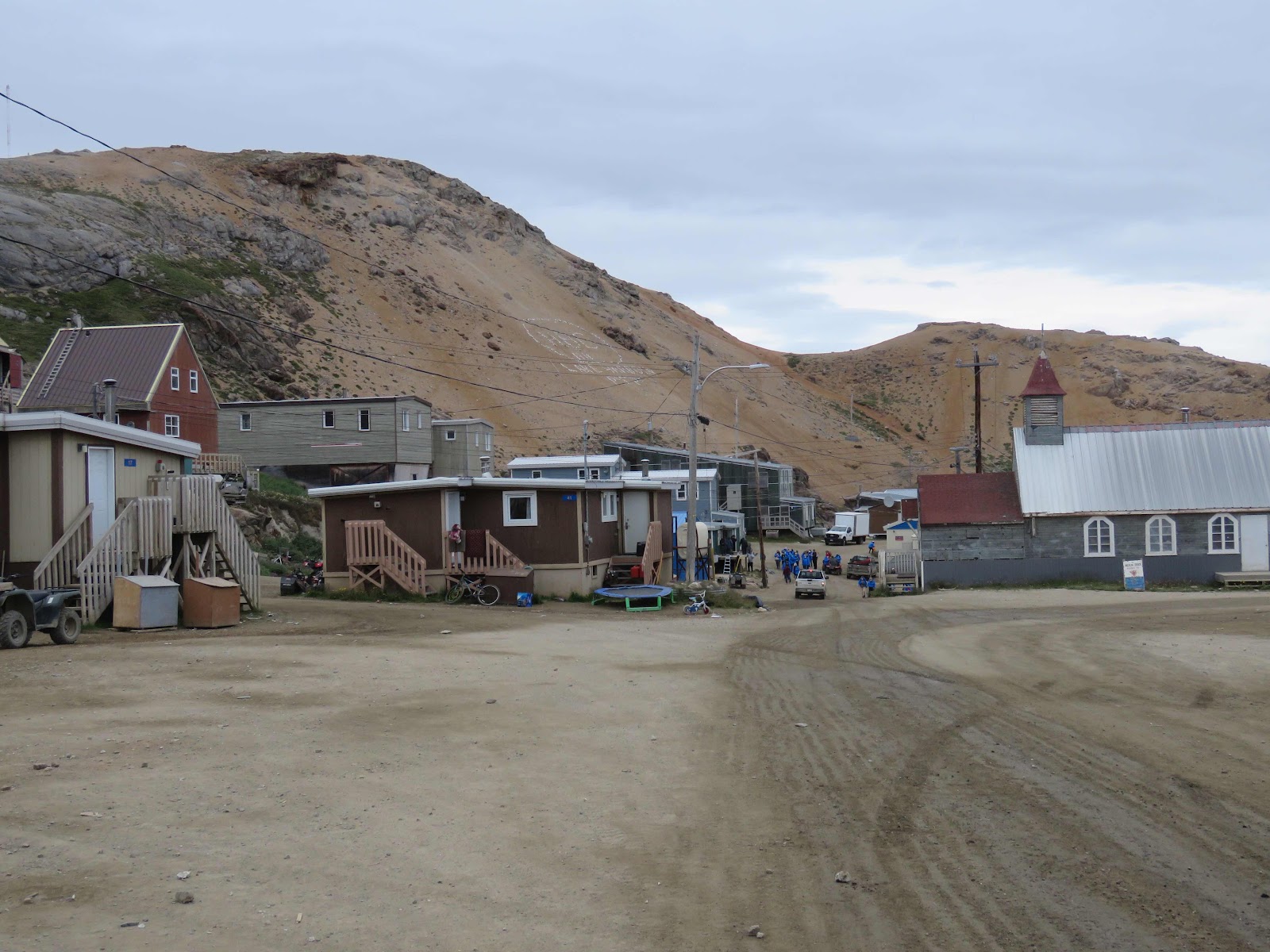
Today the 24th the weather is clear.  We sailed along the coast of Baffin Island under calm seas and 6 degree temperatures.  We anchored in Lake Harbour where we travelled by zodiac to the small village of Kimmirut.  They have not had any visitors since 2019 so for some of the young children we were quite the oddity.  Everyone was very friendly and welcoming and some of the locals conducted tours of this village of 400 Inuits.  Everyone rides around on ATVs and there is obviously no age limit as to who can drive as many young ones were zipping up the dirt streets.  There is an Anglican Church in town which was built in 1908 and holds weekly services.
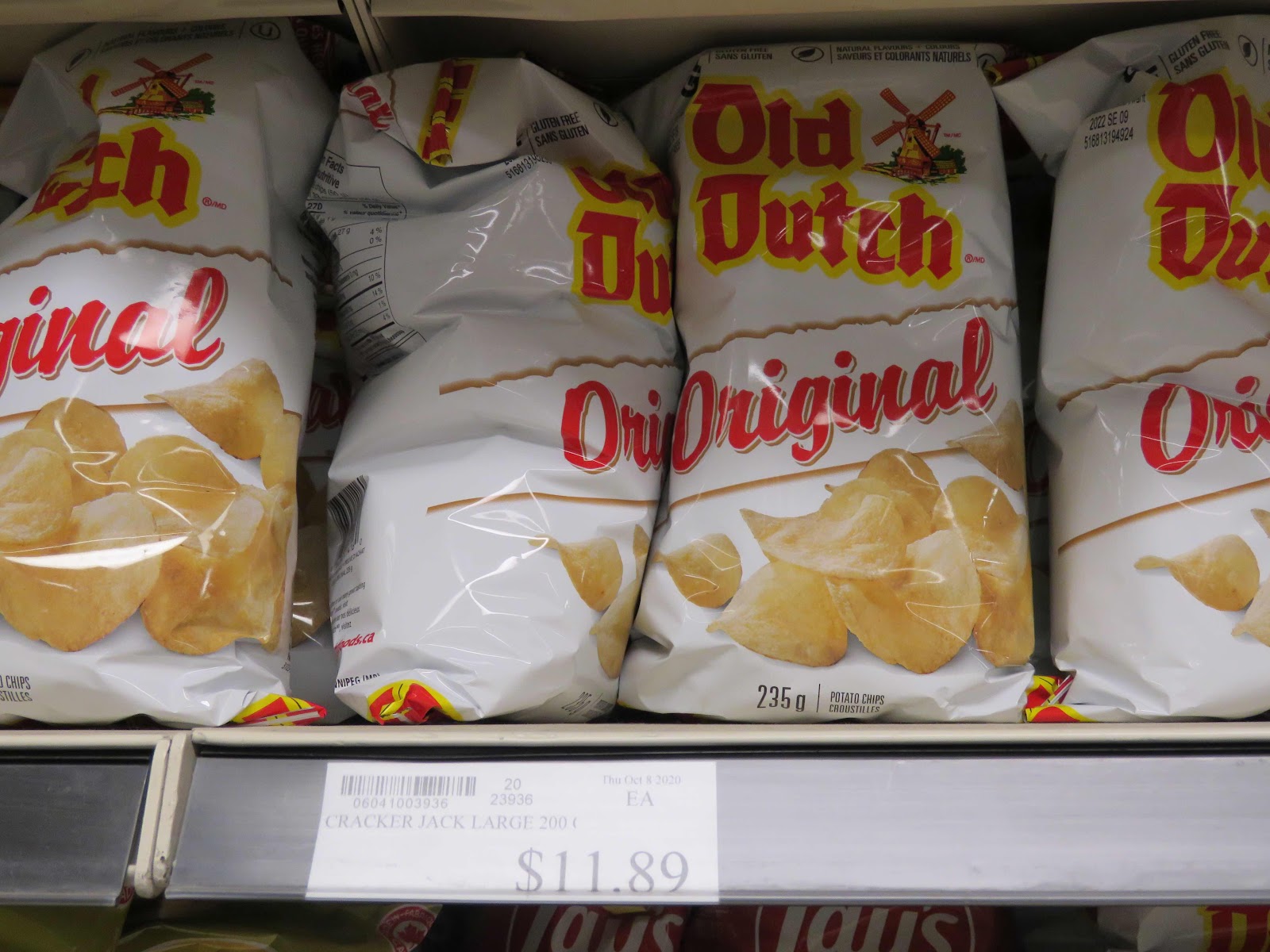
One of their main sources of food supply comes from the sea and often this is the seal.  They use every part of the animal, using the skin for mittens and boots, the blubber to burn their lamps for light and cooking and the meat as food.  They had just caught two seals and showed us how they skin them in one piece and then harvest all the individual parts.  We went into the co-op which is their store and it was fascinating to see first of all what they sold and secondly the prices.  As an example a bag of potato chips was $11.99 and a box of Kraft Mac and cheese was $4.99.  As far as what they sold they amount of junk food far out weighed healthy offerings which would help explain why even though they all had broad smiles to greet you most were missing many teeth.  Also noticed that there were a lot of smokers amongst the locals.  It was special to visit such a remote village that most have never even heard of much less visited.
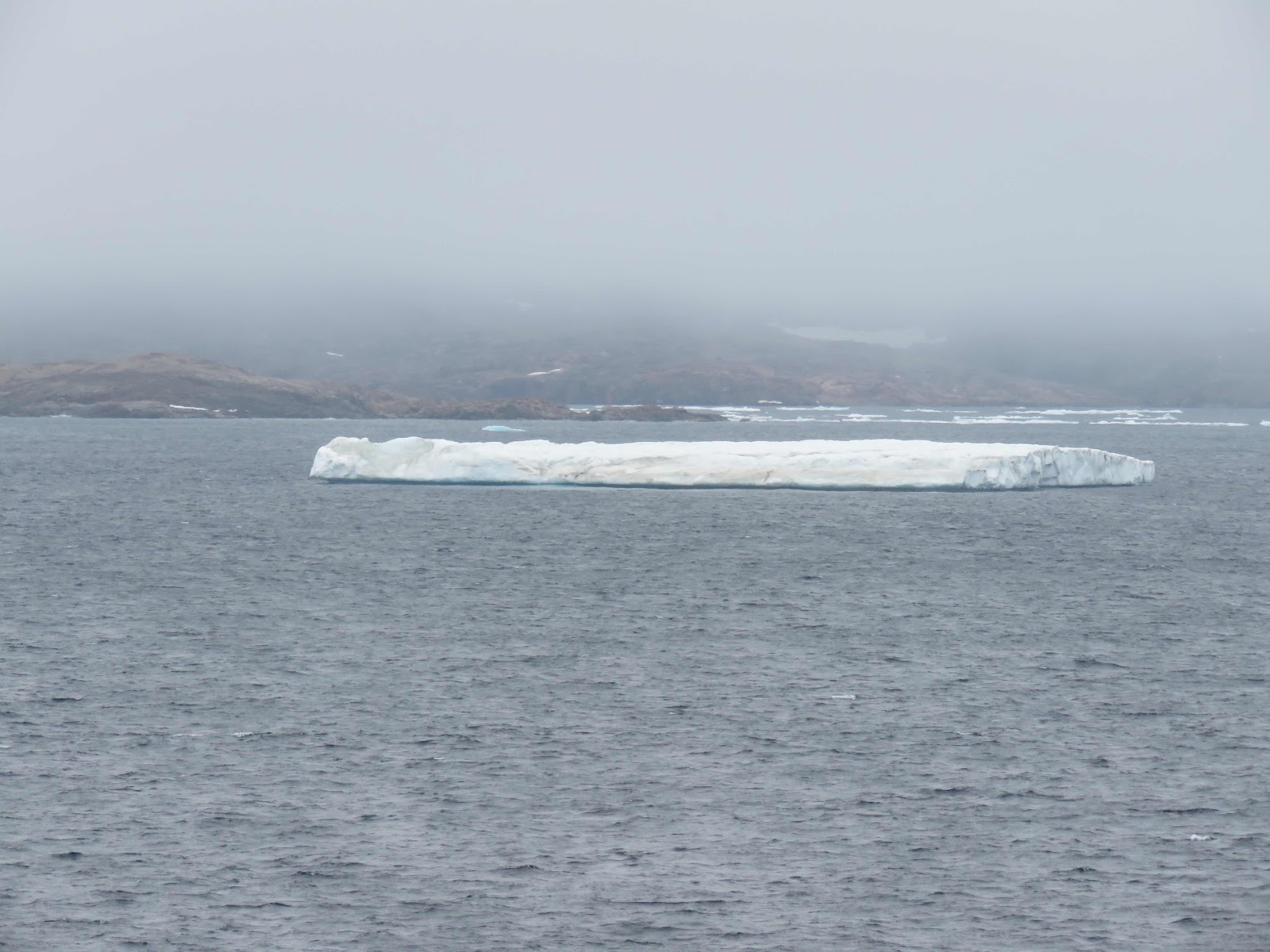
July 25th plans were once again changed due to weather.  Most of the day was spent in dense fog though we did have an hour window where we got out in the zodiacs to see Somme icebergs close up.  Was nice to get off the ship  for at least a bit. Fog prevented any wildlife spotting.


The Icebreaker Terry Fox leading the way through the fog and ice.

Big chunks of sea ice that appeared through the fog.  There are two ice navigators on board the ship.

The village of Kimmirut where we would visit and meet the locals. Many of the children wanted to come back to the ship with us as for many I am sure they have never left the small village.

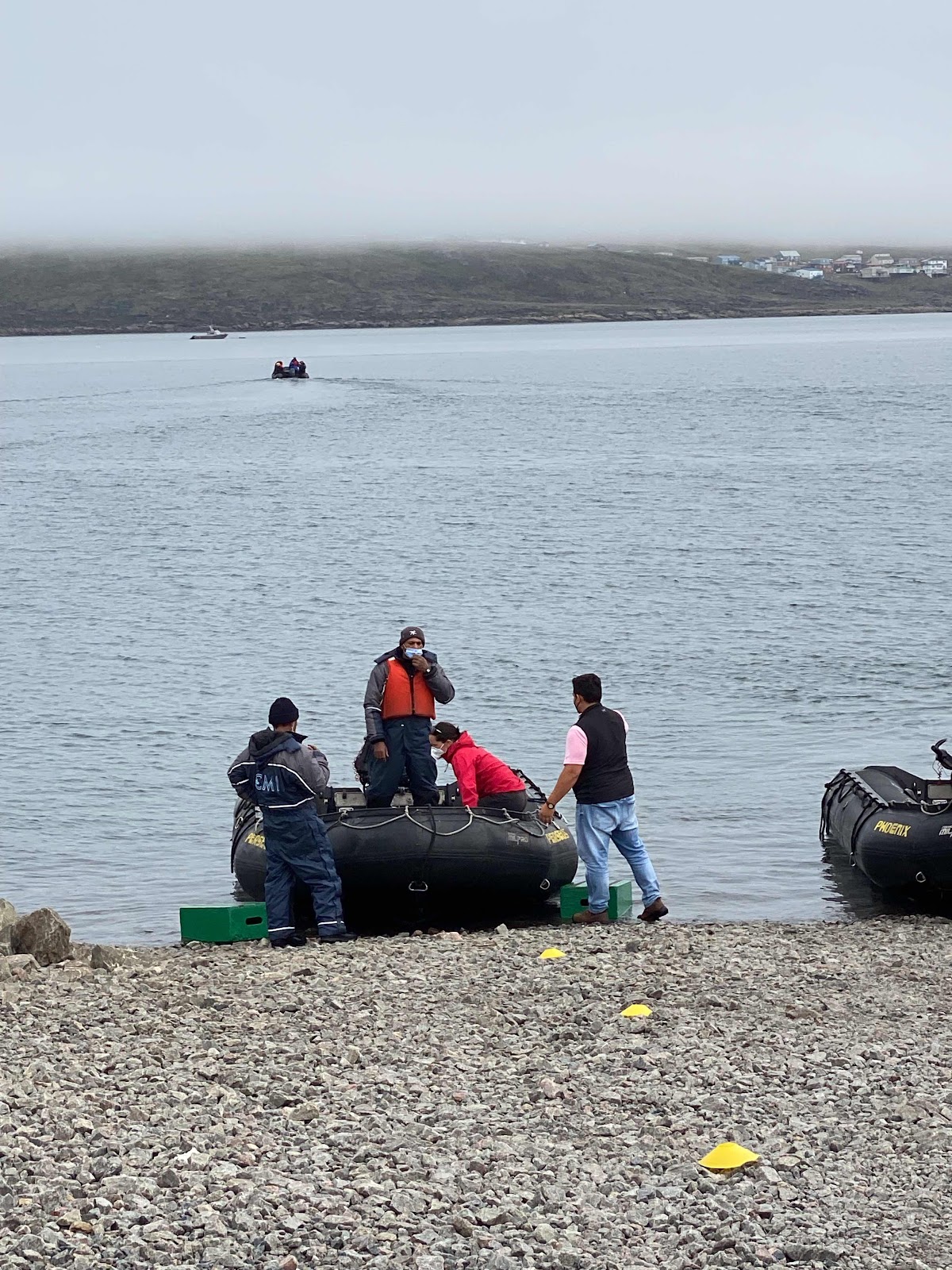
Boarding the zodiacs for our visit

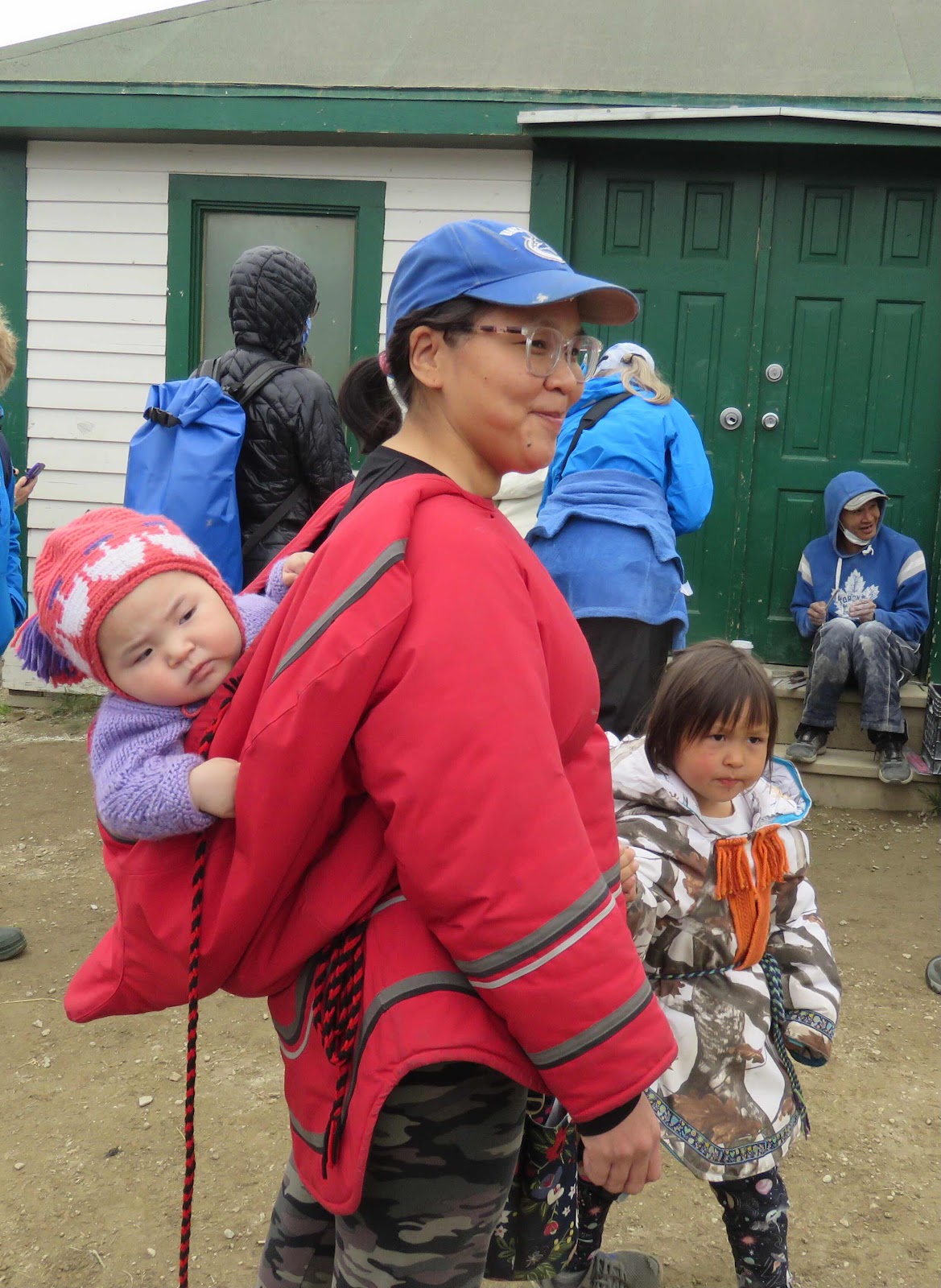
This was our guide for the village. Betsy had lived here her whole life and has three children. She is wearing the traditional Inuit coat with very intricate beadwork.local boats sit in the harbour and dot the shore waiting for the hunt.

Houses in the village are small and basic and the church sits centrally located and is a meeting point for the residents.  

The ring seal is an important source of food for the people and they do use every part. We had a demonstration of how carefully and quick they carve up the seal and then the meat is distributed amongst the residents.


The hood of the traditional coat is used to carry the babies and we saw a few being toted around this way. Even the small children wore the traditional clothes.

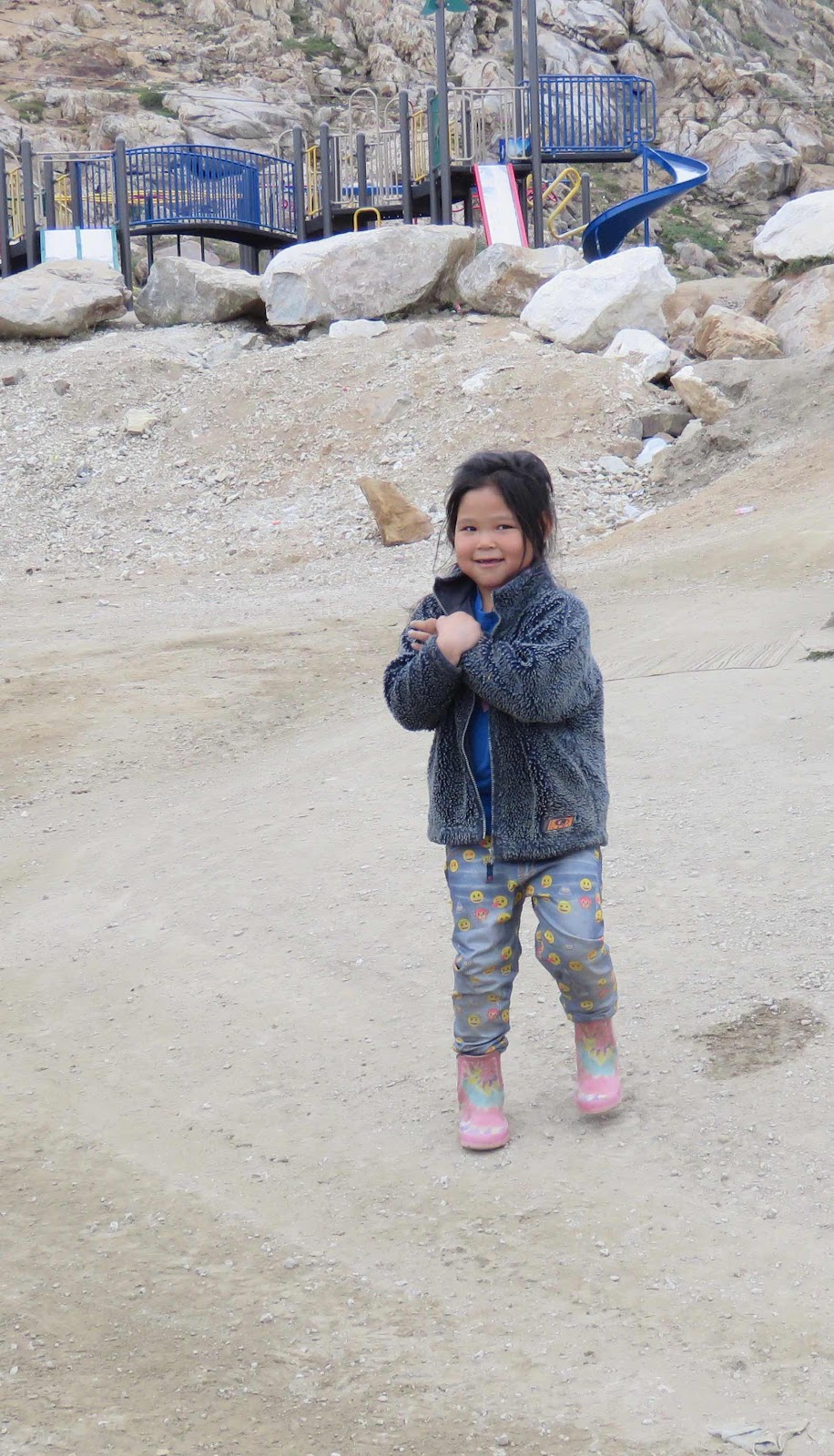
The children of the village were fascinated with us and loved to have their pictures taken and then showed to them 

A visit to the local co-op revealed the high cost of food here and why it is important to catch what you can

Certainly a tranquil outlook from the town. In the Arctic we are above the tree line so the hills appear bare though on closer inspection they are often covered in beautiful wildflowers unique to the Arctic.

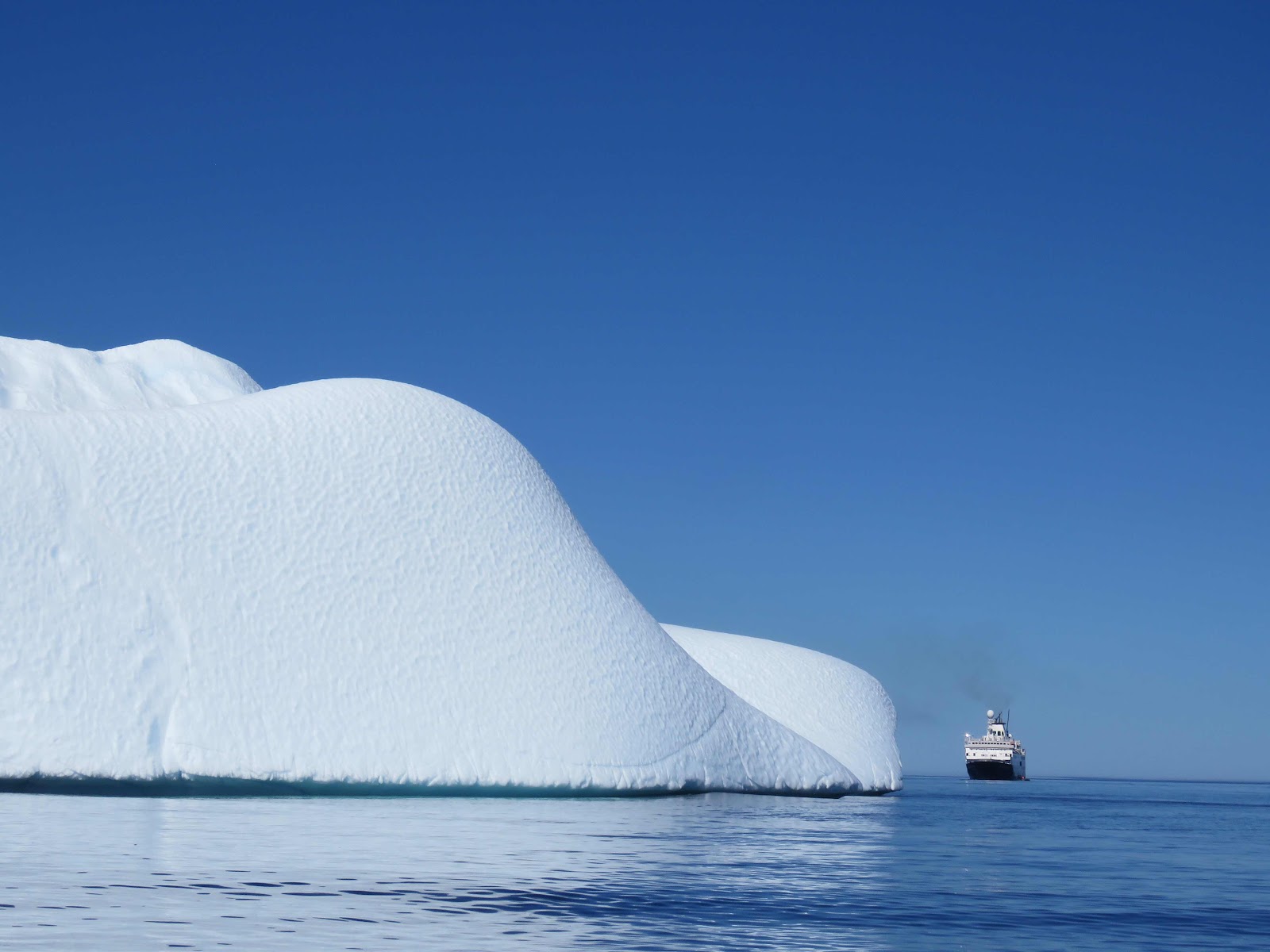
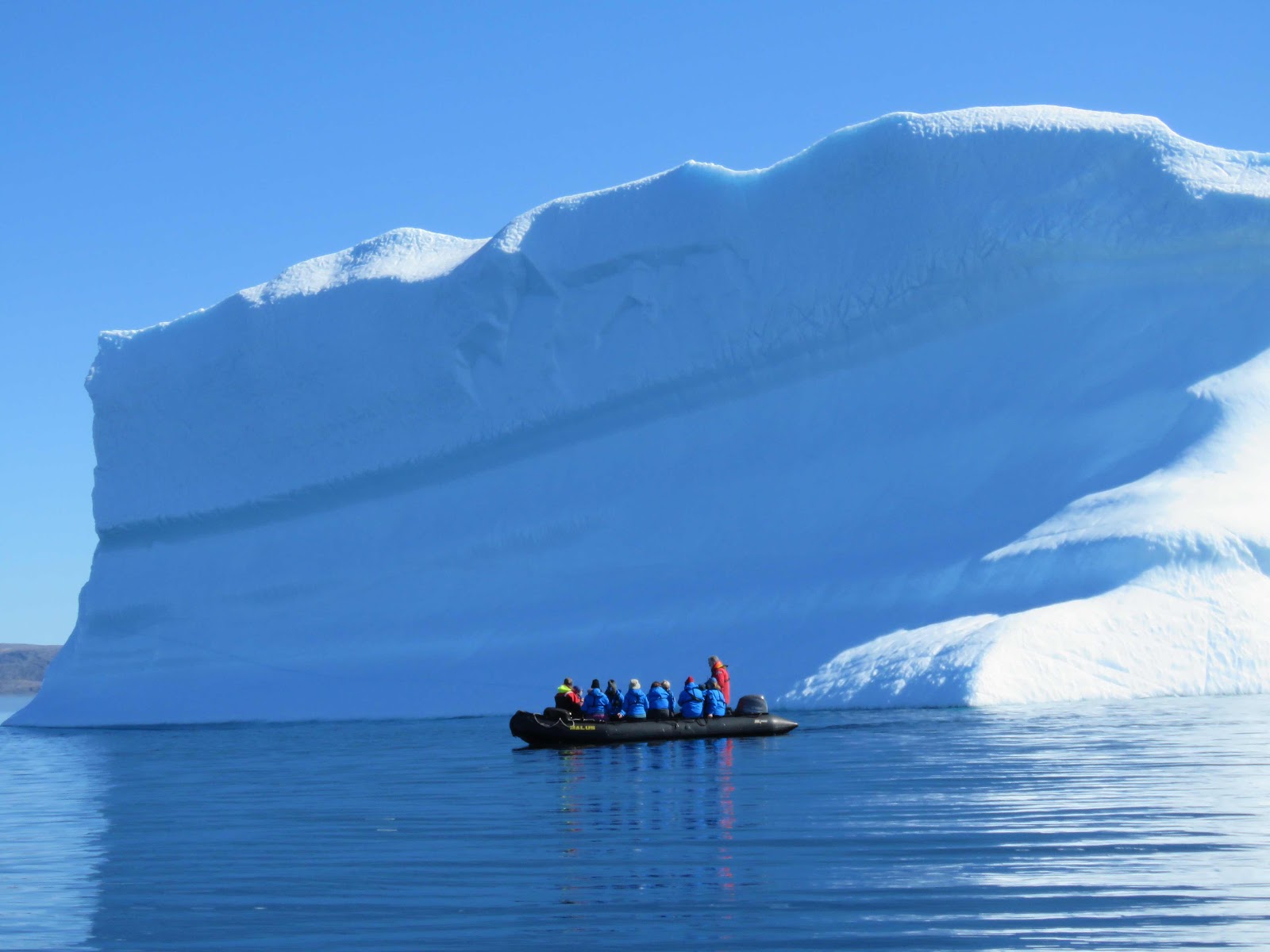
Visiting icebergs by zodiac does make one realize how big some of them truly are

The ship is dwarfed by this iceberg

The shapes, colours of blue in the ocean , sky and iceberg make for a spectacular sight

An iceberg at sunset takes on a whole different light and beauty


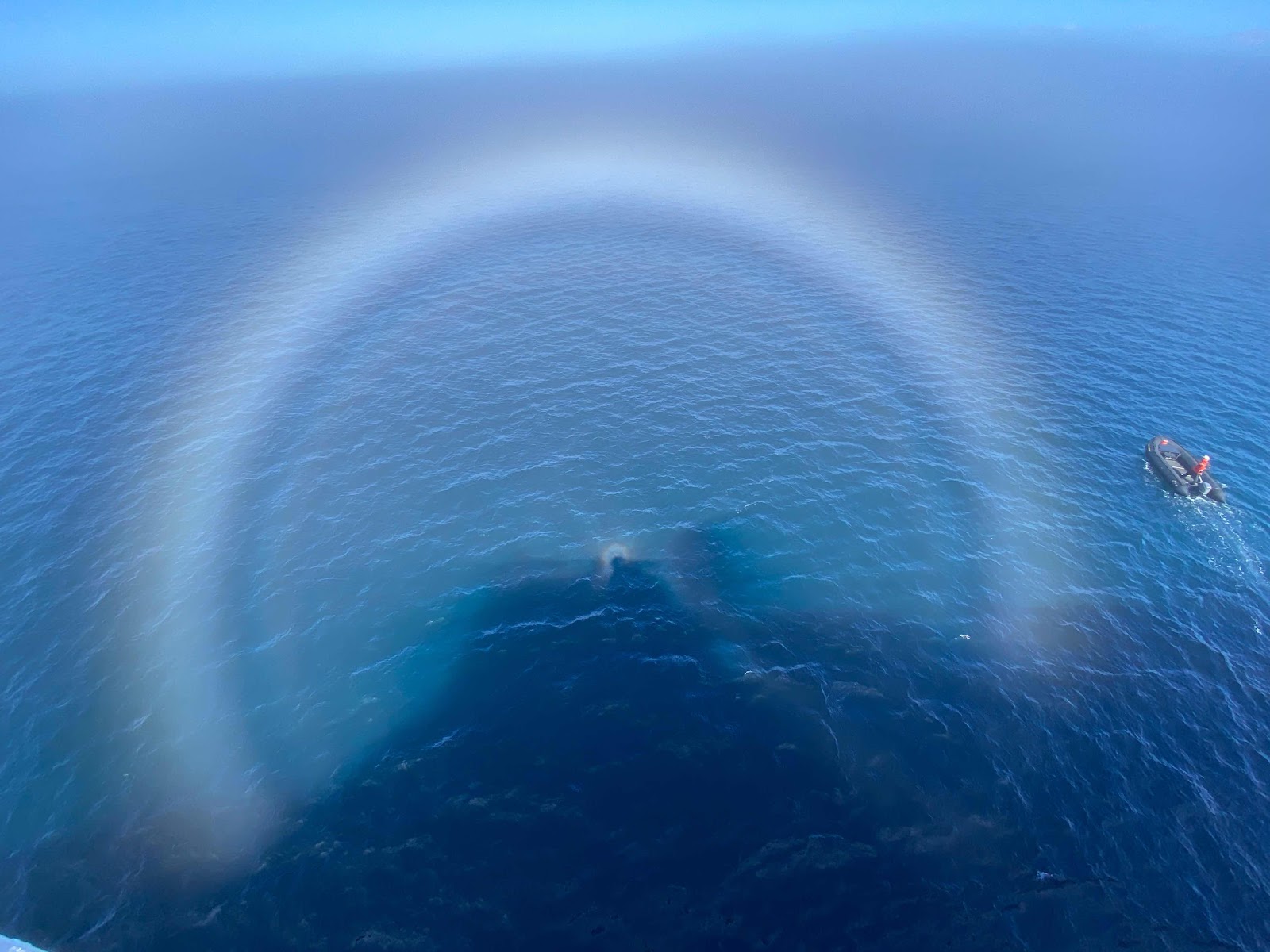
This was a very strange halo effect we caught in the sea through the fog from the ship. The small halo in the middle is coming from behind Eric and I. It was quite beautiful.


Heading off

Thursday morning bright and early we boarded buses and headed to the private terminal at Ottawa airport where we boarded our Canada North flight to Iqaluit.  No security,  the buses pulled up beside the plane and after showing our passports we were welcomed aboard for the 3 hour flight north.  As we approached our destination we could see icebergs floating in the ocean which were a clear indication that we were in a much colder climate.  Back on buses at the airport we were welcomed by a local who told us we were the first tourists since Covid so they were thrilled.  We drove sraight to the shore where we boarded zodiacs which took us out to the Ocean Endeavour anchored out in the bay.  The zodiac drivers then had to make many more trips to collect all the luggage and supplies.  The afternoon was spent on mandatory lifeboat drill, introductions of the expedition team, a talk on polar bear safety and time on deck taking pictures and enjoying the surroundings.  We were supposed to set sail but there were two big speed bumps.  First we learned that an ice flow had blocked the entrance to Frobisher Bay where we were anchored and we were waiting for an ice breaker to come and lead us out and that would not be until 0530 the next morning. This was met with a lot of interest and with most planning to get up early to experience the event.  Later in the evening we were informed that an essential member of the bridge had not yet arrived due to travel delays and they were not sure when this would happen and we could not leave without him.  This means spending at least tomorrow at anchor and I must admit that Eric and I are less than impressed.
Friday morning dawned with a thick fog which quickly burned off.  As we are unable to sail a tour of Iqaluit has been arranged. We headed back into town by zodiac and were picked up by buses, each one with a local guide.  Iqaluit is a city of 8000 and is the capital of Nunavut.  Approximately 60% of the population is Inuit with the two main jobs being government and fishing.  Tourism has really taken off with dog sledding being particularly popular.
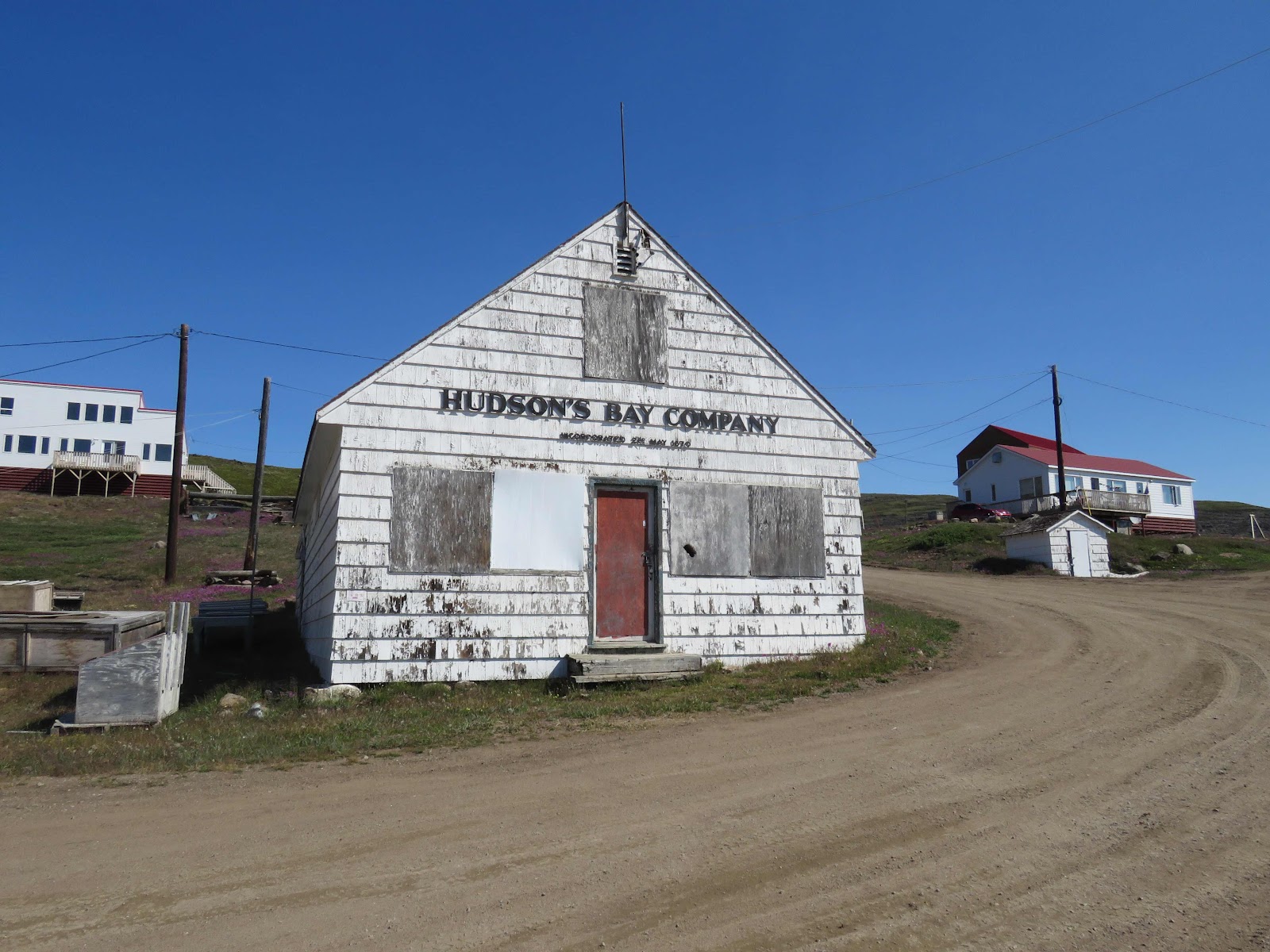
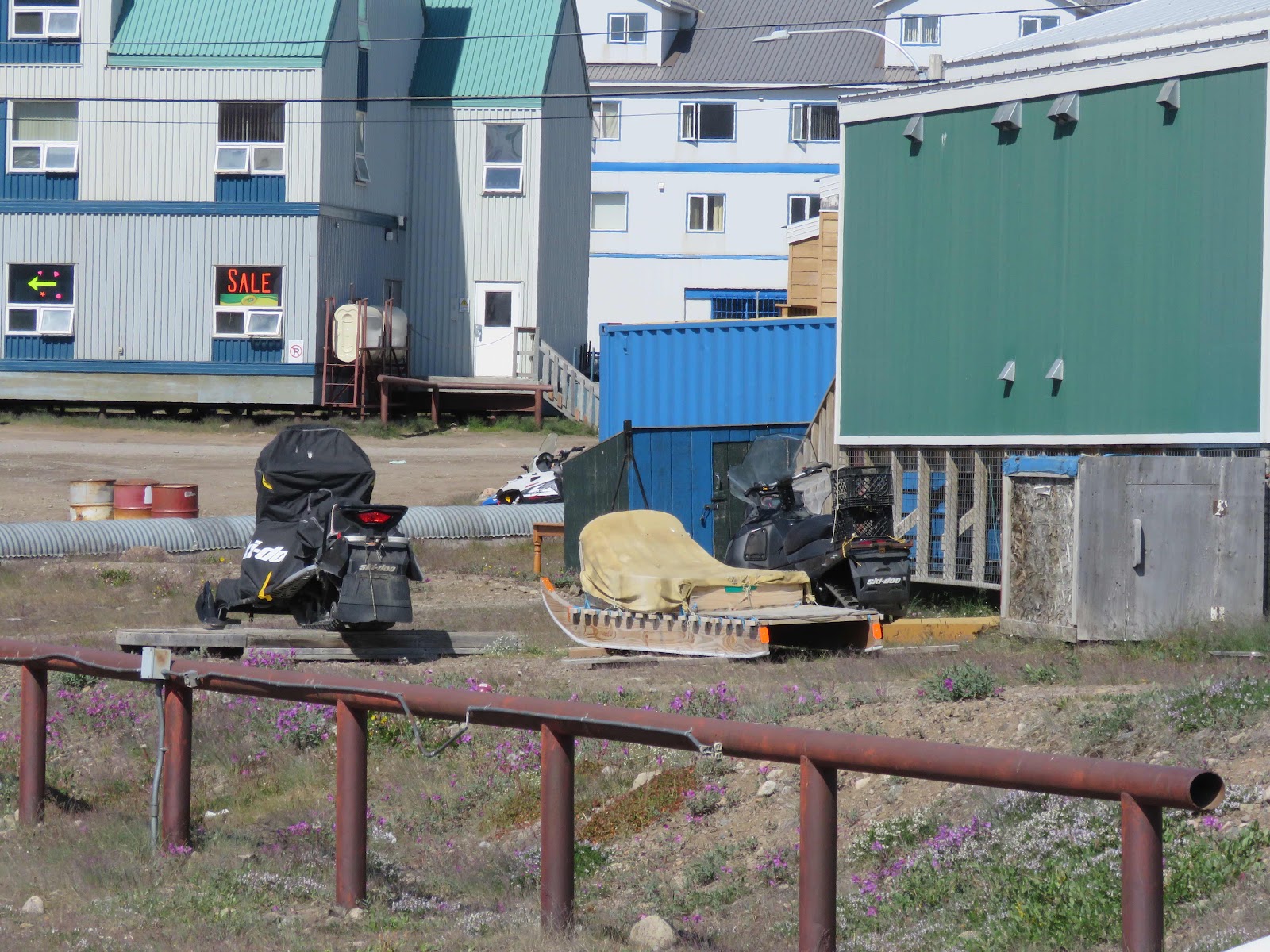
The homes and buildings are all built on stilts due to the heavy permanent frost which would warp the buildings if they were built on foundations.  Water is delivered to tanks which are inside each building and honey trucks regularly pump out the heated sewage tanks which are below each home and building as piping is not possible due to the extreme cold and rocky environment.  Each home has a red light on the outside of it which lets the water and sewage drivers know when they need to be serviced.  We visited a small collection of original Hudson Bay buildings from the 1640’s.  Amazing that they would survive this long.  Scattered outside most every house is a collection of skidoos, dog sleds and ATV,s, all in various states of repair.the hospital is one of the most modern buildings with a beautiful polar bear mural out front.  We visited the small museum which had a collection of some wonderful native carvings from all over the Arctic.  Returning to the boat we have our fingers crossed that we will sail sometime today.


Boarding our Canada North charter flight got Iqaluit.  Right off the bus and on to the plane, no security and no waiting.  Wish flying was always this easy!


Approaching the Arctic with icebergs visible in the ocean below the plane and ice dotting the shoreline.


Not a great picture taken through airplane window but loved the casual look of the pilots arm out the window.  Who knew these windows even opened?


Signs in Iqaluit were trilingual as all three languages are spoken here with kindergarten and grade one taught solely in induit and from then on students have the choice of English or French stream.


Our transportation out to the ship.


Zodiac drivers had to make many trips to deliver all the luggage to the ship.  Amazing how much luggage people bring despite instructions to bring only one each.

Our view of Iqaluit from the ship.  This was supposed to be our only view but we did indeed get a tour the next day as we waited for the ice breaker and the Captain to arrive.

The local school was built with very few windows as it was felt that with the long dark days it would be better for the students not to have views of the outside.


This igloo church is a standout in the town.  It is an Anglican Church but the ramp to the left has just been added as Iqaluit is one of the places that the Pope is visiting next week while he is in Canada to apologize for the residential schools.

This Hudson Bay Outpost has been here since the 1640’s

Every yard had various sorts of skidoos, dog sleds and ATV’s


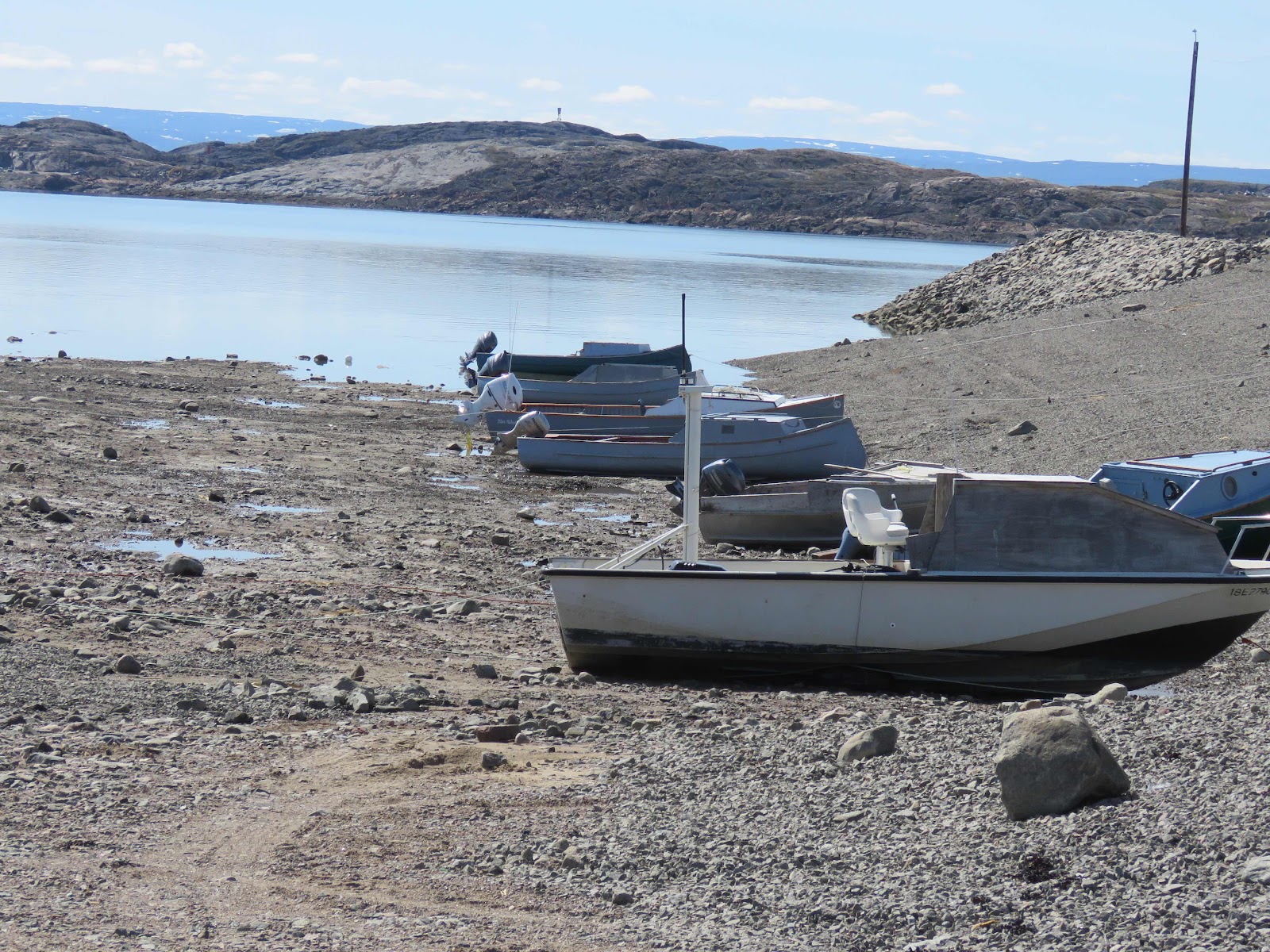
This is the local marina at low tide.  Boats are used for fishing and hunting.


An Inuit carving in the museum made out of whale bone


Outside of town is a large dog park where everyone keeps their sled dogs during the summer months.  A large percentage of people have dog teams for their own personal use or for tourism.  The park is cleaned daily and the dogs well cared for as people consider them part of the family.


A spectacular sunset to conclude our first full day in the Arctic.


Arctic Adventure 2022

Tuesday July 19th we boarded a plane for the first time in two and a half years due to the coved pandemic which has basically shut down all travel. A different environment on the plane with everyone wearing masks, no magazines and stewards won’t even touch your table tray. The world has definitely changed. As we will be going on a ship the first hurdle to this trip was to have negative PCR tests which we got yesterday and we will have to have another antigen test before boarding our charter flight north. Fingers crossed that all goes smoothly.
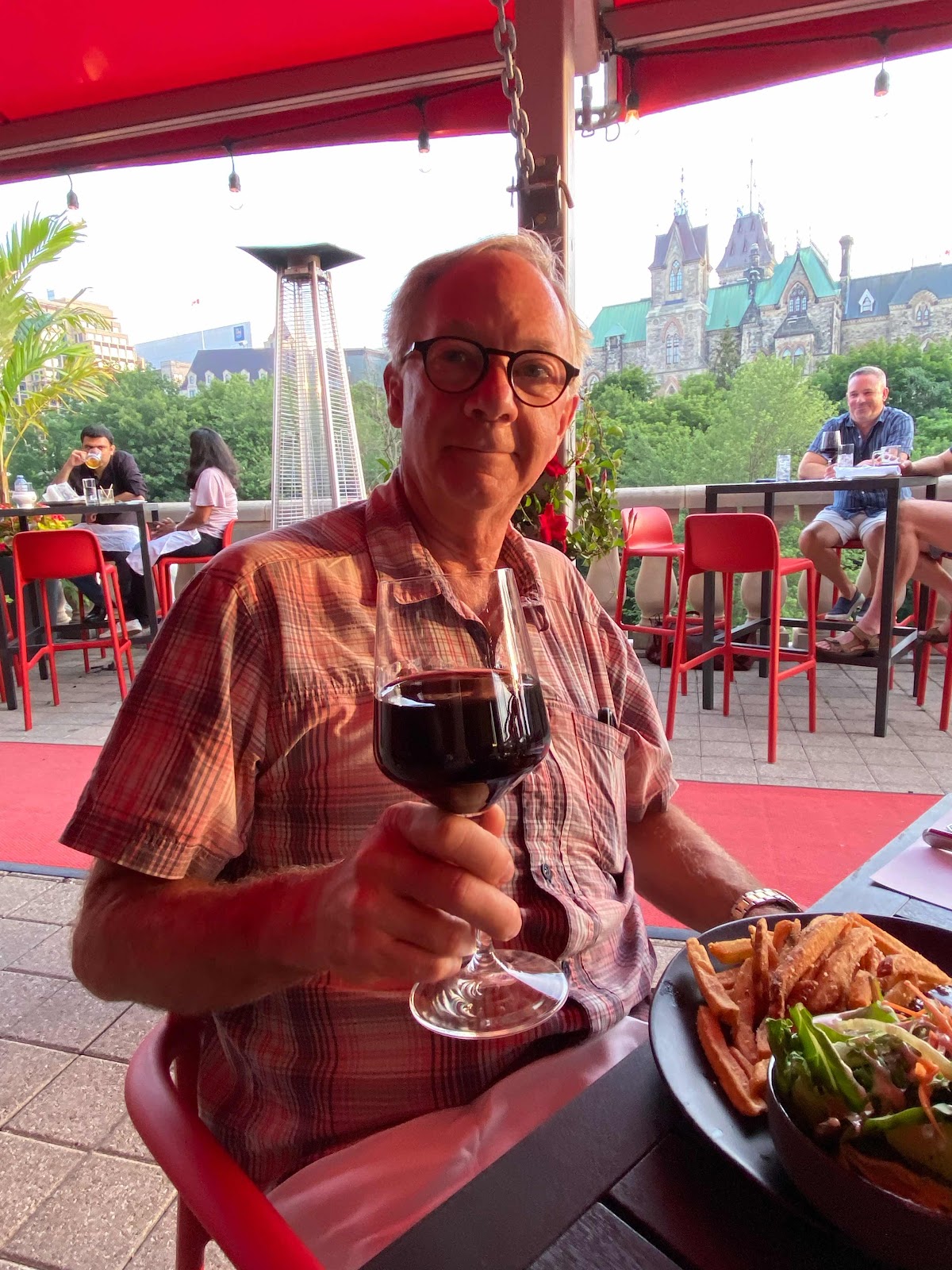
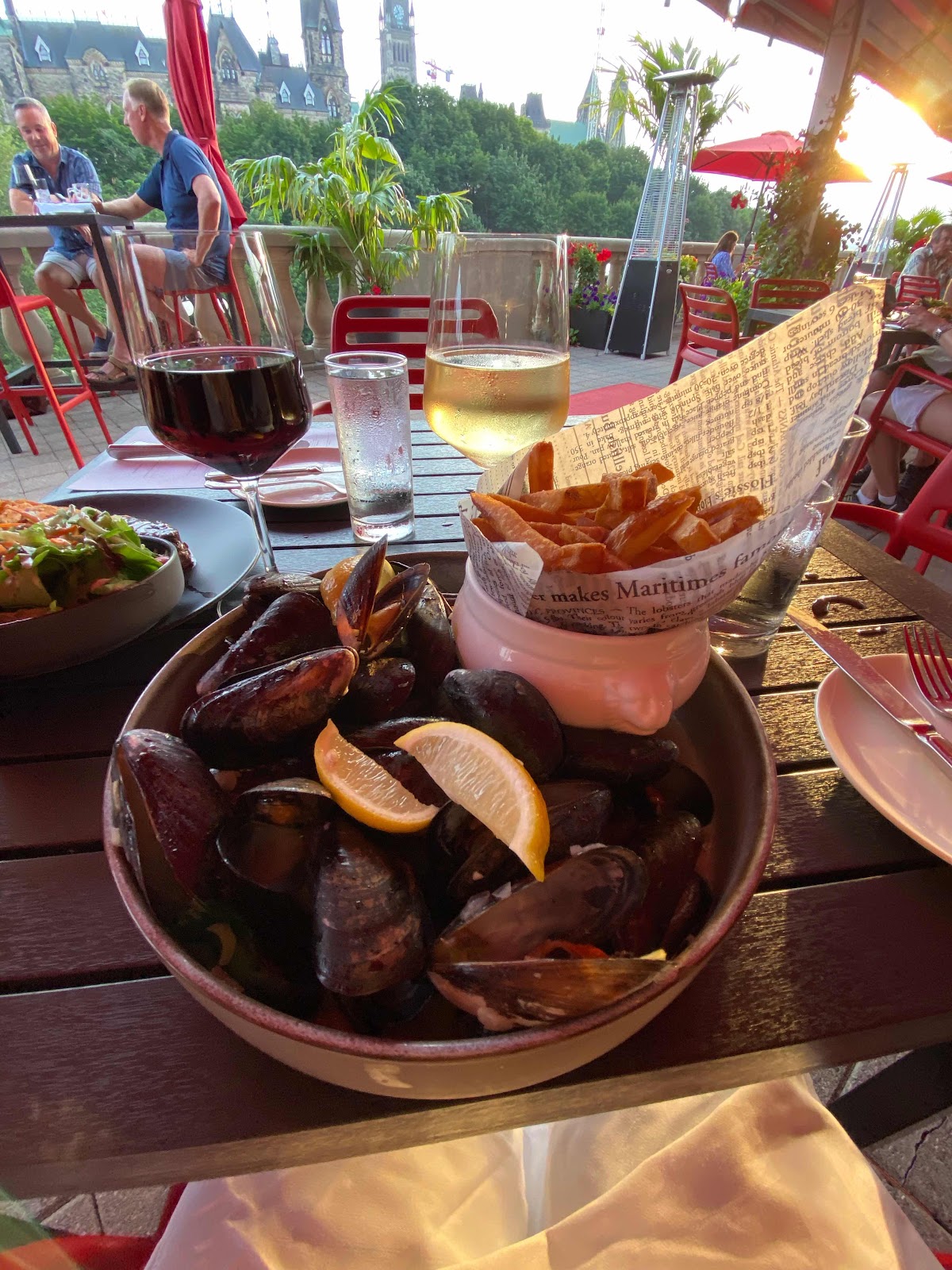
We spent the evening in Ottawa having a lovely dinner outside along side the locks and the we went for a walk by the legislature and took some nice photos before turning in early after a long day of travel.  Wednesday we walked around the city taking a long stroll along the Rideau Canal after lunch.  In the late afternoon we attended a briefing with Adventure Canada where we had to have another Covid test which thankfully we both passed. We received the details for travel the next day and some of the Covid protocols that would be followed on the trip.  One thing that we found out was that seating in the dining room would be assigned and there would be no changing of seats.  We realize that there will be a lot less opportunity on this trip to meet our fellow travellers as we are to stay in our assigned colour groups.  For us this is a little disappointing as one of the joys of travel is the wonderful people we meet but as a wise person once pointed out do not compare each experience to other ones.  Take the best from each and I am sure we are in for some wonderful experiences.


A good meal and a toast to start our first vacation in two and a half years.


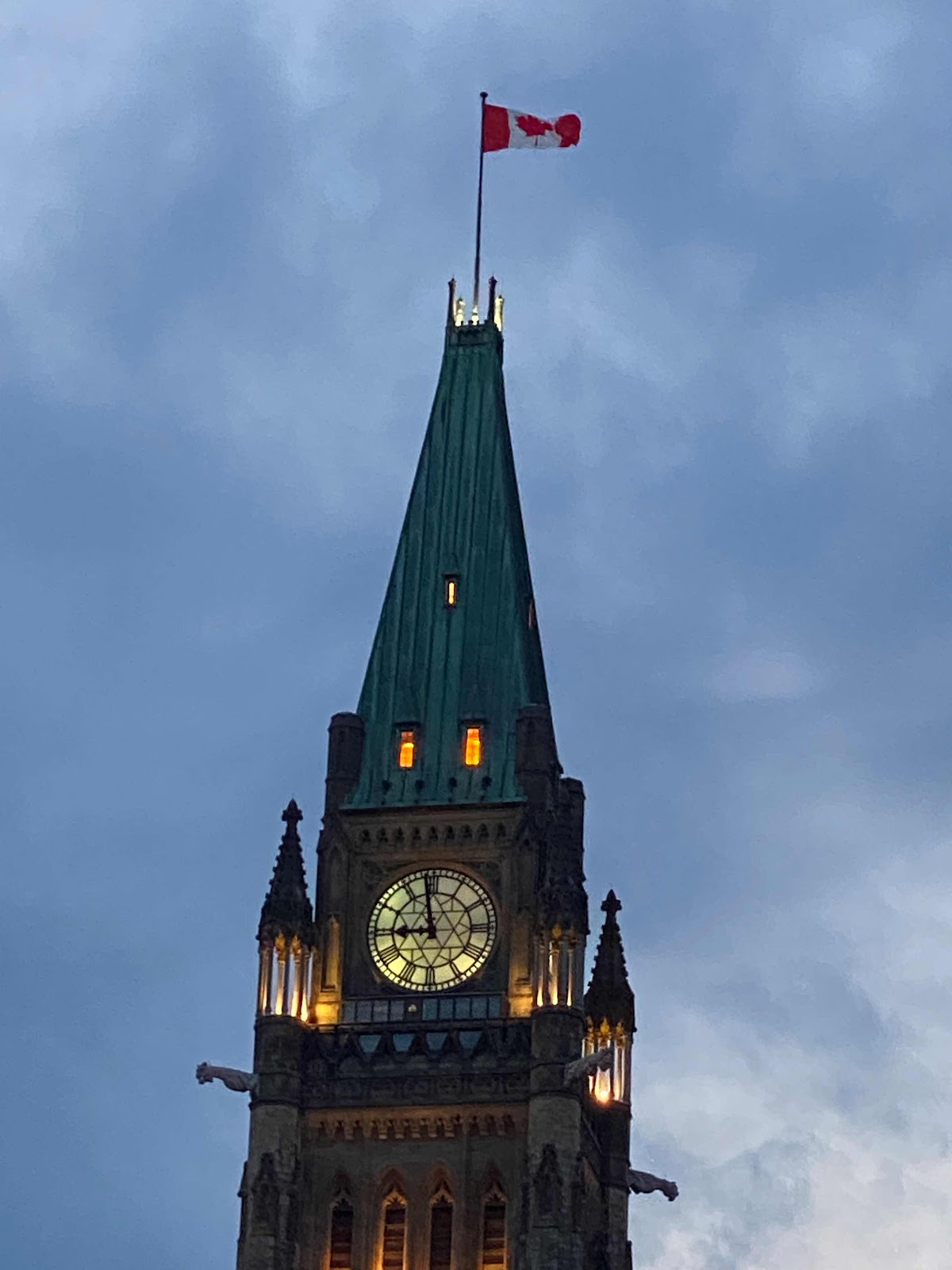
The clock on our legislative buildings 


First dinner of our trip and one of my favourite, modules and frites


The locks on the Rideau Canal 


This tower of the Château Laurier where we were staying looked like something out of a fairy tale.


Ottawa has done beautiful art on many of their staircases adding beauty to the city


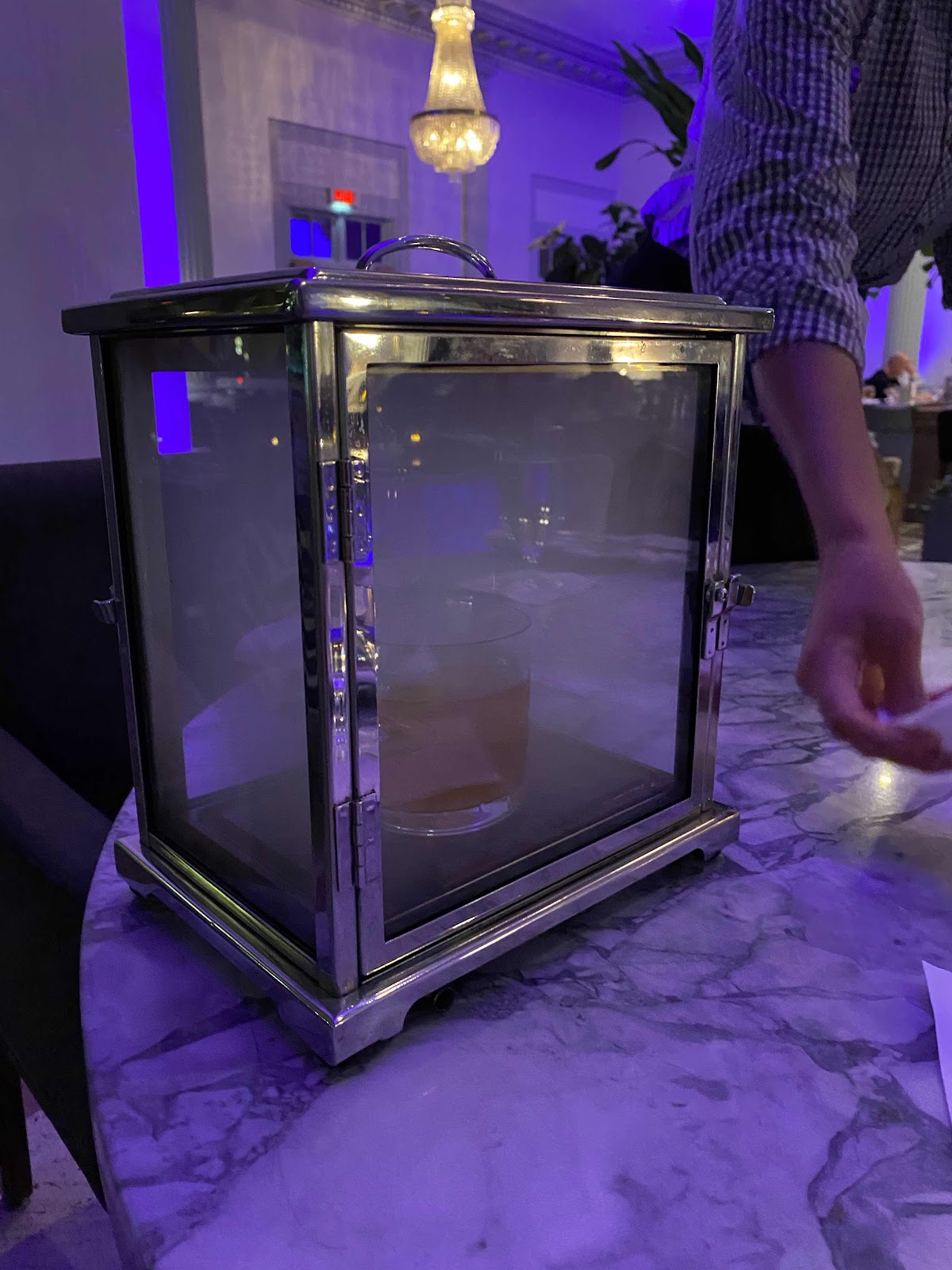
A special drink in the bar before getting read to take off on our adventure.